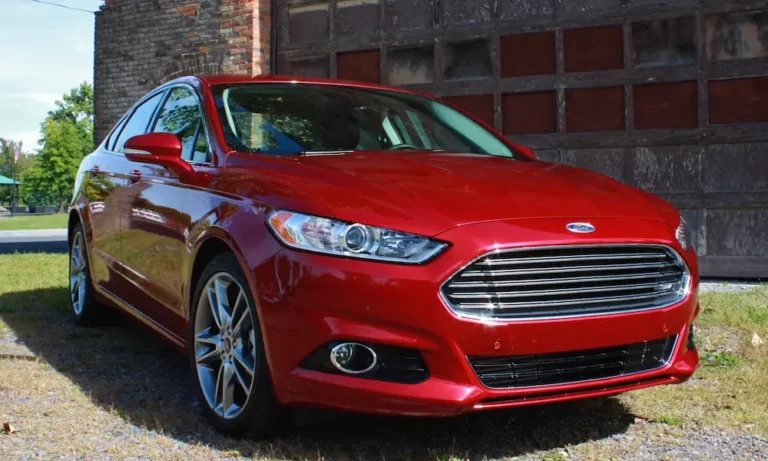
Your Ford Fusion’s engine light just came on, and you’re seeing white smoke from the exhaust. Sound familiar? You might be dealing with one of Ford’s most serious recalls affecting hundreds of thousands of vehicles. Here’s everything you need to know about the Ford Fusion coolant leak recall and what it means for your wallet.
The Big Picture: Multiple Recalls Affect Different Years
Ford didn’t just have one coolant problem – they had several. The ford fusion coolant leak recall actually covers multiple issues across different model years, each with its own set of problems and solutions.
Safety Recall 17S09: The Fire Risk (2013-2014 Models)
This is the heavy hitter. Ford’s Safety Recall 17S09 affects about 230,000 vehicles with 1.6-liter GTDI engines. We’re talking about 2013-2014 Ford Fusion models built between February 2012 and June 2014.
Here’s what happens: Poor coolant circulation causes engines to overheat. The cylinder head cracks. Pressurized oil leaks out and hits hot engine parts. Then your engine compartment catches fire.
Ford documented 29 fires in the US and Canada before announcing this recall. Twenty-nine actual fires. That’s not a small problem.
Customer Satisfaction Program 21N12: The Expensive Fix (2017-2019 Models)
Ford launched Customer Satisfaction Program 21N12 in June 2022 for 2017-2019 Ford Fusion vehicles with 1.5L EcoBoost engines. This program covered repairs for 7 years or 84,000 miles.
The bad news? This program expired on November 30, 2022. If your engine failed after that date, you’re looking at $7,000 to $9,000 in repair costs.
Technical Service Bulletin 22-2134: The Ongoing Problem
TSB 22-2134 addresses coolant intrusion in 2014-2019 Ford Fusion vehicles with 1.5L EcoBoost engines built before June 10, 2019. This bulletin tells dealerships to replace entire engine blocks when coolant gets into the cylinders.
Which Ford Fusion Years Are Affected?
Let’s break this down by what’s under your hood:
| Engine Type | Model Years | Recall/Program | Current Status |
|---|---|---|---|
| 1.6L GTDI | 2013-2014 | Safety Recall 17S09 | Active – Free repairs |
| 1.5L EcoBoost | 2014-2019 | Multiple TSBs + 21N12 | Expired – You pay |
The 1.6L engines have fire risk. The 1.5L engines have coolant intrusion that destroys the engine. Neither problem is cheap to ignore.
Red Flags: Symptoms You Can’t Ignore
Your Ford Fusion will give you warning signs before it completely fails. Don’t ignore these:
Immediate Red Flags:
- Engine overheating without visible coolant puddles
- White or blue smoke from the exhaust
- Sweet smell inside your car (that’s coolant vapor)
- Check engine light comes on
- Engine runs rough or misfires
Progressive Warning Signs:
- You’re constantly adding coolant but don’t see leaks
- Engine loses power during acceleration
- Bright green, yellow, or pink puddles under your car
If you see white smoke and smell something sweet, stop driving immediately. Continuing to drive can turn a $500 problem into an $8,000 engine replacement.
The Money Problem: What This Costs You
Here’s where things get ugly. The costs vary dramatically depending on your model year and timing.
If You Have an Active Recall (2013-2014 models):
Ford pays for everything. Schedule the repair immediately at any Ford dealership.
If You Missed the Coverage Window:
- Engine replacement: $7,000-$9,000
- Short block replacement: $5,000-$7,000
- Diagnostic fees: $150-$300
Many owners report getting repair estimates that exceed their car’s value. A 2017 Ford Fusion with 80,000 miles might be worth $12,000, but the engine replacement costs $8,000.
Legal Battles: Class Action Lawsuits Are Happening
Multiple class action lawsuits are pending against Ford, including Miller, et al. v. Ford Motor Company in California federal court. The lawsuits claim Ford knew about these engine defects before selling the vehicles.
Plaintiffs argue that Ford only applied “band-aid” fixes like coolant level sensors instead of addressing the actual engine block defects. The legal battles suggest this problem runs deeper than Ford initially admitted.
Consumer protection attorneys recommend that affected owners consider individual lemon law claims, which often provide better compensation than class action settlements.
What You Should Do Right Now
Step 1: Check Your Recall Status Immediately
Use your VIN to check Ford’s official recall website. If you have an active recall, schedule repairs immediately. Don’t wait.
Step 2: Document Everything
Start keeping records now, even if your car seems fine:
- Photos of any coolant puddles
- Receipts for coolant you’ve added
- Notes about symptoms (dates, mileage, weather)
- Repair estimates from dealerships
This documentation becomes crucial if you need to pursue legal action later.
Step 3: File NHTSA Complaints
Call the National Highway Traffic Safety Administration at 1-888-327-4236 to file a complaint. Sufficient complaint numbers could trigger federal recall investigations that force Ford to extend coverage.
Step 4: Monitor Your Coolant Religiously
Check your coolant level weekly. Look for the clear overflow tank near your radiator. The level should stay consistent between the minimum and maximum lines.
If you’re adding coolant more than once every few months, you have a problem that needs immediate attention.
The Ugly Truth About Ford’s Response
Ford’s handling of these coolant issues frustrates many owners. The company issued recalls for the most dangerous problems (fire risk) but let customer satisfaction programs expire for engine-destroying issues.
Many owners report that Ford dealerships initially denied problems or suggested expensive diagnostics before acknowledging known defects. Some dealerships allegedly told customers that coolant consumption was “normal” when it clearly wasn’t.
The expired Customer Satisfaction Program 21N12 particularly angers owners whose engines failed just months after coverage ended. Ford essentially said “too bad” to customers facing $8,000 repair bills for known manufacturing defects.
State-Specific Lemon Law Options
Your rights vary significantly by state. California, for example, has strong lemon laws that may force Ford to repurchase or replace your vehicle if it has recurring problems.
Strong Lemon Law States:
- California: Covers vehicles with substantial defects
- New York: Includes used vehicle protections
- Texas: Covers both new and used vehicles under certain conditions
Limited Protection States:
- Many states only cover new vehicle purchases
- Some require multiple failed repair attempts
- Others have short time limits for claims
Contact a lemon law attorney in your state to understand your specific rights. Many attorneys work on contingency, meaning they only get paid if you win.
Prevention and Early Detection Tips
You can’t prevent manufacturing defects, but you can catch problems early:
Monthly Checks:
- Coolant level in the overflow tank
- Look under your car for puddles after parking overnight
- Check your oil – coolant contamination makes it look milky
Driving Habits That Help:
- Don’t ignore temperature warnings
- Pull over immediately if you see white smoke
- Let your engine warm up gradually in cold weather
What Not to Do:
- Don’t use stop-leak products – they can void your warranty
- Don’t keep driving with low coolant
- Don’t wait for problems to get worse
The Bottom Line: Protect Your Investment
The ford fusion coolant leak recall represents a serious ongoing issue that Ford hasn’t fully resolved. While some recalls remain active, many affected owners face expensive repairs for known manufacturing defects.
If you own a Ford Fusion from 2013-2019, you need to stay vigilant. Check your recall status, monitor your coolant levels, and document any problems immediately. The difference between catching this early and waiting could be thousands of dollars.
Remember that Ford’s customer satisfaction programs have expired, but legal options remain available. Class action lawsuits are pending, and individual lemon law claims may provide better outcomes for some owners.
Don’t assume your problems are covered just because similar vehicles had recalls. Each program has specific dates, mileage limits, and coverage windows. When in doubt, get a professional diagnosis and keep detailed records of everything.
The coolant leak issues in Ford Fusion vehicles represent more than just inconvenience – they’re expensive problems that can leave you stranded or facing major repair bills. Stay informed, act quickly on recalls, and don’t hesitate to pursue legal options if Ford won’t stand behind their product.