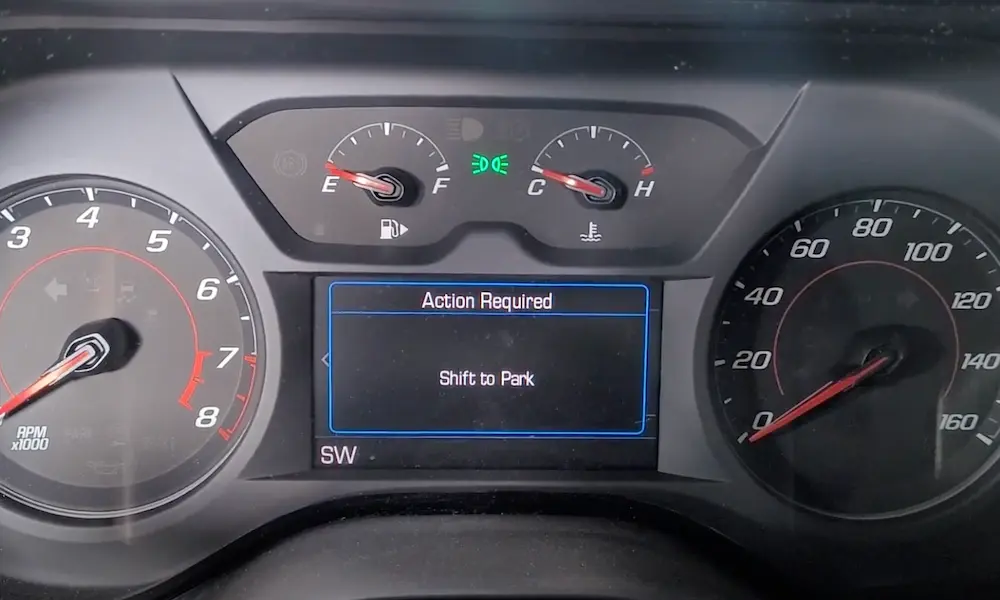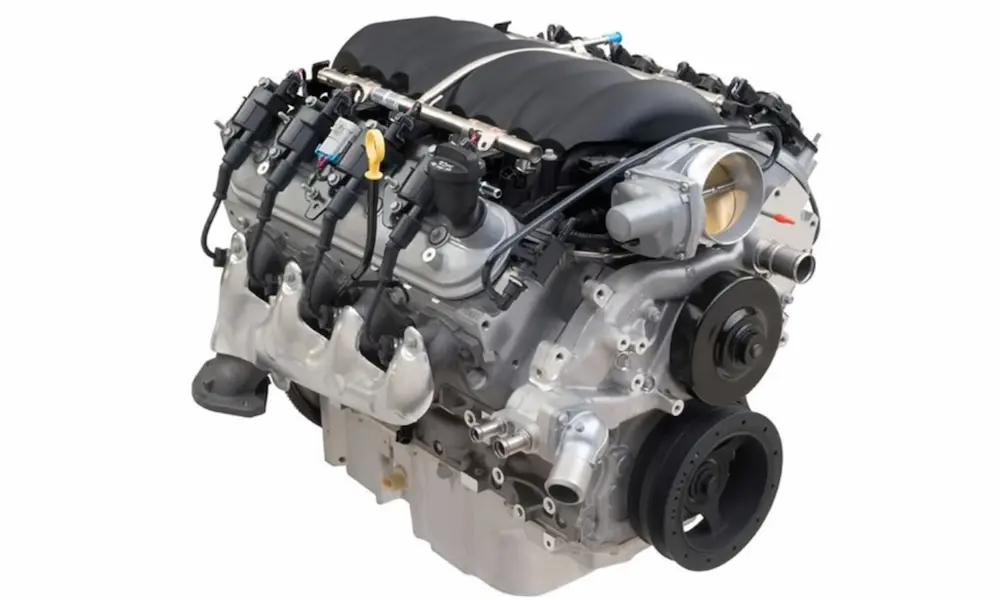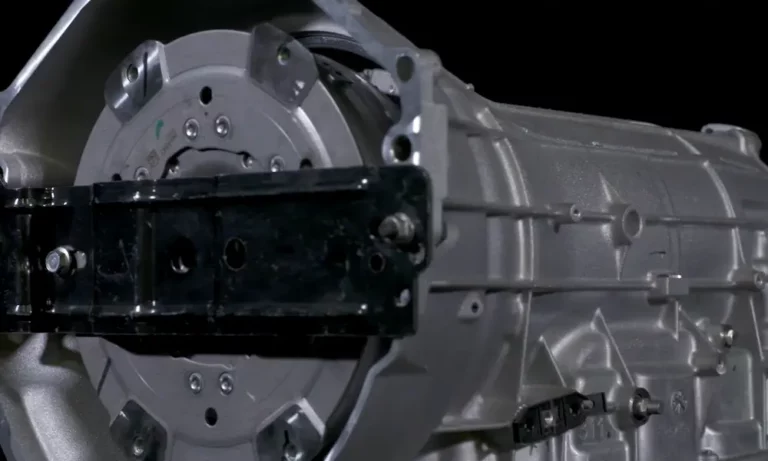
If your GM truck or SUV feels like it’s driving over rumble strips at highway speed, your 8-speed transmission might be the culprit. This guide breaks down every major GM 8 speed transmission problem, what causes it, and what you can actually do about it — so keep reading.
What Vehicles Have the GM 8-Speed Transmission?
GM rolled out the Hydra-Matic 8-speed family starting with the 2015 Corvette C7. Since then, millions of vehicles have used either the 8L45 or the 8L90 — two versions of the same basic design.
Here’s a quick breakdown of which is which:
| Feature | 8L45 | 8L90 |
|---|---|---|
| Torque Capacity | ~370 lb-ft | ~715 lb-ft |
| Engine Pairings | 2.0L Turbo, 3.6L V6 | 5.3L V8, 6.2L V8, 6.6L Diesel |
| Common Models | Camaro (V6), Cadillac ATS/CTS, Colorado | Silverado, Sierra, Tahoe, Yukon, Corvette |
| Design Focus | Efficiency, ride comfort | Power, towing, performance |
The 8L45 handles smaller vehicles, while the 8L90 pairs with heavy-duty and high-performance applications. Both share the same core architecture — and unfortunately, many of the same problems.
The “Chevy Shake”: TCC Shudder Explained
The most widespread GM 8 speed transmission problem is Torque Converter Clutch (TCC) shudder, nicknamed the “Chevy Shake” by owners and technicians alike.
It feels like driving over a rough concrete highway — a persistent vibration between 25 and 80 mph during light throttle or steady-speed cruising.
Why Does TCC Shudder Happen?
The factory transmission fluid — original Dexron HP — is hygroscopic. That means it absorbs moisture through the transmission’s vent system over time.
Once moisture gets into the fluid, it ruins the fluid’s ability to keep the torque converter clutch plates moving smoothly. Instead of a clean transition between slipping and locking, the plates go through a rapid “stick-slip” cycle that sends vibrations straight through the drivetrain and into your seat.
How Bad Can It Get?
Ignore the shudder and the damage escalates fast:
| Stage | What You Feel | What’s Actually Breaking |
|---|---|---|
| Early | Occasional vibration at highway speeds when warm | Fluid moisture contamination |
| Moderate | Frequent “rumble strip” sensation during cruising | Friction material glazing begins |
| Advanced | Violent shaking, tachometer hunting ±50-100 RPM | Friction material shedding, debris in fluid |
| Terminal | Loss of power, Check Engine light, metal in pan | Full TCC failure, pump damage, possible overhaul needed |
Debris from a failing torque converter can clog the valve body’s control circuits and trigger secondary failures. What starts as a $150 fluid flush can turn into a $3,200+ torque converter replacement — or a $5,000+ full rebuild.
The Fix: TSB 18-NA-355 and the Triple Flush
GM addressed TCC shudder through Technical Service Bulletin 18-NA-355, which outlines a specific fluid exchange procedure using Mobil 1 Synthetic LV ATF HP (Blue Label) fluid.
Why a Triple Flush?
A standard drain-and-refill only replaces 7–10 quarts of fluid. The torque converter and cooler lines hold several more quarts of the old, contaminated stuff. The TSB protocol uses a TransFlow machine (DT-45096) connected to the cooler lines to push up to 20 quarts of new fluid through the entire system — achieving close to 100% replacement.
Here’s what the full procedure involves:
- Connect the TransFlow machine to the transmission cooler lines
- Flush contaminated fluid from the system while the engine runs
- Clean the transmission cooler and check fluid level at 95–113°F
- Drive up to 200 miles and complete at least two cold-start cycles so the new fluid’s friction modifiers can fully treat the clutch surfaces
Heads-up: The flush works best on early-stage shudder. If the vibration comes back after the flush, your torque converter is likely already damaged and needs replacement.
Valve Body Failures: Worn Bores and Pressure Problems
Beyond the torque converter, the 8L90 and 8L45 valve bodies have a known design flaw — steel valves operating inside cast-aluminum bores. Over time, the constant valve movement wears down the bore walls, creating internal hydraulic leaks between gear circuits.
What Valve Body Wear Looks Like
- Harsh or “neck-snapping” shifts — pressure spikes from a worn pressure regulator valve
- RPM flares during shifts — low line pressure prevents clutch packs from gripping firmly
- 2–5 second delay shifting from Park to Drive or Reverse, especially when cold
Here’s a breakdown of the most common valve body failures:
| Component | Failure Mode | Symptom |
|---|---|---|
| Pressure Regulator Valve | Bore wear, incorrect boost valve assembly | No movement, extremely high/low line pressure |
| Accumulator Pistons | Side-loading, seal leakage | Soft or erratic shifts |
| Shuttle Valve | Bore wear, travel restriction | Overheating, TCC apply issues |
| Pump Assembly | Hub wear, chain failure | Loud whine, complete pressure loss, metal in pan |
Aftermarket Solutions That Actually Work
Because factory replacement valve bodies use the same weak materials, many rebuilders turn to Sonnax oversized valve kits and “Zip Kits.” These include:
- Oversized pressure regulator valves to restore hydraulic seal integrity
- Billet aluminum sleeves to replace soft aluminum bore surfaces
- Upgraded accumulator pistons with improved O-ring systems
For severe cases, a fully remanufactured valve body — dyno-tested under real-world load — is often the only lasting fix.
Electronics and the Fast Learn Procedure
The 8L series depends heavily on its Transmission Control Module (TCM). Each valve body gets a factory-assigned Part Unique Number (PUN) based on its individual solenoid flow characteristics. Replace the valve body without programming that PUN into the TCM, and the shift quality will be terrible — and the adaptive learning system can’t fix it.
After any major repair — fluid flush, valve body replacement, or full rebuild — a Fast Learn procedure must run using a bi-directional scan tool.
Key requirements for a successful Fast Learn:
- Fluid temperature between 167°F and 185°F
- Follow all on-screen prompts without interruption (an interrupted Fast Learn can cause a false neutral condition)
- Complete a post-repair drive cycle: multiple light-throttle accelerations and coast-downs from 65 mph to 25 mph to refine clutch adaptations
Some shift quality issues are purely software-related — where the TCM can’t adapt beyond factory-set drift margins. A dealer software update is the only fix in those cases.
How to Diagnose TCC Shudder vs. Something Else
Not every vibration is a transmission problem. GM’s own TSB outlines how to tell the difference.
The TCC Enable/Disable Test
Using a scan tool, a technician manually commands the TCC to three states:
- Open (disabled): Clutch fully released
- Enabled (slipping): Controlled slip mode
- Locked: Zero RPM slip
If the vibration only appears in “Enabled” mode and disappears when locked or open, that’s textbook TCC shudder.
If the vibration persists even when the TCC is disabled, the problem isn’t the transmission at all — it could be tire imbalance, worn U-joints, or even a clogged EVAP canister causing engine surging.
Common Diagnostic Codes to Watch
- P0741 — TCC performance or stuck off (excessive slip)
- P0218 — Transmission fluid over-temperature
- P0731–P0738 — Ratio codes indicating gear slippage or valve body wear
The Lawsuit: What Happened and Where It Stands
GM 8 speed transmission problems didn’t just affect owners — they triggered major legal action.
The biggest case, Speerly et al. v. General Motors, alleged that GM knowingly sold defective vehicles and told dealers to call the shudder “normal.” A district court certified the class in March 2023, covering owners in 26 states.
Then in June 2025, the 6th U.S. Circuit Court of Appeals decertified the class, ruling that differences in state laws and individual experiences made a single nationwide group unworkable.
| Date | Event | What It Means for Owners |
|---|---|---|
| 2018 | Class-action lawsuits filed | National spotlight on shudder issue |
| March 2023 | District court certifies 26-state class | Owners expected broad recall or reimbursement |
| June 2025 | 6th Circuit decertifies the class | Owners must now pursue individual claims |
| August 2025 | GM arbitration motions denied in some courts | Some plaintiffs can sue in open court |
| Early 2026 | Smaller subclasses continue in Michigan | Possible path for Silverado/Colorado owners |
As of early 2026, individual claims and smaller subclasses continue. If you’ve paid out of pocket for torque converter or valve body repairs, consulting a lemon law attorney is worth exploring.
How to Protect Your 8-Speed Transmission
You don’t need to wait for the transmission to fail. These steps can add years to its life.
Maintenance Changes to Make Now
- Change fluid every 30,000–40,000 miles — not the 60,000–100,000 mile intervals GM suggests
- Use Mobil 1 Synthetic LV ATF HP (Blue Label) — it’s the only fluid that resists moisture absorption
- Act at the first sign of shudder — a $150–$300 flush beats a $3,200 torque converter replacement every time
Upgrades Worth Considering
If you tow regularly or push the vehicle hard, these upgrades make a real difference:
- Thermal bypass valve — keeps transmission temps closer to 158°F instead of 190°F+, which dramatically slows fluid breakdown
- Billet torque converter — eliminates the factory design flaw permanently if the original fails
- Aftermarket deep pan — adds roughly one extra gallon of fluid capacity, lowering operating temps and extending fluid life
The GM 8 speed transmission problems aren’t a mystery anymore. The causes are well-documented, the fixes are proven, and staying ahead of maintenance keeps that “Chevy Shake” from becoming a full-blown rebuild.