Scratched your Golf Mk4 and need to match the paint? Finding the right color starts with tracking down your paint code — and it’s not always where you’d expect. This guide shows you exactly where to look, how to read the code, and what to do when the sticker’s long gone.
Where Is the Golf Mk4 Paint Code Location?
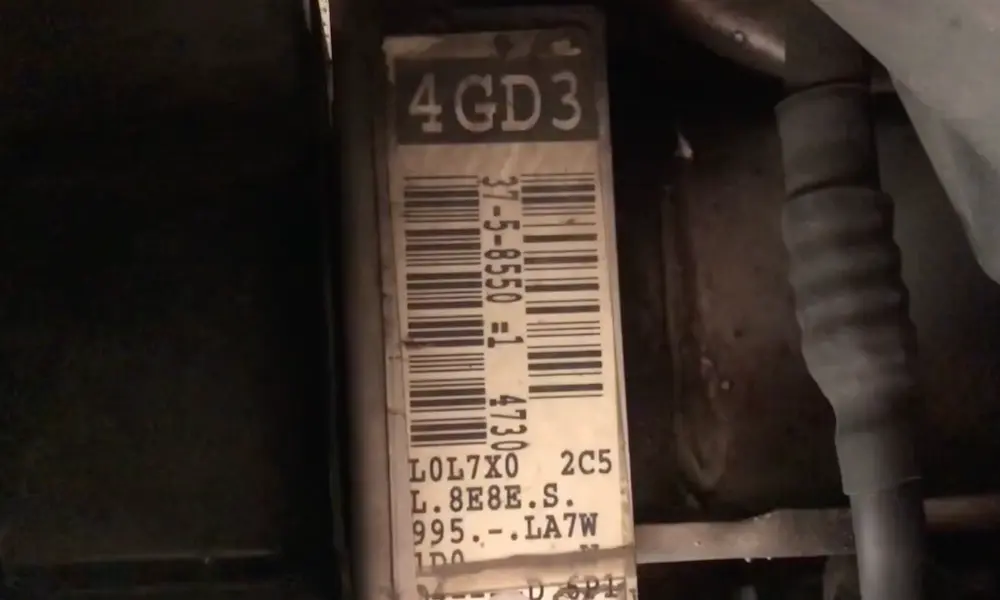
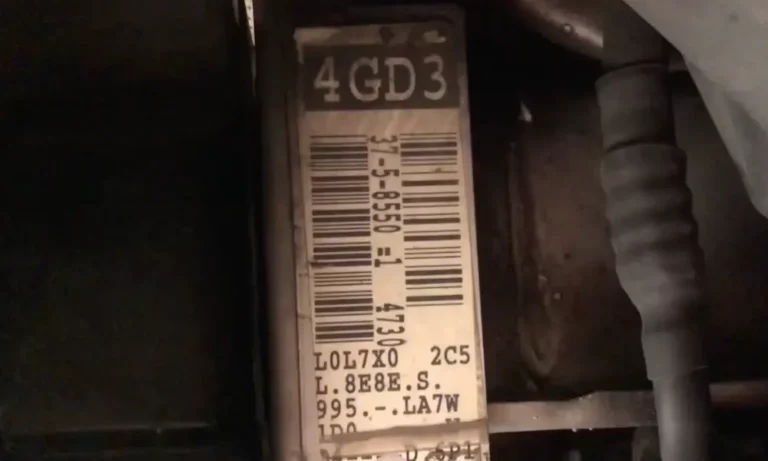
VW placed the paint code on a white paper label called the Vehicle Data Carrier (Fahrzeugdatenträger in German). There are two places this label lives on a Mk4.
The Trunk Floor — Your First Stop
Open the hatch, lift the trunk floor carpet, and pull back the spare tire cover. The sticker sits directly on the sheet metal floor, just to the left of the spare wheel well.
Look for a line labeled “Paint No.”, “Paint”, or “Lacknr.” Your code starts with the letter L — something like LC9Z or LY3D.
One problem: these stickers are paper. After 20+ years of moisture, cargo scraping, and spare tire swaps, many are torn, faded, or completely gone. Check it carefully before you give up.
The Service Booklet — Your Backup Plan
VW added a duplicate sticker inside the original Service and Warranty Booklet. It’s affixed to the inside front cover or first page of the booklet, usually sitting in the glovebox.
Because it’s sheltered from sunlight, moisture, and friction, this copy is almost always in better shape than the trunk sticker. If you bought your Mk4 secondhand, check the glovebox first — you might save yourself a lot of trouble.
| Location | Specific Spot | Risk of Damage | Why It Gets Damaged |
|---|---|---|---|
| Trunk Floor | Left of spare wheel well on sheet metal | High | Water, cargo friction, adhesive failure |
| Service Booklet | Inside front cover, glovebox | Low | Only lost if the booklet itself is missing |
Other Places to Check on the Car
No trunk sticker? No booklet? Don’t panic. A few other spots on the Mk4 chassis can help.
Check the driver’s side door frame or B-pillar first. There’s a manufacturer’s label there listing the VIN, weight ratings, and — on some North American production runs — a short paint code string.
Other places worth a look:
- Underside of the trunk deck lid
- Inside cover of the fuse box
- Inner panels of the rear side storage compartments
- Underside of the rear passenger seat bench
On early-production Mk4s, VW factory workers occasionally left assembly slips tucked behind interior door trim panels, under carpet, or beneath seat upholstery. These slips contain exact paint and trim codes, but they’re paper-thin and often brittle after decades of sitting still.
How to Read the Golf Mk4 Paint Code
VW uses a structured four-character alphanumeric system across the VW Audi Group. Each character tells you something specific about the paint.
Here’s how it breaks down:
| Character | What It Means | Example |
|---|---|---|
| 1st | Paint/lacquer classification (Lack) | L |
| 2nd | Assembly plant, region, or brand division | C = corporate VAG color |
| 3rd | Color family (based on RAL groups) | 9 = white/black family |
| 4th | Exact shade, metallic flake, or pearl effect | Z = specific pearl variation |
So LC9Z means: paint formula, corporate VAG color, white/black family, specific pearl variation — which is Black Magic Pearl.
Two Codes on the Sticker — Which One Do You Use?
The sticker often shows something like LD7X/2R. That’s two separate codes:
- LD7X — the four-character technical code used by paint mixers
- 2R — the commercial sales code used in brochures and dealership ordering
Always use the four-character technical code when ordering touch-up paint or having a shop mix a batch. The commercial code gets you the right color name — but the technical code gets you the right formula.
What If the Sticker Is Missing?
This happens constantly on older Golfs. Your VIN is the backup route.
Using Your VIN to Find the Paint Code
The 17-character VIN doesn’t contain the paint code directly — the color isn’t encoded in those 17 characters. But it acts as a key to unlock VW’s factory build records.
Find your VIN on the driver’s side dashboard base (visible through the windshield). Then contact an authorized VW dealership parts desk. The parts specialist looks it up in ELSA or erWin — VW’s internal factory service portals — and retrieves your original “as-built” build sheet. That document lists the technical paint code, the commercial color name, the build date, and interior trim codes.
One thing to know: US-market VINs differ from European ones. Characters four through six in a US VIN encode body style, trim, engine, and restraint systems — while European models simply use “ZZZ” placeholder characters in those spots. Either way, the dealer database retrieves the same factory paint information.
| Recovery Method | Steps | Best For | Watch Out For |
|---|---|---|---|
| Physical sticker | Clean trunk floor, lift carpet, read code starting with “L” | Quick, free, instant | Sticker may be damaged or missing |
| VIN dealer query | Find VIN on dashboard, call VW parts desk, request ELSA/erWin lookup | Missing stickers, accurate factory data | Cars repainted by previous owners won’t match factory records |
Common Golf Mk4 Paint Codes (US Spec)
The US-market Mk4 came in a solid lineup of solid, metallic, and pearl finishes. Some are especially sought after by collectors — particularly the finishes tied to the GTI and R32.
| Paint Code | Color Name | Finish Type | Notes |
|---|---|---|---|
| LB5R | Deep Blue Pearl | Pearl | 40% of US R32 imports arrived in this color |
| LA7W | Reflex Silver | Metallic | Used across Golf, GTI, and R32 trims |
| LC9Z | Black Magic Pearl | Pearl | Deep black with multidimensional flake; GTI and R32 |
| LY3D | Tornado Red | Solid | Shared across VW and Audi platforms |
| LA6P | Cosmic Green | Metallic | Mostly early-model Golfs and GTIs |
| LM7P | Alpine Silver | Metallic | Standard volume-production Golf and GTI |
| LB9A | Candy White | Solid | Common on base Golf and Jetta models |
| LC9A | Pure White | Solid | Late-run Mk4 variations |
Why Fresh Paint Won’t Match Without Adjustment
This catches a lot of people off guard. You find your code, order the paint, spray it on — and it looks noticeably darker than the panels around it.
That’s not a mixing error. That’s physics.
Over 20+ years, UV radiation and acid rain chemically degrade both the clearcoat and basecoat layers. The organic pigments fade and shift. Fresh paint mixed to factory spec is simply more saturated than your weathered car.
The Spectrophotometer Fix
Professional shops don’t just punch in the code and spray. They use a spectrophotometer — an optical device that measures light wavelengths reflected off a cleaned adjacent panel. The software reads exactly how faded the paint is and how the metallic flakes are oriented, then adjusts the formula to match your car’s actual current state.
For DIY repairs, you can do a spray-out card test: mix the paint, spray a card, let it dry, then hold it against the car in natural light. Adjust the formula before you touch the car.
US-Based Touch-Up Paint Support
If you’re doing this yourself or working at an independent shop without a commercial mixing bench, ERA Paints in Portland, Oregon specializes in older VW color matching. Their technical support team is reachable at 971-770-2372 or [email protected], Monday through Friday, 8:00 am to 2:00 pm Pacific time.
PR Codes: The Rest of the Sticker
At the bottom of the Vehicle Data Carrier, you’ll find a grid of three-character alphanumeric codes. These are PR Codes — and they document every factory-fitted component on your specific car.
Brake caliper sizes, suspension damping rates, interior seat fabric, sunroof type — it’s all there. For restoration projects or sourcing correct replacement parts, the PR code grid is just as valuable as the paint code itself. Don’t ignore it.
Your Quick-Reference Checklist
Before you order a single drop of paint, run through this sequence:
- Lift the trunk carpet → look left of the spare tire well for the white paper sticker
- Check the glovebox booklet → find the duplicate sticker on the inside front cover
- Read the four-character code starting with “L” — ignore the two-character commercial code beside it
- Missing sticker? → grab your 17-digit VIN from the dashboard, call a VW parts desk, ask them to pull the factory build sheet via ELSA
- Before spraying → test against an adjacent panel and adjust for paint fade