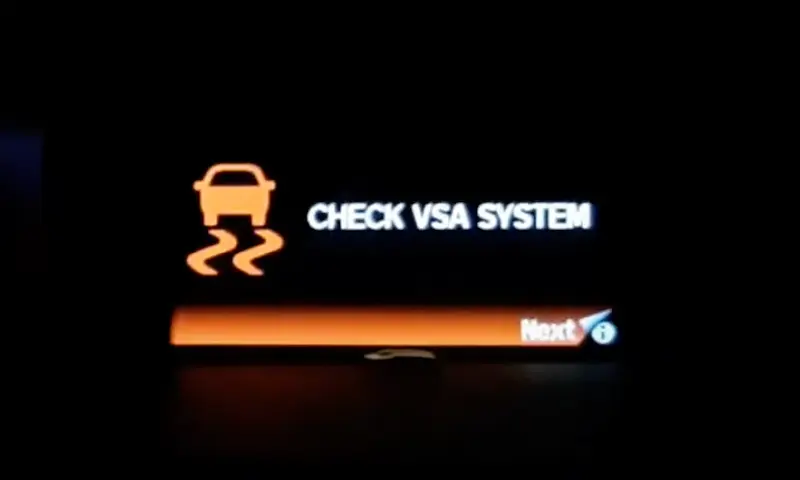
If your Honda’s dashboard just lit up like a Christmas tree—check engine light, VSA light, traction control light all blazing at once—and your scan tool spat out code 83-11, you’re probably freaking out a bit. Here’s the good news: this code isn’t what it seems. It’s not telling you what’s broken. It’s telling you that something else is broken, and your car’s safety systems are just playing it safe. Let’s break down what’s actually going on and how to fix it without wasting money on the wrong parts.
The 83-11 Code Has an Identity Crisis
Here’s where things get weird. The Honda 83-11 code doesn’t point to just one problem—it can come from two completely different systems. It’s like your car speaking in code, and you need to figure out which language it’s using first.
Code 83-11 shows up in:
- Your VSA/ABS system (Vehicle Stability Assist and anti-lock brakes)
- Your SRS system (airbag system, though this usually shows as 83-31 or 83-41)
The cheap code readers from auto parts stores don’t always tell you which system is complaining. They’ll just say “83-11” and leave you guessing. That’s a problem, because fixing the wrong system is like putting a band-aid on your elbow when you cut your finger.
You need a proper scan tool that talks to all your car’s computers—something like a Honda HDS or a decent bidirectional scanner. This isn’t optional. Without it, you’re shooting in the dark.
What VSA Code 83-11 Actually Means
If your 83-11 is coming from the VSA system (which is the most common scenario), the official definition is “ECM/PCM (PGM-FI) Malfunction.” Sounds scary, right? It’s not.
Here’s what’s actually happening: Your VSA system needs constant, accurate data from your engine’s computer (the PCM) to do its job. It needs to know your engine speed, throttle position, and torque calculations to manage traction and stability. When your PCM detects a serious problem—like a cylinder misfiring—it can’t guarantee its data is reliable anymore.
So it sends out a distress signal to all the other systems: “Hey, I’m having issues, don’t trust my data right now.” Your VSA system receives this message and immediately shuts itself down as a safety precaution. It logs code 83-11 and turns on its warning lights.
Translation: Code 83-11 doesn’t mean your VSA system is broken. It means your VSA system heard that your engine computer is having a bad day and decided to sit this one out until you fix the real problem.
This is why you’ll almost never see 83-11 alone. It typically shows up alongside other codes that point to the actual issue, as documented in official Honda service procedures.
The Real Culprits Behind Code 83-11
Let’s talk about what’s actually wrong with your car. In almost every case, one of two things is happening.
Engine Misfires Are the Top Suspect
The overwhelming majority of 83-11 codes trace back to engine misfires. Your scan tool will show codes like P0301, P0302, P0303, etc. (each number represents a different cylinder).
Real-world example: A 2014 Honda Pilot came in with the check engine light and traction control alert. The scan revealed three codes: P0301 (cylinder 1 misfire), 83-11 (PCM malfunction), and 61-11 (low voltage).
The fix? Replace the bad spark plug or ignition coil on cylinder 1. Once that misfire was gone, codes 83-11 and 61-11 cleared themselves and never came back.
What causes misfires:
- Fouled or worn spark plugs (especially common if you’re overdue for replacement)
- Failed ignition coils (these can go bad suddenly)
- On Honda V6 engines with VCM (Variable Cylinder Management), piston ring problems that cause oil consumption, which then fouls the plugs
The diagnostic rule is simple and backed by experienced techs: “Troubleshoot that misfire first. 83-11 is caused by the engine malfunction—it’ll clear when the misfire is repaired.”
Low Battery Voltage Is the Second Most Common Cause
Modern Hondas are packed with sensitive electronics. When your battery starts to die or your alternator gets weak, it creates a “brownout” effect—voltage drops below what these systems need to communicate properly.
During startup, when electrical demand spikes, the VSA module and PCM try to perform their startup “handshake.” If voltage is too low, that handshake fails. The VSA logs code 61-11 (reporting its own low voltage) and code 83-11 (reporting the failed communication with the PCM).
You’ll often see these two codes together: 83-11 and 61-11 appearing simultaneously.
If you see both codes, stop everything and check your charging system first:
- Load test your battery (many auto parts stores do this free)
- Check your alternator output with a multimeter (should be 13.5-14.5V with the engine running)
- Inspect battery terminals and ground connections for corrosion
Replacing a VSA module when you just needed a $150 battery is an expensive mistake.
How to Actually Fix Code 83-11 (Step-by-Step)
Here’s the diagnostic process that’ll save you time and money.
Step 1: Get All Your Codes
Don’t just pull one code and call it a day. You need to scan every system in your car—engine, VSA, ABS, airbag, body control. You’re looking for the full picture, not just one piece of the puzzle.
If you don’t have access to a good scan tool, it’s worth paying a shop $50-100 for a proper diagnostic scan. That’s way cheaper than replacing the wrong part.
Step 2: Follow the Diagnostic Priority
This is critical. Don’t skip ahead.
Priority 1: Check for engine codes (P-codes)
Do you have any codes starting with P, especially P0300-P0308 (misfire codes)?
- YES: Stop right here. Don’t touch the VSA system. Fix the misfire first. Move to Step 3A below.
- NO: Move to Priority 2.
Priority 2: Check for low voltage codes
Do you have VSA code 61-11 (low voltage)?
- YES: Stop. Don’t touch the VSA system. Fix your charging system first. Move to Step 3B below.
- NO: Your 83-11 is isolated. This is rare. Move to Step 3C below.
Step 3A: Fix Your Engine Misfire
Let’s say you’ve got code P0303 (cylinder 3 misfire). Here’s what you do:
For spark plug issues:
- Remove the plugs and inspect them
- Look for oil fouling, carbon buildup, or electrode wear
- Replace fouled or worn plugs (always replace all plugs as a set if they’re old)
For ignition coil issues:
- Swap the coil from cylinder 3 with another cylinder
- Clear codes and test drive
- If the misfire “moves” to the new cylinder, the coil is bad—replace it
- If the misfire stays on cylinder 3, you’ve got a different problem (compression, injector, etc.)
On Honda V6 models, especially those with VCM, be aware that oil consumption from worn piston rings can foul plugs repeatedly. If you’re burning oil, you’ve got a bigger issue to address.
After the repair:
- Clear all codes from all modules
- Test drive the car for at least 20 minutes
- The 83-11 should not return
Step 3B: Fix Your Voltage Problem
Your battery or alternator is struggling. Here’s the fix:
Battery testing:
- Have it load tested (free at most auto parts stores)
- If it fails, replace it
- If it’s marginal and over 4-5 years old, replace it anyway
Alternator testing:
- With the engine running, measure voltage at the battery
- Should read 13.5-14.5V
- Turn on all electrical loads (A/C, headlights, rear defrost, heated seats)
- Voltage shouldn’t drop below 13V
- If it does, your alternator is weak
Ground connections:
- Check battery-to-chassis ground
- Check engine-to-chassis ground
- Clean any corroded connections
After the repair:
- Clear all codes from all modules
- Test drive
- Both 83-11 and 61-11 should stay gone
Step 3C: Fix an Isolated 83-11 (Rare)
If you’ve got 83-11 with no other codes, the fault might actually be in the VSA system itself or a software issue. This is uncommon.
Check software first:
- Connect a Honda HDS or equivalent professional scan tool
- Check if your PCM has the latest software update
- Update if needed, clear codes, retest
Check VSA software:
- Check if your VSA module has the latest software
- Update if needed, clear codes, retest
Check connectors:
- Inspect the 38-pin connector on the VSA modulator
- Look for loose pins, corrosion, or damaged terminals
- Clean and reseat if needed
Last resort—replace the VSA modulator:
- If software is current, connections are good, and 83-11 keeps coming back
- The VSA module itself has failed internally
- This happens, but it’s much rarer than the other causes
- After replacement, you must perform VSA sensor calibration with a scan tool
If Your Code Is from the Airbag System Instead
If your scan shows the 83-11 (or 83-31, 83-41) is coming from your SRS/airbag system instead of VSA, you’re dealing with a completely different animal.
Modern SRS Codes (83-31, 83-41)
These codes point to the passenger seat weight sensors. The good news? There’s often a simple fix.
According to Honda technical documentation, these codes are frequently caused by debris under the front passenger seat interfering with the sensors.
The fix:
- Pull out the passenger seat (or at least look underneath thoroughly)
- Remove all trash, water bottles, backpacks, or other items stored under the seat
- Check that the floor mat isn’t bunched up
- Clear codes and retest
If that doesn’t work, the seat weight sensor itself has failed. Honda issued warranty extensions on these sensors for several models due to high failure rates, as detailed in NHTSA service bulletins.
Important: If you replace any passenger seat components or SRS parts, you must perform the SWS (Seat Weight Sensor) initialization procedure using a Honda HDS scan tool. This isn’t a DIY job. The passenger airbag won’t deploy correctly until this calibration is done.
Legacy SRS Code 83 (Older Hondas)
On pre-1996 or early OBDII Hondas, a plain code 83 means the SRS control unit itself has failed internally. The only fix is replacing the SRS unit.
Common “Fixes” That Won’t Work
The internet is full of bad advice for code 83-11. Let’s clear up some myths.
The Paperclip Reset Method
You’ll find videos showing how to read codes by jumpering pins in the diagnostic connector with a paperclip. This only works on pre-1996 OBD1 Hondas with a 2-pin connector.
Modern Hondas (2008+) that get code 83-11 use a 16-pin OBDII port with a CAN-bus network. Sticking a paperclip in there won’t help—and if you short the wrong pins (like battery voltage to ground), you can fry expensive modules. Don’t do it.
VSA Sensor Calibration
Some guides describe a procedure to calibrate the VSA sensor’s neutral position. This is a real procedure, but it fixes code 84-x (VSA sensor neutral position), not code 83-11.
Code 83-11 is a communication problem with the PCM. Calibrating the yaw rate sensor won’t fix that. You’d be running the right procedure for the wrong problem.
What It’ll Cost You
Let’s talk money. The actual cost depends entirely on the root cause.
| Problem | DIY Cost | Shop Cost | Time Required |
|---|---|---|---|
| Spark plugs (4-cylinder) | $20-60 | $150-250 | 30-60 min |
| Spark plugs (V6) | $40-90 | $200-350 | 1-2 hours |
| Ignition coil (single) | $40-80 | $150-250 | 15-30 min |
| Battery replacement | $100-200 | $150-250 | 15 min |
| Alternator replacement | $200-400 | $400-700 | 1-2 hours |
| VSA module replacement | $800-1200 | $1200-2000 | 2-3 hours |
| SRS seat sensor | $150-300 | $300-500 | 1-2 hours |
Notice that the most common fixes (plugs, coils, battery) are the cheapest. The least common fix (VSA module) is the most expensive. That’s why following the diagnostic priority is so critical.
If you skip straight to replacing the VSA module without checking for misfires or low voltage first, you’ll drop $1,500+ and still have the same problem.
The Bottom Line
Code 83-11 is almost never about the VSA system itself. It’s a messenger telling you something else is wrong. In most cases, you’re looking at:
- A misfire from bad spark plugs or ignition coils
- A dying battery or weak alternator
Both of these are relatively cheap and easy fixes compared to VSA module replacement.
Get a proper scan of all systems. Check for engine codes first. Check for voltage codes second. Only if those come back clean should you even think about the VSA system itself.
And if you see code 83-11 alongside codes like P0301 or 61-11? You’ve already found your answer. Fix that misfire or charge that battery, and your VSA lights will take care of themselves.
Don’t let a confusing code number trick you into an expensive repair you don’t need. Follow the diagnostic steps, fix the root cause, and you’ll be back on the road without breaking the bank.