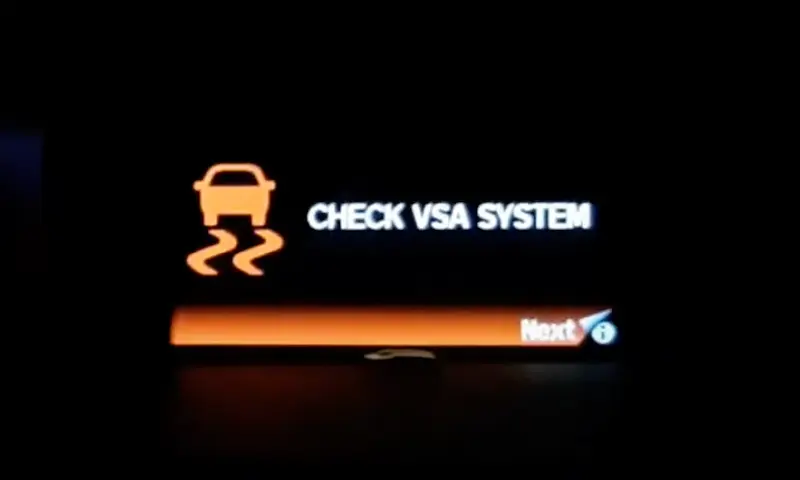
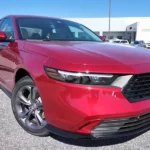
That warning light with a person and airbag on your dashboard isn’t something to ignore. If you’re dealing with a Honda Accord supplemental restraint system problem, you’re facing a safety issue that needs attention. I’ll walk you through what’s happening, why it matters, and what you can do about it.
What Is the Honda Accord SRS System?
The Supplemental Restraint System (SRS) in your Honda Accord is a network of safety components working together to protect you during a crash. It includes:
- Front, side, and curtain airbags
- Seat belt pretensioners
- Crash sensors throughout your vehicle
- SRS control module (the system’s brain)
- Seat belt buckle sensors
This system is called “supplemental” because it works alongside your seat belts, not as a replacement. When you start your car, the SRS light should come on briefly during the self-check, then turn off. If it stays illuminated, your car is telling you something’s wrong with this critical safety system.
Common Honda Accord SRS Problems
Seat Belt Buckle Sensor Failures
This is perhaps the most frequent SRS issue in Honda Accords. These sensors detect whether seat belts are fastened properly, and when they fail, they trigger the SRS warning light.
Signs of the problem:
- SRS light stays on
- Seat belt warning light flickers
- System shows warning even when belts are buckled
Why it happens: Seat belt sensors can fail due to:
- Spilled drinks or food particles contaminating the contacts
- Normal wear and tear over time
- Electrical contact corrosion
Some owners have successfully fixed this by cleaning the contacts with rubbing alcohol or electrical contact cleaner. Replacement buckles typically cost $20-100 depending on your specific model year.
SRS Control Unit Corrosion
Honda issued a significant recall for 2008-2010 Accord models due to SRS electronic control unit failures. Manufacturing issues allowed moisture to penetrate the ECU circuitry, causing corrosion.
Signs of the problem:
- Constant SRS warning light
- Possible airbag deployment failure in a crash
This recall affected approximately 341,000 Accord sedans and has been linked to injuries from airbags failing to deploy properly. If your car falls within this range and hasn’t had this recall addressed, contact your Honda dealer immediately.
Clock Spring Malfunctions
The clock spring connects your steering wheel airbag to the car’s electrical system while allowing the wheel to turn freely. When it fails, several problems occur at once.
Signs of the problem:
- SRS light illuminates
- Horn stops working
- Steering wheel controls become inoperative
Clock spring failures often present intermittently – functions might work sporadically as you turn the wheel. Replacement typically costs $200-600 including parts and labor.
Passenger Detection System Issues
Modern Honda Accords use weight sensors in the passenger seat to determine if someone is sitting there and whether the airbag should deploy. This system (called ODS or OPDS) can malfunction for several reasons.
Signs of the problem:
- SRS light stays on
- Passenger airbag off indicator behaves incorrectly
- System doesn’t recognize when someone is in the seat
These problems often require professional diagnosis and repair, as the system needs proper initialization after component replacement.
Model-Specific SRS Issues
2003-2007 Honda Accord
These models commonly experience:
- Seat belt buckle switch failures
- Clock spring problems
- Basic SRS module issues
Replacement parts are generally affordable, with buckle assemblies costing $20-50. Honda has provided warranty coverage for some buckle-related issues in these older models.
2008-2010 Honda Accord
This generation is most notably affected by:
- The SRS control unit corrosion recall mentioned above
- Standard clock spring failures
- Seat belt sensor problems
If you own one of these models, check if your vehicle was included in the recall for the SRS control unit.
2012-2017 Honda Accord
These Accords may experience:
- Passenger weight sensor inconsistencies
- Front impact sensor failures (especially after minor collisions)
- OPDS system initialization problems
The passenger detection systems in these models are particularly sensitive and may require professional service.
2018-2020 Honda Accord
The most recent generation has shown specific patterns of:
- Airbag inflator resistance codes (B0020-13 and B0028-13)
- Passenger seat weight sensor failures
- Integration issues with other electronic systems
Honda has issued technical bulletins for these newer models, suggesting these are problems they’re actively investigating.
How to Diagnose Honda Accord SRS Problems
Understanding SRS Warning Codes
Honda vehicles use specific codes to identify SRS problems. Here are some common ones:
| Code | Meaning | Common Cause |
|---|---|---|
| 61-10 | Open in driver’s seat belt buckle switch | Faulty buckle sensor |
| 81-64 | ECU serial ID code inconsistent | Passenger weight sensor issue |
| 85-64 | OPDS unit not initialized | System needs reset after repair |
| B0020-13 | Driver’s airbag inflator resistance high | Wiring or inflator problem |
| B0028-13 | Passenger’s airbag inflator resistance high | Wiring or inflator problem |
Professional vs. DIY Diagnosis
While some simple SRS issues can be identified by owners, professional diagnosis is usually recommended for three important reasons:
- Safety concerns: Working with airbag systems carries risk of accidental deployment
- Specialized equipment: Generic OBD-II scanners typically can’t access SRS codes
- Comprehensive diagnosis: Multiple issues can trigger the same warning light
If you’re comfortable with basic automotive work, you can check for obvious issues like:
- Inspect seat belt buckles for damage or contamination
- Check if the horn and steering wheel controls work (clock spring test)
- Look for signs of water damage around the SRS module (usually under the center console)
Fixing Honda Accord SRS Problems
DIY Repair Options
Some simpler SRS issues can be addressed by owners with basic tools:
- Cleaning seat belt buckle contacts:
- Disconnect the battery (wait 15+ minutes for system discharge)
- Remove the trim around the buckle
- Clean contacts with alcohol or electrical contact cleaner
- Reconnect and test
- Resetting the SRS light:
After fixing the underlying issue, some owners have successfully reset the light by:- Disconnecting the battery
- Pressing the horn for 30 seconds (discharges capacitors)
- Reconnecting the battery
However, this reset method only works if you’ve actually fixed the root problem.
When Professional Repair is Necessary
Professional repair is essential for:
- Airbag component replacement: Any work involving actual airbag units
- SRS module replacement or programming: Requires specialized tools
- Passenger detection system repairs: Needs Honda-specific calibration
- Post-collision repairs: Even minor accidents can affect sensor calibration
The average cost of professional SRS repairs varies widely:
| Repair Type | Typical Cost Range |
|---|---|
| Seat belt buckle replacement | $100-300 |
| Clock spring replacement | $200-600 |
| SRS module replacement | $500-1,000+ |
| OPDS system repair | $200-1,000+ |
| Complete post-accident system inspection | $150-300 |
Honda Accord SRS Recalls and Service Bulletins
Honda has issued several important recalls related to SRS systems:
- 2008-2010 SRS Control Unit Recall: Free replacement for moisture-related ECU failures affecting 341,000 vehicles
- 2020-2022 Passenger Weight Sensor Recall: Affecting over 750,000 vehicles with sensor failures that could cause improper airbag deployment
- Takata Airbag Inflator Recalls: Multiple campaigns addressing dangerous inflator degradation across many model years
If your vehicle is affected by any of these recalls, Honda will perform the necessary repairs at no cost to you. You can check if your vehicle has open recalls by entering your VIN at nhtsa.gov/recalls or the Honda recall information site.
The Importance of Addressing SRS Problems Promptly
Driving with an SRS warning light on creates significant safety risks:
- Airbags may not deploy in a collision when needed
- Airbags could deploy unexpectedly during normal driving
- Seat belt pretensioners might not function correctly in a crash
Honda strongly advises against driving with an active SRS warning light. While it might be tempting to ignore the warning, properly functioning airbags can be the difference between minor injuries and life-threatening ones in a serious collision.
Preventive Maintenance for Your Honda Accord SRS
To avoid SRS problems, consider these preventive steps:
- Protect your SRS module from liquids: Be careful with drinks near the center console
- Keep seat belt buckles clean: Prevent contamination from spills or debris
- Respond to warning lights immediately: Early intervention often means simpler repairs
- After any collision, have the SRS system checked: Even minor impacts can affect sensors
Honda recommends SRS system inspection at 10 years of vehicle age. The production date is available on your driver’s door jamb sticker.
Understanding Your Honda’s SRS Warranty Coverage
Honda typically provides these warranty terms for SRS components:
- Basic SRS coverage: 3 years/36,000 miles (same as basic vehicle warranty)
- Seat belt systems: Lifetime warranty against defects for the original owner
- Extended OPDS coverage: Some models received extended 10-year/150,000 mile warranties
For vehicles involved in recalls, repairs are covered regardless of age or mileage.
Getting the Most Reliable Honda Accord SRS Repairs
For the best repair experience:
- Use Honda-certified technicians for SRS work whenever possible
- Insist on OEM parts for critical safety components
- Keep documentation of all SRS-related repairs
- After repairs, ensure the SRS light turns off and stays off after several drive cycles
Even with aftermarket repair options available, the SRS system is not the place to cut corners on quality. Your safety depends on these components working perfectly in the critical split-second of a collision.
Honda’s Supplemental Restraint System is a sophisticated safety network designed to protect you in an accident. While problems can be frustrating and sometimes expensive to fix, addressing them promptly ensures your vehicle provides the protection it was designed to deliver when you need it most.