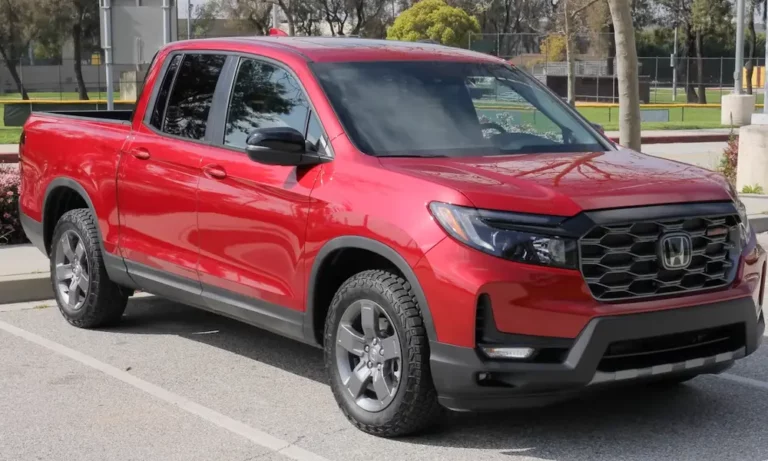
Is your Honda Ridgeline’s check engine light on? Experiencing strange performance issues? You might be dealing with an emissions system problem that’s affecting thousands of Ridgeline owners. These issues can range from minor inconveniences to major repair headaches, but understanding what’s happening under the hood can save you time, money, and frustration.
What Are the Common Honda Ridgeline Emissions Problems?
Honda Ridgelines, particularly models from 2016 to 2023, frequently experience emissions system issues. These problems typically trigger warning lights on your dashboard and can affect your truck’s performance.
The most common emissions-related trouble codes include:
- P0455: EVAP system large leak
- P0442: EVAP system small leak
- P0420: Catalytic converter efficiency below threshold
Faulty Purge Valve Issues
The purge valve is often the culprit behind many Ridgeline emissions problems. This component controls the flow of fuel vapors from the charcoal canister to the engine for proper combustion. When it fails, your truck’s computer will detect the issue and illuminate the check engine light.
Some owners have reported that a malfunctioning purge valve even disables the automatic start-stop system and all-wheel drive functionality as a safety measure. Replacing this valve (part number 36162-5G0-A01) typically costs between $30-$150 depending on whether you do it yourself or pay for labor.
EVAP System Leaks: More Than Just the Purge Valve
The Evaporative Emission Control (EVAP) system is designed to prevent fuel vapors from escaping into the atmosphere. Several components in this system can fail:
- Fuel Filler Neck Issues: Honda has issued technical service bulletins (TSBs) including ATS 170206 identifying problems with the capless fuel filler system. In cold weather, moisture can infiltrate and freeze, preventing you from refueling.
- Mis-Fuel Inhibit Device: This component, designed to prevent you from using the wrong fuel type, can malfunction. Honda recommends replacing it (part 06160-TG7-A01) rather than the entire fuel fill pipe, according to official guidelines.
- Charcoal Canister Problems: This component absorbs and stores fuel vapors until they can be safely burned in the engine. Cracks or contamination in the canister require replacement to fix leaks.
Oxygen Sensor and Catalytic Converter Problems
Failing oxygen sensors can trigger the P0420 code, suggesting catalytic converter efficiency issues. While sometimes the sensor itself is the problem, this warning can also indicate a genuinely failing catalytic converter.
Replacing the catalytic converter isn’t cheap—owners report costs exceeding $2,000 because the converter is integrated with the exhaust manifold in many Ridgeline models. Some drivers have found temporary relief by using catalytic converter cleaners, but this rarely provides a permanent solution.
How to Diagnose Honda Ridgeline Emissions Problems
Proper diagnosis can save you from expensive unnecessary repairs. Here’s how to approach common emissions issues:
For P0455/P0456 Codes (EVAP Leaks)
- Start with the simplest cause: check your gas cap. Ensure it’s properly tightened and not damaged.
- Visually inspect the fuel filler neck, EVAP hoses, and connections for any obvious cracks or disconnections.
- For a deeper diagnosis, a smoke machine test can pinpoint leaks in the system. This specialized equipment, available at most repair shops, pushes smoke through the EVAP system to reveal leak locations.
- If the filler neck is leaking, follow the recommendations in TSB ATS 170206 to replace the mis-fuel inhibit device rather than the entire assembly.
For P0420 Code (Catalytic Converter Efficiency)
- Test the oxygen sensors with a multimeter to verify they’re providing proper voltage fluctuations.
- Inspect the catalytic converter for external damage.
- Check for exhaust leaks upstream of the converter, as these can mimic efficiency failures.
- In some cases, cleaning the catalytic converter might temporarily restore function, but replacement is often inevitable if the core material is degraded.
Cold Weather-Related Issues
If you’re experiencing fuel filler problems in freezing conditions, Honda’s TSB A18-018 recommends replacing the shutter set and applying anti-ice lubricants to prevent recurrence.
Real-World Owner Experiences
Many Ridgeline owners report frustratingly intermittent emissions warnings. One owner of a 2022 Ridgeline described how EVAP system leaks disabled their AWD system until repairs were completed.
Others have noted that dealerships sometimes struggle to replicate the issues, resulting in multiple visits before a proper fix is implemented. The emissions light may disappear after resetting codes only to reappear weeks later.
Cost Breakdown for Common Emissions Repairs
Understanding potential repair costs helps you budget appropriately:
| Repair Type | DIY Cost | Professional Repair Cost | Notes |
|---|---|---|---|
| Purge Valve Replacement | $30-50 | $100-150 | Relatively easy DIY job |
| Fuel Cap Replacement | $15-30 | $50-75 | Simplest fix – try this first |
| Charcoal Canister | $150-300 | $400-600 | Labor-intensive location |
| Oxygen Sensor | $50-150 | $175-300 | Multiple sensors may need replacement |
| Catalytic Converter | $800-1200 | $2,000-3,500 | Highest cost repair; may be covered under warranty |
Prevention and Maintenance Tips
While some emissions issues are inevitable due to design flaws, you can minimize problems by:
- Always use OEM parts – Aftermarket fuel caps or purge valves may not meet Honda’s specifications, increasing leak potential.
- Check your warranty coverage – Federal emissions warranties cover catalytic converters and engine control modules (ECMs) for 8 years/80,000 miles, potentially saving you thousands in repair costs.
- Address check engine lights promptly – Early intervention can prevent cascading failures.
- Regular inspections – Have your EVAP system checked during routine maintenance to catch issues before they worsen.
- Use quality fuel – Poor fuel quality can contribute to emissions system problems over time.
DIY Fixes for Emissions Problems
For the mechanically inclined, some emissions issues can be addressed at home:
Replacing the Purge Valve
- Locate the purge valve (usually near the intake manifold or under the vehicle near the charcoal canister)
- Disconnect the electrical connector
- Remove any mounting brackets or clips
- Disconnect the vacuum lines (note their positions first)
- Install the new valve in reverse order
Fuel Cap Replacement
Simply unscrew the old cap and install a new Honda OEM cap. This fixes a surprising number of emissions codes.
Smoke Testing Your Own Vehicle
While professional smoke testers are expensive, you can create a makeshift version:
- Use a small fog machine
- Connect it to the EVAP test port (requires an adapter)
- Look for smoke escaping from connections or components
Using Honda’s Technical Service Bulletins
Honda has issued several TSBs addressing emissions problems:
- TSB ATS 170206: Addresses fuel filler neck and mis-fuel inhibit device issues
- TSB A18-018: Provides fixes for cold-weather fueling problems
- Multiple other bulletins address specific model years and problems
If your dealer isn’t aware of these bulletins, politely point them to the appropriate NHTSA documentation to ensure you receive the proper repair.
Understanding Honda’s Emissions Warranty
Your Ridgeline’s emissions system is covered by two different warranties:
Federal Emissions Warranty:
- Basic coverage: 3 years/36,000 miles for most emissions components
- Extended coverage: 8 years/80,000 miles for major components (catalytic converter, engine computer, etc.)
California Emissions Warranty (applies to California and states following California standards):
- Basic coverage: 3 years/50,000 miles
- Extended coverage: 7 years/70,000 miles for many components
- PZEV vehicles may have even longer coverage
Be sure to check if your repair is covered before paying out of pocket. Honda dealers are required to honor these warranties even if you didn’t purchase your vehicle from them.
When to Consider Trading In Your Ridgeline
If you’re facing repeated emissions problems, particularly with an older model, it might be time to evaluate whether continued repairs make financial sense.
Consider these factors:
- Total repair costs exceed 50% of the vehicle’s value
- Problems recur despite multiple repair attempts
- Other major components are also showing signs of failure
- Your vehicle is out of emissions warranty coverage
The 2016-2018 model years seem to have more emissions-related complaints than newer versions, so upgrading to a 2020 or newer model might provide better reliability.
Finding a Honda Specialist
Not all mechanics are equally skilled with Honda’s emissions systems. To find a knowledgeable specialist:
- Look for Honda-certified technicians
- Check online reviews specifically mentioning emissions repairs
- Ask about their experience with TSB implementation
- Find out if they have proper diagnostic equipment (especially smoke machines)
A specialist might charge more per hour but will likely solve the problem faster and more effectively than a general mechanic.
Conclusion
Honda Ridgeline emissions problems, while frustrating, can be managed with proper diagnosis and repair. Understanding the common failure points—purge valves, EVAP components, oxygen sensors, and catalytic converters—helps you communicate effectively with repair shops and make informed decisions.
By following manufacturer guidelines, leveraging warranty coverage when applicable, and addressing issues promptly, you can minimize downtime and expense while keeping your Ridgeline running cleanly and efficiently.