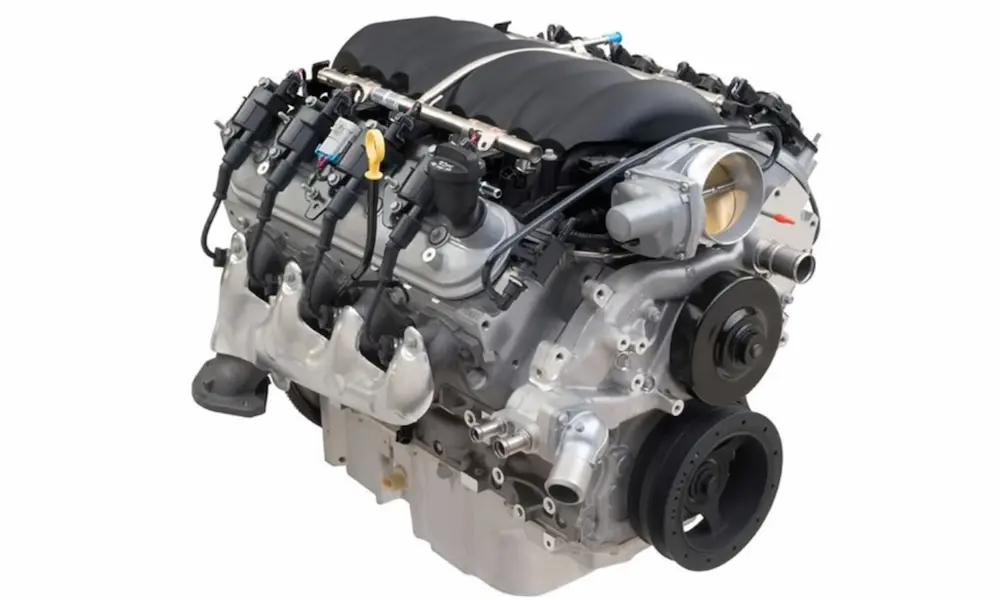
Your Chevy 350 feels sluggish, knocks under load, or chugs at idle? Bad timing is probably the culprit. Setting the timing on a Chevy 350 isn’t rocket science, but get it wrong and you’re looking at blown bearings or a melted piston. Stick with this guide and you’ll dial it in correctly the first time.
What “Setting Timing” Actually Means
Timing tells your spark plug exactly when to fire during the engine’s compression stroke. Fire too early, and the piston fights the explosion on its way up — that’s the knocking you hear. Fire too late, and you waste energy as heat out the exhaust.
The Chevy 350 measures this in degrees of crankshaft rotation before the piston hits Top Dead Center (TDC). That’s why you’ll hear terms like “10 degrees BTDC” — it means the spark fires 10 degrees before the piston reaches the top.
As engine speed climbs, the pistons move faster but combustion speed stays roughly the same. So the spark needs to fire earlier at high RPM. That’s what the advance systems handle — more on those shortly.
Tools You Need Before You Start
Don’t grab a random socket set and wing it. The Chevy 350’s distributor sits at the back of the engine block, jammed between the intake manifold and the firewall. Access is genuinely awkward.
Here’s what you actually need:
| Tool | Purpose |
|---|---|
| Offset distributor wrench (1/2″ & 9/16″) | Reaches the hold-down bolt in tight spaces |
| Inductive timing light (dial-back style) | Reads timing marks on the spinning balancer |
| Vacuum gauge | Fine-tunes idle and confirms advance |
| 3/8″ drive ratchet | Works with the distributor wrench |
| Piston stop tool | Verifies true TDC |
| Small rubber cap or golf tee | Plugs the vacuum advance port |
A dial-back timing light is worth the extra money. It lets you dial in a number on the light itself so the zero mark on your balancer aligns with the pointer — giving you a direct digital readout of total advance. That’s essential once you start tuning.
Safety First — Seriously
You’re working on a running engine with a spinning fan, rotating harmonic balancer, and high-voltage ignition wires. Keep loose clothing and hair clear of the fan and belts. Wear safety glasses — oil spray is no fun in the eyes.
If you’re in California, New York, or Virginia, heads up: ignition timing directly affects your emissions test results. Advancing timing too far spikes nitrogen oxide output. Check the white Vehicle Emissions Control Information sticker under your hood for your legal timing spec before you touch anything.
Step 1: Verify True Top Dead Center
Before you set anything, confirm the TDC mark on your harmonic balancer is actually accurate.
Here’s the problem: the harmonic balancer has an inner hub and an outer ring bonded by rubber. After decades of heat cycles, that rubber degrades and the outer ring slips. When it does, your timing mark lies to you every single time.
How to check it:
- Thread a piston stop tool into the Number 1 spark plug hole
- Rotate the engine by hand until the piston touches the stop — mark that spot on the balancer
- Rotate the engine the other direction until the piston touches the stop again — mark that spot too
- Find the exact midpoint between those two marks
That midpoint is true TDC. If the factory groove doesn’t line up, scratch a new mark with a hacksaw or dab it with bright paint. Every timing adjustment you make depends on this being correct.
Step 2: Static Timing — Getting the Distributor In Right
Static timing happens before the engine starts. You’re setting the physical relationship between the distributor and the crankshaft.
Here’s the process:
- Rotate the engine until cylinder Number 1 is at the top of its compression stroke — not the exhaust stroke. Put your finger over the plug hole while someone bumps the starter. You’ll feel air pressure pushing out when it’s compression.
- Align the timing mark to 10 degrees BTDC on the timing tab
- Apply engine oil or break-in lube to the distributor gear before dropping it in
- Point the rotor slightly counterclockwise of the Number 1 cap terminal — the helical gear will twist it into position as it seats
| Step | What to Do | Why It Matters |
|---|---|---|
| Find #1 compression stroke | Feel for air pressure at plug hole | Distinguishes compression from exhaust stroke |
| Set balancer to 10° BTDC | Align mark to timing tab | Establishes your firing baseline |
| Lube the gear | Oil or break-in lube on distributor gear | Prevents wear on first startup |
| Aim rotor counterclockwise | Point slightly before #1 terminal | Helical gear corrects position on drop |
| Confirm rotor position | Rotor should point at #1 terminal | Verifies correct tooth mesh |
Stuck distributor problem: If it won’t drop fully and hovers about a quarter inch high, the oil pump drive shaft tang isn’t aligned with the distributor slot. Apply light downward pressure and have someone briefly bump the starter. The camshaft rotation will spin the distributor shaft until the slot engages and the unit drops into place. Check that the rotor points at the Number 1 terminal once it seats.
Step 3: Wire It Up — Firing Order Matters
The Chevy 350 fires in this order: 1-8-4-3-6-5-7-2, with the distributor rotating clockwise.
Cylinder layout:
| Bank | Cylinders (Front to Rear) |
|---|---|
| Driver’s Side (Left) | 1, 3, 5, 7 |
| Passenger Side (Right) | 2, 4, 6, 8 |
One wiring issue trips people up constantly: cylinders 5 and 7 fire back-to-back in the firing order and sit right next to each other on the block. If their plug wires run parallel for any distance, the magnetic field from the Number 5 wire can induce a false spark in the Number 7 wire. That’s called cross-firing, and it causes a rough, stumbling idle.
Keep those two wires separated. Where they have to cross, run them at a 90-degree angle. Use plastic wire looms to hold them apart.
Step 4: Dynamic Timing — Setting Initial Advance
Now the engine’s running and warmed up. This is where you dial in the actual timing.
Before you touch anything:
- Disconnect the vacuum advance hose from the distributor
- Plug that port with a rubber cap, small bolt, or a golf tee
- Let the engine idle and stabilize
For most stock Chevy 350s, aim for 8 to 12 degrees BTDC at idle. Performance builds with bigger camshafts may need 14 to 16 degrees to idle cleanly.
To adjust: loosen the distributor hold-down bolt just enough to rotate the housing by hand.
- Rotate against rotor direction (counterclockwise): advances timing
- Rotate with rotor direction (clockwise): retards timing
Snug the bolt when you hit your target, then recheck with the timing light. The distributor can shift slightly when you tighten it.
Step 5: Total Timing and the Mechanical Advance Curve
Initial timing is only part of the story. As RPM climbs, mechanical advance weights inside the distributor add more timing — typically starting around 1,500 RPM and maxing out near 2,800 to 3,000 RPM.
Total timing = initial timing + full mechanical advance
For a stock iron-head Chevy 350, the sweet spot is 36 degrees BTDC total. Vortec-head engines run cooler combustion chambers and often peak at 32 to 34 degrees.
To check total timing:
- Use your dial-back timing light with vacuum advance still disconnected
- Rev to 3,000 RPM and hold it until the timing mark stops moving
- Read the total advance off the light
If you’re reading 40 degrees and want 36, rotate the distributor clockwise to retard initial timing by 4 degrees. Recheck total timing after every adjustment.
| Advance Type | Typical Range | What It Controls |
|---|---|---|
| Initial Timing | 10° – 15° | Idle quality, cold start behavior |
| Mechanical Advance | 18° – 22° | High-RPM power and torque |
| Vacuum Advance | 10° – 15° | Cruising economy and light-throttle response |
| Total (WOT) | 34° – 36° | Maximum output without detonation |
Step 6: Vacuum Advance — Don’t Skip This
Vacuum advance adds 10 to 15 degrees of timing during light-load cruising when manifold vacuum is high. At partial throttle, your air-fuel mixture is lean and burns slowly, so it needs extra timing to fully combust before the exhaust valve opens.
You’ve got two vacuum sources to choose from:
- Manifold vacuum (below the throttle plates): active at idle and cruise. Better for performance street engines — helps the engine run cooler and smoother at idle
- Ported vacuum (above the throttle plates): zero signal at idle, only activates with throttle. Was standard in 1970s emissions-era vehicles to keep exhaust temps up at idle
For most carbureted street builds today, manifold vacuum is the better choice. It improves fuel economy, reduces heat, and makes the engine feel crisper on light throttle inputs.
Setting Timing on TBI Engines (1987–1995)
Throttle Body Injection Chevy 350s handle timing differently. The ECM controls advance once the engine runs, but you still set base timing manually through the distributor.
The key step: find the Set Timing connector — a single tan wire with a black stripe, usually near the passenger-side firewall or under the dash. Unplug it before you start.
With that wire disconnected, the computer drops into base mode and stops fighting your adjustments. Set the distributor to 0 degrees TDC, or whatever your emissions sticker specifies. Tighten the distributor, shut the engine off, then reconnect the tan wire. The ECM takes back over from there.
Troubleshooting Common Timing Problems
| Symptom | Likely Cause | Fix |
|---|---|---|
| Timing mark jumps at steady RPM | Worn timing chain | Replace chain and gear set |
| Hard to start when hot | Initial timing too advanced | Retard initial by 2–4 degrees |
| Off-idle stumble or hesitation | Distributor gear backlash | Inspect and replace distributor gear |
| Correct timing causes poor power | Slipped harmonic balancer | Verify TDC with piston stop; remark balancer |
| Rough idle that timing can’t fix | Vacuum leak | Plug all ports, check for steady vacuum reading |
One more thing worth knowing: if your engine uses a high-pressure oil pump, it puts extra load on the distributor shaft that drives it. A melonized distributor gear handles that stress far better than a standard gear, especially with a steel performance camshaft. If you’re replacing the gear anyway, it’s a cheap upgrade that prevents headaches later.
Now take it for a drive. If it pulls strong, idles clean, and doesn’t knock under load — you nailed it.