That “Emission System Problem” message on your Honda Accord’s dashboard is one of those warnings you don’t want to ignore. It could be something minor, or it could be the start of a costly repair spiral. This guide breaks down exactly what causes it, what the warning lights mean, and how much you’re likely to pay to fix it.
What Does “Emission System Problem” Actually Mean?
Your Accord’s powertrain control module (PCM) runs constant self-checks called readiness monitors. These tests watch components like the oxygen sensors, catalytic converter, and evaporative system. When something falls outside the acceptable range, the PCM logs a fault code and triggers a warning.
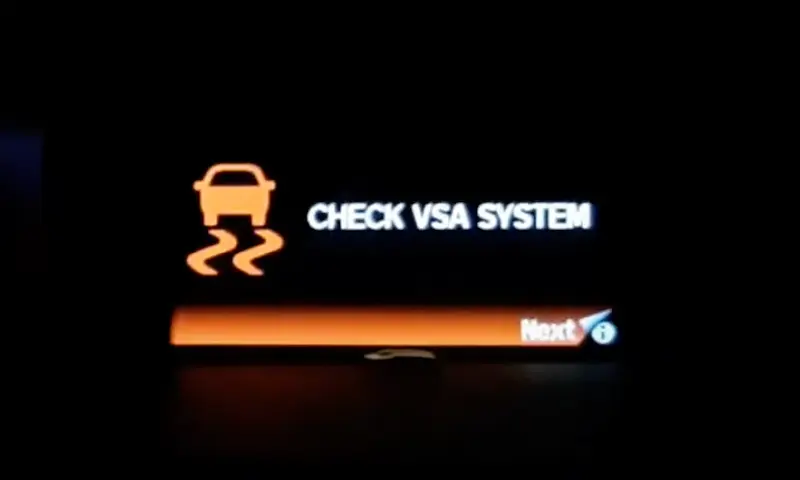
The “Emission System Problem” message is specific — it points to the clean-air components or fuel system, not a general engine fault. Think of it as your car telling you it’s failing its own internal smog test.
Reading the Warning Lights: What Each One Means
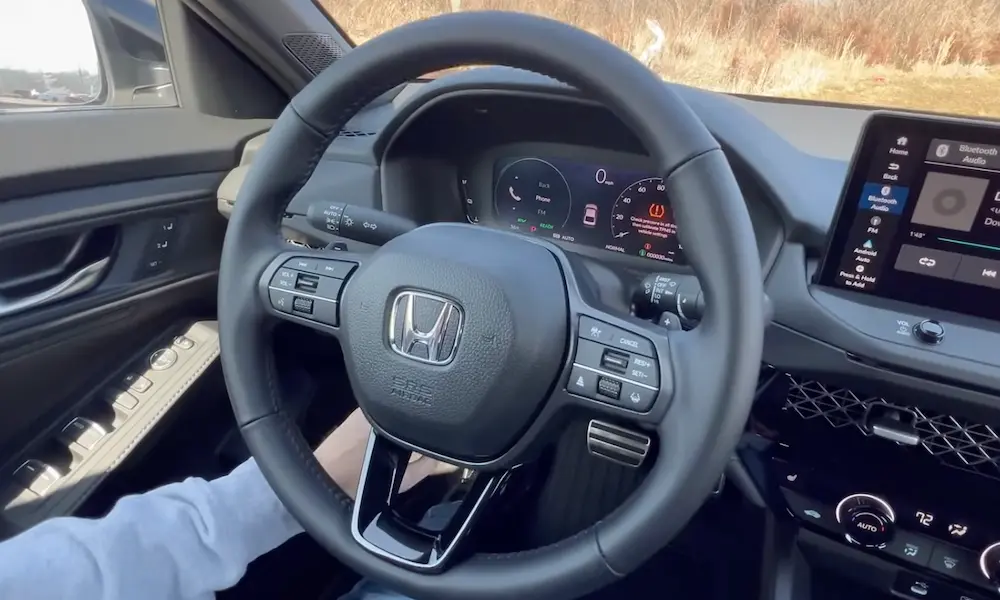
Not all warning lights carry the same urgency. Here’s how Honda communicates the severity of the fault:
| Indicator State | What It Means | What You Should Do |
|---|---|---|
| Solid yellow check engine | Non-critical fault detected | Schedule a diagnostic soon |
| Blinking yellow check engine | Severe misfire dumping raw fuel into exhaust | Pull over safely, turn off engine |
| Solid red warning | Major system failure | Stop immediately — unsafe to drive |
| Text: “Emission System Problem” | Fault in clean-air or fuel components | Avoid hard acceleration, get it inspected |
| Text: “Power May Be Reduced” | Vehicle entered limp mode | Drive slowly to a safe location |
A blinking check engine light is the one you really don’t want to ignore. A severe misfire can destroy your catalytic converter within a few miles, turning a few-hundred-dollar repair into a few-thousand-dollar one.
10th Gen Accord (2018–2022): The Fuel Injector Problem
The 2018–2022 Accord’s 1.5-liter and 2.0-liter turbocharged engines use direct injection — fuel is sprayed directly into the combustion chamber at extreme pressure. It’s efficient, but the injectors have a documented failure pattern that Honda acknowledged through technical service bulletins filed with NHTSA.
The failure usually starts with internal wear or debris from the high-pressure pump entering the injector body. A worn injector leaks fuel when it should be sealed, creating a “rich” condition — too much fuel, not enough air for clean combustion.
Here’s what that looks like in diagnostic codes:
| Code | Symptom | What’s Happening |
|---|---|---|
| P0300–P0304 | Shaking at idle, hesitation | Misfire from inconsistent fuel spray or fouled plugs |
| P0172 | Poor fuel economy | Leaking injector dumping excess fuel |
| P219A | Rough engine operation | Air-fuel ratio variation between cylinders |
| P0420 | Rotten egg smell | Catalytic converter overwhelmed by unburned fuel |
One tell-tale sign of injector failure: your oil level reads higher than normal and smells like gasoline. That’s excess fuel washing down the cylinder walls and contaminating the crankcase. If you’re seeing P0172 on a 2018–2022 Accord 1.5T, this is the likely culprit.
Good news — Honda extended the warranty on certain fuel injector failures to 10 years or 150,000 miles. That’s well beyond the standard 3-year/36,000-mile bumper-to-bumper coverage. Check your eligibility at a dealer before paying out of pocket.
Head Gasket Failure on the 1.5T: A Slower Problem
Between 60,000 and 100,000 miles, the 1.5-liter turbo has shown increased susceptibility to head gasket failure. When the gasket breaches, coolant enters the combustion chamber and gets burned during the combustion process.
This hits the emission system two ways:
- Coolant in the cylinder causes misfires, which triggers the “Emission System Problem” light
- Coolant residue coats the oxygen sensors and catalytic converter, poisoning them and permanently reducing their efficiency
Watch for rough cold starts, white smoke from the exhaust, or a sweet smell coming from the engine bay. Catching this early saves you from replacing both the gasket and the catalytic converter. There’s even an active class action discussion around 1.5T head gasket failures worth keeping an eye on.
11th Gen Accord (2023–2025): The Fuel Pump Recall You Need to Know About
The 11th generation brought refined hybrid systems, but it also brought a serious safety recall. In late 2024, American Honda issued a stop-sale and safety recall (NHTSA Campaign 24V763) for 2023–2024 Accords.
The issue: an improperly manufactured high-pressure fuel pump that can develop internal cracks. Those cracks let liquid fuel and vapors escape the housing. Since the emission system is a closed loop designed to contain all fuel vapors, any leak immediately triggers the “Emission System Problem” warning.
The primary symptom beyond the warning light is a strong gasoline smell inside the cabin or near the front of the vehicle after driving. Honda’s fix involves a specialized hydrocarbon detector — an electronic sniffer that catches raw fuel particles even when there’s no visible leak. This matters because hairline fractures in the pump housing are a fire risk.
If you own a 2023 or 2024 Accord, check your VIN at NHTSA’s recall database. This repair is free.
A separate 2025 recall also addressed fuel injection software on roughly 295,000 vehicles. Improper programming caused the engine to misinterpret sensor data during sudden throttle changes, leading to hesitation or stalling — both of which spike emissions during the stumble.
EVAP System Failures: The Sneaky Culprit
A big chunk of “Emission System Problem” warnings trace back to the evaporative emission (EVAP) system. Its job is to capture gasoline vapors from the fuel tank, store them in a charcoal canister, and route them into the engine to be burned. When any part of that loop leaks, the PCM flags it.
Honda’s capless fuel filler removed the traditional gas cap — which used to be the most common cause of a check engine light. Now, a series of mechanical flaps and rubber seals handle the seal. Dirt or debris on those seals can cause:
- P0455 — Large EVAP leak
- P0456 — Very small EVAP leak
The 2018–2022 Accord has a specific failure point: the fuel filler neck tube can separate from the pipe or develop micro-cracks. What used to be a $10 gas cap fix can now mean replacing the entire filler pipe assembly, which involves pulling the wheel well liner.
Beyond the filler neck, two valves manage vapor flow:
- Purge valve (engine bay): If it sticks open, it creates a constant vacuum leak and a rich condition
- Vent valve (near the canister): If it fails to close during self-tests, the PCM assumes there’s a fuel tank leak
One easy prevention tip: don’t top off your tank after the pump clicks. Over-filling pushes liquid fuel into the charcoal canister, which isn’t designed to handle it and will eventually fail.
How Technicians Actually Diagnose This
When your Accord arrives at a shop with an emission warning, the diagnostic process follows a structured path. Here’s what’s actually happening:
OBD-II scan and freeze frame data — A basic scanner reads codes, but professional tools like Honda’s i-HDS pull “freeze frame” data showing the exact engine conditions when the fault occurred. Technicians also check readiness monitors to confirm whether the fault is current or was recently cleared without a real fix.
Smoke testing — For leaks too small to see, a smoke machine pumps visible vapor into the fuel or intake system. Cracks in hoses, failed seals, or a leaking filler neck show up immediately as smoke billowing from the breach.
Active testing — Modern scan tools can command the vehicle’s computer to operate individual parts while the engine runs. A technician can open and close the purge valve remotely and watch whether the oxygen sensors react. No reaction means the valve is stuck or the line is blocked.
Hydrocarbon detection — Specific to the 11th gen fuel pump recall, this electronic sniffer catches raw fuel particles that a smoke machine would miss entirely.
Limp Mode: Why Your Accord Suddenly Lost Power
If your Accord suddenly feels sluggish and won’t accelerate past 30–50 mph, it’s entered limp mode. This isn’t a failure — it’s a protective strategy built into the PCM.
| Limitation | What It Means |
|---|---|
| RPM ceiling (2,000–3,000 RPM) | Prevents high loads on a struggling engine |
| Speed cap (30–50 mph) | Gets you to safety without highway use |
| Gear locking (2nd or 3rd) | Limits torque and high-speed travel |
| A/C disabled | Reduces parasitic load on the engine |
Limp mode activates when sensors detect conditions that could cause catastrophic damage — extreme overheating, a massive fuel leak, or a severe misfire. Drive slowly to a repair facility, and if the check engine light is blinking, get it towed instead.
What Repairs Actually Cost
Repair costs vary widely depending on what failed and how long it takes to access it. Here’s a realistic breakdown for U.S. dealership rates (typically $150–$200/hour):
| Repair | Part Cost (OEM) | Labor | Total Estimate |
|---|---|---|---|
| Diagnostic fee | — | 1 hour | $60–$130 |
| Oxygen sensor | $150–$350 | 1 hour | $210–$550 |
| EVAP purge valve | $80–$150 | 0.5 hours | $150–$300 |
| Fuel injector kit (4) | $700–$900 | 3–5 hours | $1,200–$1,900 |
| Catalytic converter | $1,500–$2,700 | 2–4 hours | $1,800–$3,500 |
| Fuel filler pipe | $200–$400 | 1.5–2.5 hours | $450–$900 |
| Head gasket | $400–$700 | 10–15 hours | $2,500–$4,500 |
Before you authorize any repair, check two things. First, the Federal Emission Warranty covers the catalytic converter and PCM for 8 years or 80,000 miles on most vehicles. Second, Honda’s voluntary warranty extensions for the 10th gen — including that 10-year/150,000-mile injector coverage — can save you thousands. A dealer can confirm your eligibility in minutes.
The Smog Check Problem
In states like California that require periodic smog checks, an illuminated “Emission System Problem” light is an automatic failure. But here’s the part most people don’t know: clearing the codes with a scan tool or disconnecting the battery doesn’t fix this. The readiness monitors will show as “incomplete,” and you’ll still fail the test.
The vehicle needs to complete a specific drive cycle — a sequence of starts, stops, and highway speeds — to let the PCM verify all emission components are working. Only then will the monitors show “ready” and allow the car to pass.
If you fail a smog check, you can’t legally register the vehicle until it passes a re-test. Some states offer financial assistance for emission repairs to qualifying low-income residents through consumer assistance programs, so it’s worth checking with your state’s Bureau of Automotive Repair if cost is a barrier.
Simple Habits That Prevent Emission Problems
Most emission failures aren’t random — they’re predictable. A few habits go a long way:
- Use Top Tier gasoline. It contains higher detergent concentrations that keep direct injection fuel injectors clean and reduce carbon buildup
- Change your oil on schedule, especially if you drive short distances in cold weather. The 1.5T is prone to oil dilution, and contaminated oil accelerates wear throughout the engine
- Don’t top off your tank after the pump clicks. That extra fuel damages the charcoal canister over time
- Check your air filter regularly. A clogged filter throws off the air-fuel mixture and can trigger emission codes
- Watch for rodent damage. In suburban and rural areas, rodents chew through the soy-based wiring insulation on emission system components. It’s more common than you’d think, and the resulting intermittent faults are expensive to track down