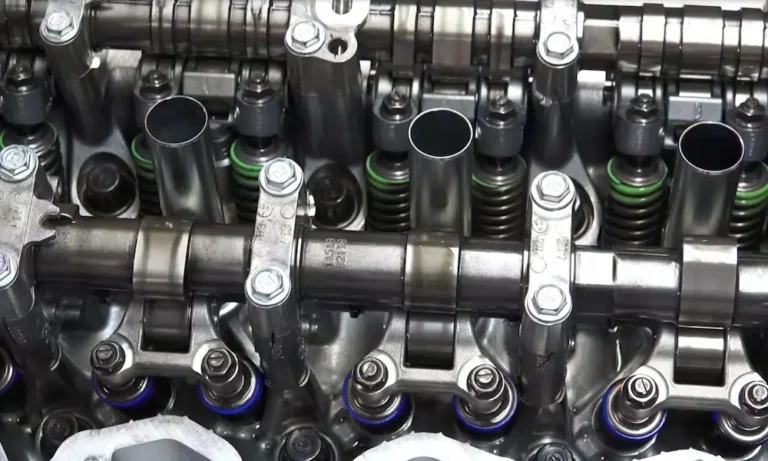
Ever wondered why some Honda engines feel like they have a secret turbo button around 4,500 RPM? Or why newer models seem to have smoother power delivery? The answer lies in Honda’s innovative VTEC and i-VTEC technologies. These systems have defined Honda’s engineering excellence for decades, but they’re quite different under the hood. Let’s dive into what makes each unique and which might be right for your driving style.
What Are VTEC and i-VTEC?
VTEC (Variable Valve Timing and Lift Electronic Control) and i-VTEC (intelligent VTEC) are Honda’s proprietary valve control systems that optimize how engines breathe. While traditional engines use fixed camshaft profiles, Honda’s systems can adjust valve operation based on driving conditions.
Think of VTEC as having two engines in one: an efficient, tame engine for daily driving and a high-performance engine that kicks in when you push the gas pedal. i-VTEC takes this concept further with continuous adjustments rather than just an on/off switch.
The Evolution from VTEC to i-VTEC
VTEC: Honda’s Original Game-Changer
Honda introduced VTEC in 1989, revolutionizing engine performance. The original VTEC system solved a fundamental problem: low-RPM efficiency versus high-RPM power.
VTEC works through:
- Two distinct cam profiles (low-lift and high-lift)
- Hydraulically operated switching mechanism
- RPM-based activation (typically around 4,500-6,000 RPM)
The B16A engine in the Acura Integra GS-R demonstrated VTEC’s potential, delivering 160 horsepower from just 1.6 liters—impressive for its time.
i-VTEC: The Intelligent Evolution
In the early 2000s, Honda unveiled i-VTEC, adding Variable Timing Control (VTC) to the mix. This enhanced system offers:
- Continuous adjustment of intake camshaft timing
- Smoother power delivery across all RPM ranges
- Better fuel efficiency and emissions control
The K-series engines (like the K20A in the RSX Type-S) showcase i-VTEC’s capabilities, offering both improved low-end torque and high-RPM power.
Technical Differences: How They Work
VTEC’s Binary Operation
VTEC operates like a two-position switch:
- Low-RPM Mode: Small cam lobes create minimal valve lift and duration, ideal for fuel efficiency.
- High-RPM Mode: At a preset RPM, oil pressure pushes pins that lock the rocker arms to larger cam lobes, dramatically increasing airflow.
This creates the famous “VTEC kicked in, yo!” sensation—a sudden surge of power as the engine transforms its breathing pattern. The B18C1 in the Integra Type R perfectly demonstrates this character.
i-VTEC’s Continuous Adjustment
i-VTEC combines cam profile switching with continuous timing adjustment:
- VTC System: An oil-pressure actuator can advance or retard the intake camshaft by up to 50 degrees relative to the crankshaft
- Optimized Valve Overlap: Continuously adjusting when valves open and close relative to piston position
- Smooth Transitions: Gradual power delivery without the dramatic “on/off” feel of traditional VTEC
This sophisticated system created two distinct i-VTEC variants:
- Economy i-VTEC: Found in engines like the R18, with VTEC only on the intake side
- Performance i-VTEC: Used in Type R engines with dual VTEC operation for both intake and exhaust valves
Performance Comparison
Power Delivery
| Characteristic | VTEC | i-VTEC |
|---|---|---|
| Power Curve | Two distinct power bands with noticeable “step” | Smoother, more linear power delivery |
| Low-End Torque | Weaker (focuses on high-RPM power) | Stronger due to VTC optimization |
| High-RPM Power | Excellent, dramatic power surge | Excellent, with more gradual build-up |
| Peak Power RPM | Typically 7,000-8,000 RPM | Varies by application (5,500-8,000 RPM) |
The 1999 Civic Si with its B16A2 VTEC engine delivered 160 hp but only 111 lb-ft of torque, with much of that coming at high RPM. In contrast, the K20 i-VTEC engines provide similar peak power but with significantly better low and mid-range torque.
Fuel Economy and Emissions
i-VTEC holds a clear advantage here:
- VTEC: Approximately 10% more efficient than non-VTEC engines of similar displacement
- i-VTEC: Up to 15% better fuel economy than comparable VTEC engines
The 2017 Accord’s K24W i-VTEC engine produces about 162 g/km CO2, representing a substantial improvement over earlier VTEC models. This efficiency comes from VTC’s ability to optimize combustion timing across all engine speeds.
Real-World Applications
Notable VTEC Engines
- B16A (1989-2000): Found in Civic Si and Acura Integra, producing up to 160 hp from 1.6L
- B18C (1992-2001): Powered the Integra Type R, making 195 hp in Japanese spec
- H22A (1992-2002): Used in the Prelude, generating 200+ hp from 2.2L
Each of these engines is known for screaming high-RPM performance and a distinctive VTEC engagement that enthusiasts love.
Popular i-VTEC Engines
- K20A/K20Z (2002-present): Powers Civic Si, RSX, and earlier Type R models
- K24Z (2003-present): Found in CR-V, Accord, and later Civic Si models
- L15B Turbo (2016-present): Modern turbocharged i-VTEC in current Civic models
The K-series engines particularly showcase i-VTEC’s versatility, serving everything from economical daily drivers to high-performance Type R models.
Maintenance Considerations
Common VTEC Issues
VTEC systems depend heavily on:
- Oil quality and level: Low oil pressure prevents VTEC engagement
- Clean oil passages: Sludge can block the oil control solenoid
- Proper valve adjustments: More critical due to high-RPM operation
The simpler VTEC system has fewer potential failure points but requires careful maintenance to function properly at high RPM.
i-VTEC Maintenance Needs
i-VTEC introduces additional considerations:
- VTC actuator failures: Common in early K24 engines, causing startup rattle
- Timing chain tensioner issues: More complex timing system requires attention
- Oil control valves: Additional solenoids can fail or clog
The VTC actuator is particularly notorious on some i-VTEC engines, with replacement costs around $300 for parts alone.
Modification Potential
Tuning VTEC Engines
VTEC engines respond well to:
- High-flow intake and exhaust systems
- Higher compression pistons
- Aggressive camshafts with adjusted VTEC engagement points
- Higher redlines (7,500-9,000 RPM)
The B-series and H-series engines have massive aftermarket support, making them popular platforms for naturally aspirated builds aiming for 200+ horsepower per liter.
Enhancing i-VTEC Performance
i-VTEC engines benefit from:
- Aftermarket VTC gears that increase adjustment range
- ECU tuning to optimize VTC timing and VTEC engagement
- Forced induction (turbocharging/supercharging)
- Valvetrain reinforcement for high-RPM use
K-series i-VTEC engines are particularly receptive to forced induction, with 400+ horsepower potential from otherwise stock engines.
Which System Is Better?
The answer depends entirely on your priorities:
Choose VTEC if you value:
- Raw, engaging driving experience with a distinct power surge
- Mechanical simplicity with fewer potential failure points
- Classic Honda character with high-RPM excitement
- Modification potential for naturally aspirated builds
Choose i-VTEC if you prioritize:
- Better day-to-day drivability with stronger low-end torque
- Improved fuel economy and emissions
- Smoother power delivery across all engine speeds
- Modern performance with turbo potential
Both systems represent Honda’s engineering prowess, just with different approaches to the same goal: extracting maximum performance while maintaining efficiency.
The Future of VTEC Technology
While VTEC and i-VTEC have defined Honda performance for decades, the future brings new developments:
- Earth Dreams Technology: Honda’s newest engine family builds on i-VTEC principles
- VTEC Turbo: Combining i-VTEC with turbocharging for efficiency and power
- Hybrid Integration: i-VTEC working alongside electric motors in systems like Sport Hybrid
These technologies continue Honda’s traditions while adapting to stricter emissions requirements and changing consumer preferences.
A Legacy of Innovation
Whether you’re a fan of the raw character of VTEC or the refined nature of i-VTEC, both systems showcase Honda’s commitment to extracting maximum performance from minimal displacement. From humble Civics to screaming Type Rs, these technologies have created some of the most beloved engines in automotive history.
The next time you hear a Honda engine climbing toward redline, listen for that distinctive change in engine note—you’re experiencing one of automotive engineering’s most innovative solutions to the age-old problem of balancing efficiency and performance.