Spotting green puddles under your Jeep? That sweet smell in the cabin? You’re dealing with a coolant leak, and it won’t fix itself. Don’t panic—most Jeep Grand Cherokee coolant leak issues are fixable with the right know-how and a bit of elbow grease.
Why Your Jeep Grand Cherokee Develops Coolant Leaks
Your Grand Cherokee’s cooling system works hard, circulating coolant through dozens of components. Over time, these parts wear out, crack, or simply give up. Here’s what typically goes wrong:
Deteriorated Hoses and Loose Clamps
Rubber hoses don’t last forever. Heat cycles make them brittle, pressure causes bulges, and eventually they crack. The clamps holding them can loosen too, creating gaps where coolant seeps out under pressure.
You’ll often see this problem around the radiator connections, heater core lines, and overflow tank. It’s one of the cheaper fixes, but ignoring it leads to bigger problems.
Cracked Radiator End Tanks
Modern radiators use plastic end tanks that become brittle over time. Temperature swings cause them to crack, especially where the tanks meet the aluminum core. Integrated transmission coolers can also fail, mixing coolant with transmission fluid.
This creates a messy situation that’s expensive to fix if you catch it late.
Failed Water Pump Seals
Your water pump has a “weep hole” at the bottom—it’s supposed to be dry. When you see coolant dripping from this hole, the internal seal has failed. You’ll notice trails of dried coolant under the engine bay.
Water pump failure can happen gradually or suddenly. Either way, it needs immediate attention.
Thermostat Housing Problems
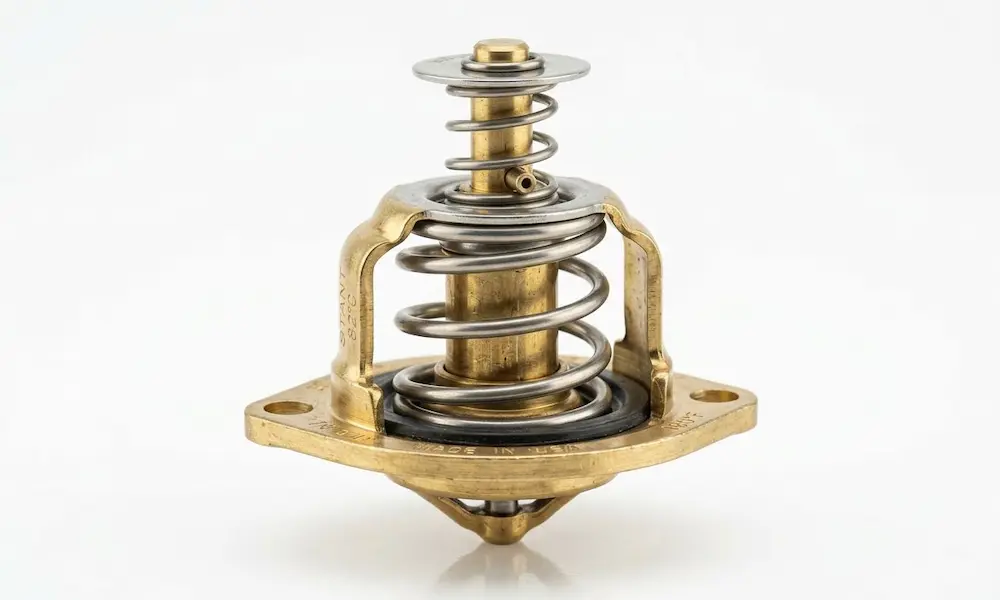
The thermostat housing can crack or its gasket can fail. This creates external leaks and temperature regulation issues. Some Grand Cherokee models use plastic housings that don’t handle heat cycles well.
Heater Core Line Failures
Grand Cherokees from 2011-2017 have a known issue with rear heater hoses breaking at elbows or fittings. These lines run through the firewall, and when they fail, coolant leaks into the plenum cavity.
You’ll smell it before you see it.
Oil Cooler Housing Issues (3.6L Pentastar Engines)
The 3.6L Pentastar engine has a notorious weak point: the plastic intake manifold oil-cooler housing. The figure-8 O-rings deteriorate, causing coolant leaks at the rear of the engine block.
This one’s tricky because the leak happens where you can’t easily see it.
How to Spot a Jeep Grand Cherokee Coolant Leak
Don’t wait for your engine to overheat. These warning signs tell you there’s trouble brewing:
Visual Evidence
Look for colored puddles under your Jeep. Coolant comes in green, pink, or orange, depending on type. Check under the radiator, engine bay, and firewall area. Fresh wet spots or dried residue both indicate active leaks.
Engine Temperature Problems
Your temperature gauge climbing above normal? Warning lights flashing? Rapid temperature rise above 240°F signals insufficient coolant flow. Don’t keep driving when this happens.
Sweet Smell and Fogged Windows
Coolant has a distinctive sweet smell. If you smell it in the cabin or your windows fog up when running the heater, you’ve got a heater core leak.
Mysterious Coolant Loss
Your coolant level keeps dropping but you don’t see puddles? You might have an internal leak. White exhaust smoke or “milkshake” colored oil suggests coolant mixing where it shouldn’t.
Step-by-Step Leak Detection
Finding the exact source saves time and money. Here’s how to track down your Jeep Grand Cherokee coolant leak:
Start with Visual Inspection
Pop the hood when the engine’s cold. Safety first—hot coolant burns. Look at every hose, connection, and housing. Check for dried coolant residue or fresh drips.
Pay special attention to:
- Radiator end tanks
- Water pump weep hole
- Thermostat housing
- Heater core connections
- Overflow tank
Pressure Test the System
A coolant system pressure tester pressurizes your cooling system to manufacturer specs (usually around 15 psi). Watch for pressure drops and trace escaping fluid to its source.
This method reveals leaks that only show up under pressure.
Use UV Dye Detection
Add UV dye to your coolant and run the engine. After it circulates, use a UV lamp to spot exactly where it’s leaking. The dye glows bright under UV light, making even tiny leaks obvious.
Check for Internal Leaks
Suspect a head gasket? Remove spark plugs and look for coolant in the cylinders with a borescope. A cylinder leakdown test can detect combustion gases entering the cooling system.
Fixing Common Coolant Leaks
Once you’ve found the problem, here’s what you’re looking at for repairs:
Hose and Clamp Replacement
What’s involved: Drain the system, replace worn hoses and clamps, refill and bleed air
Time needed: 1-2 hours
Cost range: $150-$300
This is often a DIY job if you’re handy with tools. Use quality hoses and spring clamps for longer life.
Radiator Replacement
What’s involved: Remove front cover panels, disconnect lines, install new radiator
Time needed: 3-4 hours
Cost range: $400-$800
Modern radiators often include integrated transmission coolers. Factor this into replacement costs.
Water Pump Replacement
What’s involved: Remove accessories, replace pump and gasket, check belts
Time needed: 3-5 hours
Cost range: $300-$600
While you’re in there, replace the thermostat too. It’s cheap insurance.
Thermostat Housing Repair
What’s involved: Remove old housing, install new housing and thermostat
Time needed: 1-2 hours
Cost range: $200-$400
Straightforward repair that prevents bigger problems.
Heater Core Line Repair
What’s involved: Remove wiper assembly or plenum cover, replace supply and return lines
Time needed: 2-3 hours
Cost range: $300-$500
Access is the biggest challenge here. Take photos before disassembly.
Oil Cooler Housing Fix (3.6L)
What’s involved: Remove intake manifold, replace housing and O-rings, pressure test
Time needed: 4-6 hours
Cost range: $500-$900
This repair requires intermediate mechanical skills. The intake manifold is heavy and has many connections.
Cost Breakdown by Repair Type
| Repair Type | Parts Cost | Labor Hours | Total Cost Range |
|---|---|---|---|
| Hoses & Clamps | $50-$100 | 1-2 | $150-$300 |
| Radiator | $200-$400 | 3-4 | $400-$800 |
| Water Pump | $100-$200 | 3-5 | $300-$600 |
| Thermostat Housing | $75-$150 | 1-2 | $200-$400 |
| Heater Lines | $100-$200 | 2-3 | $300-$500 |
| Oil Cooler Housing | $200-$350 | 4-6 | $500-$900 |
Labor rates vary by location. These estimates assume $100/hour shop rate.
Preventing Future Coolant Leaks
Smart maintenance prevents most cooling system failures:
Follow Coolant Change Intervals
Replace coolant every 5 years or 100,000 miles. Old coolant loses its protective additives and becomes acidic, eating away at seals and gaskets.
Regular Visual Checks
At every oil change, spend five minutes checking hoses and connections. Catching problems early saves hundreds in repairs.
Use Quality Replacement Parts
Cheap aftermarket cooling parts often fail quickly. Stick with OEM or quality aftermarket brands, especially for plastic components.
Monitor Engine Temperature
Your temperature gauge tells a story. Even slight increases from normal can indicate developing problems. Address them before they become emergencies.
Address Small Leaks Quickly
That tiny drip under your radiator? It’ll become a flood eventually. Small leaks are cheaper to fix than big ones.
What Happens If You Ignore the Problem
Coolant leaks don’t heal themselves. Here’s what you risk by waiting:
Engine Overheating Damage
Running low on coolant causes overheating. Overheating warps cylinder heads, blows head gaskets, and can crack engine blocks. These repairs cost thousands, not hundreds.
Complete Cooling System Failure
One failed component stresses the others. That small radiator leak puts extra pressure on your water pump. The pump fails, taking out your thermostat housing. Suddenly you’re replacing the entire cooling system.
Roadside Breakdowns
Coolant leaks leave you stranded. Overheated engines shut down to prevent damage, and you’re calling for a tow truck instead of driving home.
Tools You’ll Need for DIY Repairs
Basic coolant leak repairs don’t require expensive tools:
- Socket set (metric and standard)
- Screwdriver set
- Pliers
- Drain pan (large capacity)
- Funnel
- Pressure tester (can be rented)
- UV dye kit
- Work gloves
- Safety glasses
For complex repairs like oil cooler housing replacement, you’ll need additional tools and experience.
Safety Reminders
Cooling system work has real hazards:
- Never open the radiator cap on a hot engine
- Coolant is toxic—keep it away from pets and children
- Dispose of old coolant properly at recycling centers
- Wear eye protection when working under pressure
- Support the vehicle properly if working underneath
Making the Repair vs. Replace Decision
Sometimes fixing an old Grand Cherokee doesn’t make financial sense. Consider these factors:
Repair makes sense when:
- Vehicle has under 150,000 miles
- Only one or two components need replacement
- Body and transmission are in good condition
- Total repair cost is under $1,500
Consider replacement when:
- Multiple major cooling components are failing
- Repair costs exceed 50% of vehicle value
- Other major systems need work too
- You’re facing repeat failures
Your Jeep Grand Cherokee coolant leak is fixable, but don’t wait. The longer you drive with low coolant, the more expensive the eventual repair becomes. Start with a visual inspection, identify the source, and tackle the repair before it leaves you stranded. Your engine will thank you, and your wallet will too.