Got a check engine light and a code pointing to your knock sensor? You’re probably wondering how bad this really is. Good news — it’s usually not catastrophic. Bad news — ignoring it can make things worse fast. This guide covers everything you need to know about Kia knock sensor replacement, from symptoms to step-by-step fixes.
What Does a Knock Sensor Actually Do?
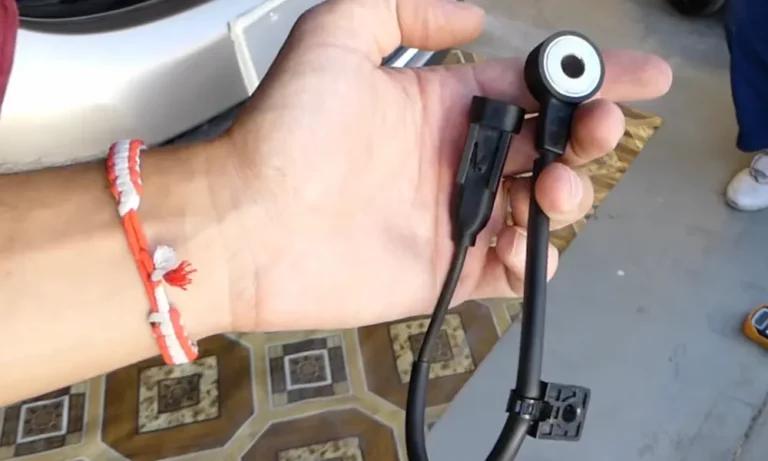
Your Kia’s knock sensor listens for engine knock — that pinging sound caused by fuel igniting at the wrong time. Think of it as a tiny microphone bolted to your engine block.
When it detects knock, it sends a signal to the ECU. The ECU then retards ignition timing to prevent engine damage. Without a working knock sensor, your engine runs blind. It can’t protect itself from detonation, which causes serious internal damage over time.
Common Symptoms of a Bad Knock Sensor on a Kia
You won’t always hear knocking. Sometimes the sensor itself just fails electrically. Here’s what to watch for:
- Check engine light — almost always the first sign
- Reduced power or sluggish acceleration — the ECU enters a protective “limp” strategy
- Poor fuel economy — timing retard burns more fuel
- Rough idle or hesitation — especially under load
- Actual engine knocking or pinging — if it’s gotten this far, act fast
The most common diagnostic trouble codes tied to Kia knock sensor issues are P0325, P0326, P0327, P0328, P0330, and P0332. These point to knock sensor circuit faults or signal range problems.
Which Kia Models Have Knock Sensor Problems Most Often?
Knock sensor failures show up across the Kia lineup, but some models see it more often than others.
| Kia Model | Common Engine | Typical Mileage at Failure |
|---|---|---|
| Kia Sorento | 2.4L, 3.3L, 3.5L | 80,000 – 130,000 miles |
| Kia Sportage | 2.4L GDI | 70,000 – 110,000 miles |
| Kia Soul | 1.6L, 2.0L | 75,000 – 120,000 miles |
| Kia Optima | 2.4L, 2.0T | 80,000 – 125,000 miles |
| Kia Stinger | 2.0T, 3.3T | 60,000 – 100,000 miles |
| Kia Forte | 2.0L | 85,000 – 130,000 miles |
The 2.4L GDI engine found in the Sportage and Sorento is a repeat offender. If you own one of these, it’s worth knowing the knock sensor location before a problem appears.
Where Is the Knock Sensor Located on a Kia?
Location varies by engine, but here’s the general picture:
- 4-cylinder engines (2.0L, 2.4L): Usually mounted on the engine block, beneath the intake manifold. Expect to remove the intake to reach it.
- V6 engines (3.3L, 3.5L): Often located between the cylinder banks, deep in the valley of the engine. These are harder to access and take more time.
- Turbocharged engines (2.0T, 3.3T): Still typically on the block, but turbo plumbing can complicate access.
If you’re not sure where yours sits, your factory service manual or a quick search with your specific engine code will tell you exactly.
Kia Knock Sensor Replacement Cost
Here’s what you’re looking at, broken down honestly:
| Cost Type | DIY | Shop (Labor + Parts) |
|---|---|---|
| Knock sensor (OEM) | $30 – $80 | Included below |
| Knock sensor (aftermarket) | $15 – $45 | Included below |
| Labor (4-cylinder) | $0 | $150 – $300 |
| Labor (V6) | $0 | $250 – $500 |
| Total DIY cost | $15 – $80 | — |
| Total shop cost | — | $200 – $600+ |
V6 engines cost more at the shop because techs often need 2–4 hours of labor just to access the sensor. On a 4-cylinder, it can be a 1-hour job or less.
OEM sensors from Kia or Hyundai are worth the extra money. Cheap aftermarket units sometimes trigger the same codes again within months.
How to Replace a Kia Knock Sensor (Step-by-Step)
This walkthrough covers the most common scenario — a 4-cylinder Kia with the sensor under the intake manifold. Always disconnect the battery before you start.
Tools You’ll Need
- 10mm, 12mm, and 14mm sockets
- Torque wrench
- Ratchet extensions
- Flathead and Phillips screwdrivers
- Needle-nose pliers
- New intake manifold gasket (recommended)
- Dielectric grease
Step 1: Disconnect the Battery
Pull the negative terminal. Give it 10 minutes before you touch anything electrical.
Step 2: Remove the Intake Manifold
This is the biggest part of the job. You’ll disconnect:
- The air intake tube and throttle body hose
- The vacuum lines (photograph them first so you remember where they go)
- The fuel injector connectors
- The PCV hose
- Any wiring harness clips in the way
Unbolt the manifold. Most Kia 4-cylinders use ten to twelve 10mm bolts. Pull the manifold straight up and set it on a clean surface.
Step 3: Locate and Unplug the Knock Sensor
With the manifold out of the way, the knock sensor sits on the engine block. It has a single wire harness connector. Press the tab and pull the connector free.
Step 4: Remove the Old Sensor
Use a 12mm or 14mm socket (depending on your year). Unscrew it counterclockwise. It may be tight from heat cycles — a breaker bar helps here.
Step 5: Install the New Sensor
Thread the new sensor in by hand first to avoid cross-threading. Then torque it to spec. This step matters more than most people realize.
Most Kia knock sensors torque to 17–20 Nm (150–177 in-lbs). Over-tightening changes the sensor’s frequency response and can cause it to send incorrect signals — or trigger the same fault codes you just tried to fix. Check your specific model’s service spec.
Plug in the connector until it clicks. Apply a small amount of dielectric grease to the connector pins to prevent moisture intrusion.
Step 6: Reinstall the Intake Manifold
Use a new gasket here. Old gaskets often leak after being disturbed. Torque the manifold bolts in a cross pattern to the factory spec. Reconnect all vacuum lines, sensors, and the throttle body hose.
Step 7: Reconnect the Battery and Clear Codes
Reconnect the negative terminal. Use an OBD-II scanner to clear the fault codes. Start the engine and let it idle for a few minutes. Check for any new codes or warning lights.
Take it for a short drive with light to moderate throttle. If the light stays off and the car pulls cleanly through the rev range, you’re done.
Can You Drive with a Bad Knock Sensor?
Technically, yes. Practically, you shouldn’t.
Here’s why: the ECU pulls ignition timing back aggressively when it loses confidence in the knock sensor signal. That protects the engine short-term. But it also means you’re running rich, losing power, and wearing things out faster.
If you’re getting actual engine knock alongside the sensor code, stop driving immediately. That means detonation is happening unchecked, and it can destroy pistons, rings, and rod bearings quickly.
Knock Sensor vs. Wiring Harness: Don’t Misdiagnose It
Before you buy a sensor, check the wiring. A P0325 code doesn’t always mean the sensor itself failed. It means the circuit has a problem — and that could be:
- A broken wire in the harness
- A corroded connector
- A loose ground
- A failed sensor
Use a multimeter to test sensor resistance before replacing it. A healthy Kia knock sensor typically reads between 100k and 600k ohms depending on the model. Check your service manual for the exact spec. If resistance is within range and the connector looks clean, trace the wiring back to the ECU before spending money on a part you don’t need.
Knock Sensor Replacement Tips Specific to Kia
A few things that save time and headaches:
- Buy the OEM sensor. Kia knock sensor part numbers vary by year and engine. Cross-reference your VIN on the Kia parts site or at a dealer counter to get the exact unit.
- Replace the harness connector if it looks green or corroded. Kia pigtail repair connectors are inexpensive and widely available.
- On V6 engines, consider doing the job at a shop. The sensor sits deep in the engine valley, and some techs estimate 3–4 hours of disassembly on models like the Sorento 3.5L. The DIY savings may not be worth the frustration without a lift.
- Don’t use anti-seize on the threads. Anti-seize changes the torque reading and can cause you to under-tighten the sensor without realizing it.
- Reset adaptations after the repair. On some Kia models, an idle relearn helps the ECU stabilize after intake work. Disconnect the battery for 15 minutes, then let the car idle for 10 minutes without touching the throttle.
What Happens If You Ignore It Too Long?
The ECU’s timing retard strategy has limits. If knock gets bad enough, or if the sensor completely fails and the ECU can’t compensate, you risk:
- Piston damage from detonation
- Head gasket failure from excess heat
- Bent connecting rods in severe cases
A $30–$80 sensor is cheap insurance against a $2,000–$5,000 engine repair. Fix it sooner rather than later.