Shopping for the right coolant feels simple until you’re standing in the auto parts aisle staring at six different purple and orange jugs. Use the wrong one, and you could end up with a gelled mess clogging your radiator. This guide breaks down every verified MS-90032 coolant equivalent, why the chemistry matters, and how to avoid the costly mistakes most people make.
What Is MS-90032 Coolant?
MS-90032 is Chrysler’s official material standard for an Organic Additive Technology (OAT) engine coolant. Stellantis uses it across the entire modern Chrysler, Dodge, Jeep, and Ram lineup for vehicles built from the 2013 model year onward.
What makes it special? It’s rated for a 10-year or 150,000-mile service interval. That’s three times the life of older coolants. It achieves this through carboxylate-based chemistry that only attacks active corrosion sites instead of forming a thick protective blanket over every surface. This “just-in-time” protection is why the inhibitors last so long.
It’s also strictly NAPS-free: no Nitrites, Amines, Phosphates, or Silicates. That purity is what makes it compatible with the aluminum-heavy engines in modern Stellantis vehicles.
How Chrysler Coolant Standards Evolved
You can’t fully understand MS-90032 without a quick look at what came before it. Chrysler has used three distinct coolant technologies over the decades.
| Specification | Technology | Primary Color | Service Life | Typical Application |
|---|---|---|---|---|
| MS-7170 | IAT (Inorganic) | Green | 2 Years / 30,000 Miles | Pre-2000 Legacy Models |
| MS-9769 | HOAT (Hybrid) | Orange/Yellow | 5 Years / 100,000 Miles | 2000–2012 Models |
| MS-12106 | OAT (Organic) | Purple/Violet | 10 Years / 150,000 Miles | Early 2013+ Transition |
| MS-90032 | OAT (Organic) | Purple/Violet | 10 Years / 150,000 Miles | 2013–Present |
The shift away from HOAT chemistry happened because silicates in those older fluids would drop out of solution over time. That silicate dropout caused abrasive wear on water pump seals and clogged the increasingly narrow passages in modern radiators and heater cores. MS-12106 and MS-90032 are chemically near-identical. MS-90032 is simply the current reference standard in Stellantis service documentation.
The Official Mopar Part Numbers to Know
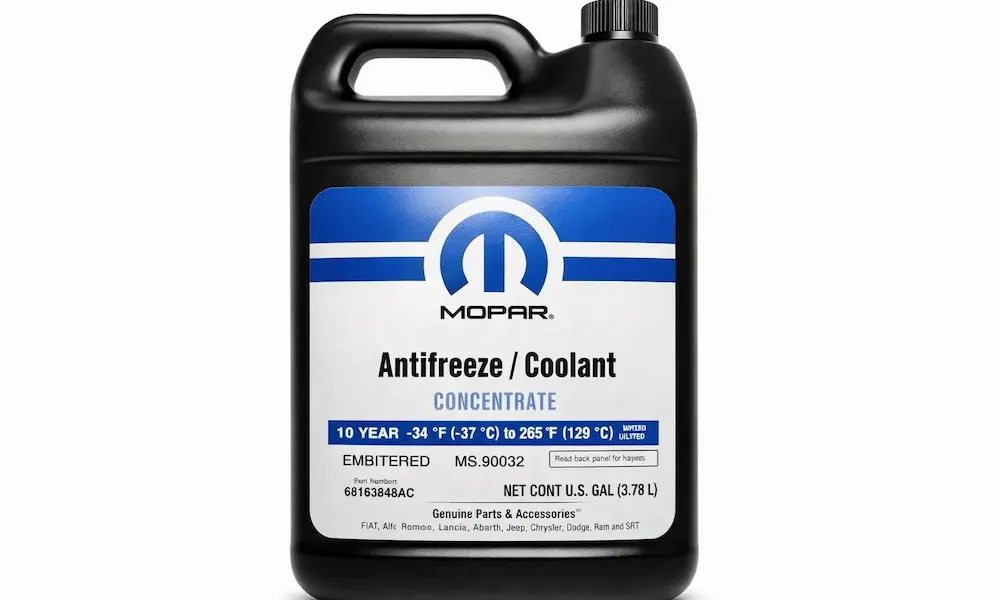
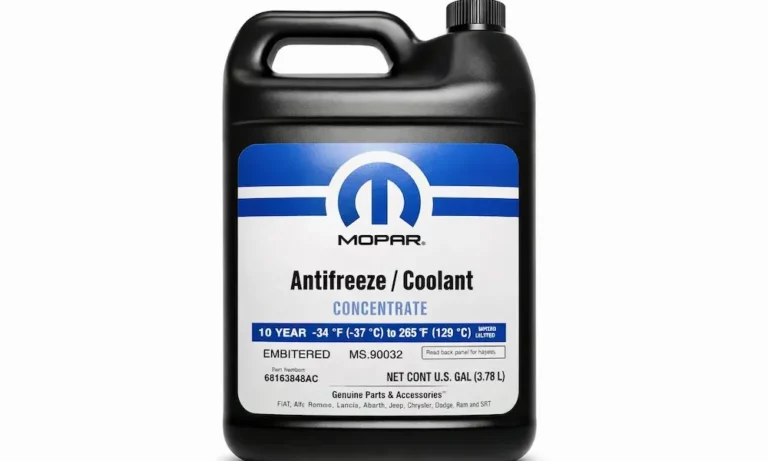
If you want the genuine OEM fluid, Mopar sells MS-90032 under a set of specific part numbers. The revisions (AA, AB, AC) reflect updates to labeling and bitterant concentrations, not major chemistry changes.
Concentrated Fluid (mix 50/50 with distilled water):
| Part Number | Description | Status |
|---|---|---|
| 68163848AA | Concentrate, 1 Gallon | Discontinued |
| 68163848AB | Concentrate, 1 Gallon | Previous Revision |
| 68163848AC | Concentrate, 1 Gallon | Current Standard |
| 68163848GA | Concentrate, 1 Gallon | Global/Export Markets |
Prediluted 50/50 Fluid (ready to pour, don’t dilute further):
| Part Number | Description | Status |
|---|---|---|
| 68163849AA | 50/50 Premix, 1 Gallon | Initial Release |
| 68163849AB | 50/50 Premix, 1 Gallon | Current Revision |
| 68163849GA | 50/50 Premix, 1 Gallon | Global/Export Markets |
The prediluted version is great for topping off or for areas where sourcing distilled water is inconvenient. Just don’t add extra water to it.
MS-90032 Coolant Equivalent Options That Actually Meet the Spec
You don’t have to buy Mopar brand. Several aftermarket products meet the MS-90032 spec — but you need to verify the chemistry, not just the color.
Zerex G30 (Valvoline)
Zerex G30 is the most widely trusted MS-90032 coolant equivalent on the market. It uses the same carboxylate OAT chemistry as Mopar fluid, comes in the same purple color, and explicitly lists MS-12106/MS-90032 compliance. It’s a solid first choice if Mopar isn’t available locally.
The Zerex American Vehicle formula is also OAT, but its inhibitor profile targets a broader range of American vehicles. It works, but technical purists prefer G30 because its chemistry more closely mirrors the European-derived OAT standard Chrysler adopted after the Fiat merger.
Peak OE North American Orange
Peak’s OE North American Orange is an OAT fluid that explicitly lists MS-12106 and MS-90032 among its supported specifications. It’s orange — which is your first reminder that color tells you nothing about chemistry. This is a legitimate equivalent despite not being purple.
Ravenol LTC (Lobrid Technology Coolant)
Ravenol LTC is a German fluid with an interesting nuance. Ravenol calls it a “Lobrid” formulation — it combines a small amount of silicates with OAT chemistry. Despite this, Ravenol officially recommends it for MS-90032 applications. It’s a high-quality option, particularly if you’re sourcing coolant in European markets.
Recochem Turbo Power Extended Life
Recochem Turbo Power is a direct OAT equivalent based on the same Dex-Cool-type chemistry. It explicitly lists Chrysler MS-90032 and MS-12106 compliance. It’s common in Canada and is a straightforward, no-fuss option.
Ridgeline Global Automotive Antifreeze
The Ridgeline Global Automotive Antifreeze comes in yellow — again, proof that color doesn’t equal chemistry. It lists MS-90032 among its supported specs and uses OAT technology.
Quick Comparison:
| Product | Technology | Color | MS-90032 Listed? |
|---|---|---|---|
| Mopar 10-Year | OAT | Purple | ✅ Yes |
| Zerex G30 | OAT | Purple | ✅ Yes |
| Peak OE Orange | OAT | Orange | ✅ Yes |
| Ravenol LTC | Lobrid | Violet | ✅ Yes |
| Recochem Turbo Power | OAT | Orange | ✅ Yes |
| Ridgeline Global | OAT | Yellow | ✅ Yes |
Which Vehicles Need MS-90032?
The 2013 model year is your dividing line. If your Chrysler-platform vehicle was built in 2013 or later, it almost certainly needs MS-90032.
| Vehicle | Engine | Year Range | Spec Required |
|---|---|---|---|
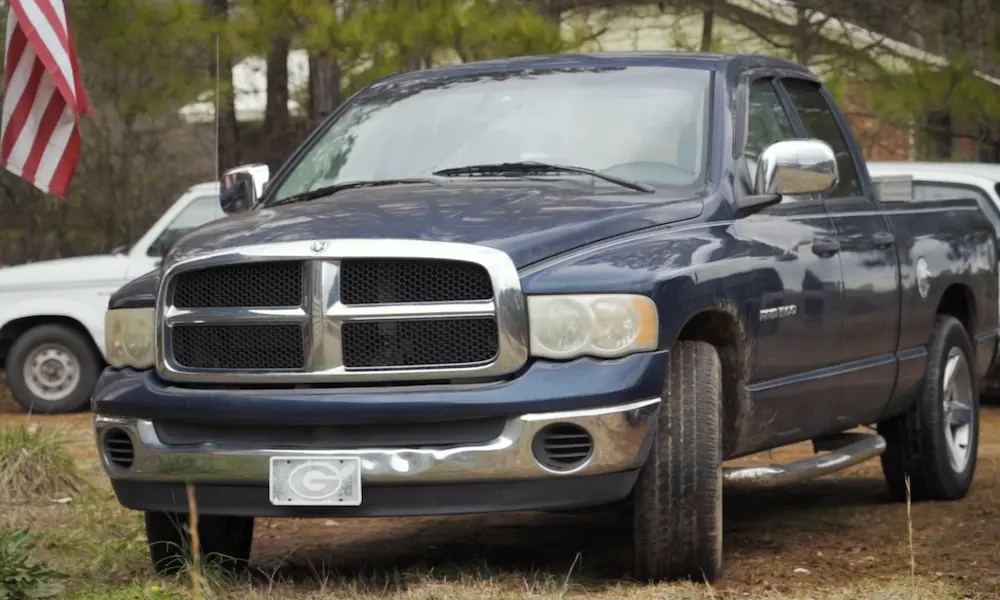
| Ram 1500 | 3.6L Pentastar V6 | 2013–Present | MS-90032 |
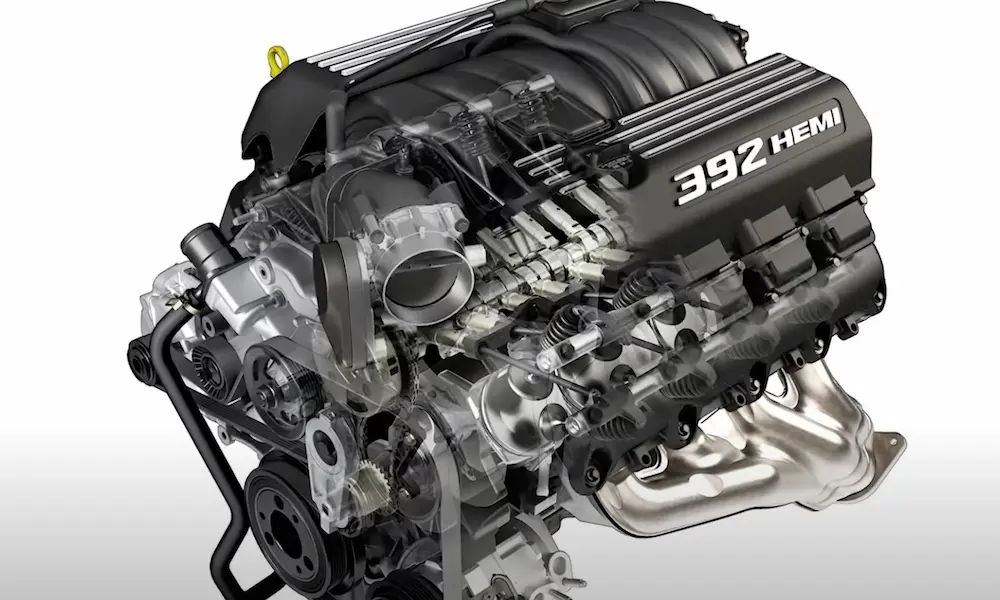
| Ram 1500 | 5.7L Hemi V8 | 2013–Present | MS-90032 |
| Ram 1500 | 3.0L EcoDiesel | 2014–2022 | MS-90032 |
| Ram 1500 TRX | 6.2L Hellcat V8 | 2021–Present | MS-90032 |
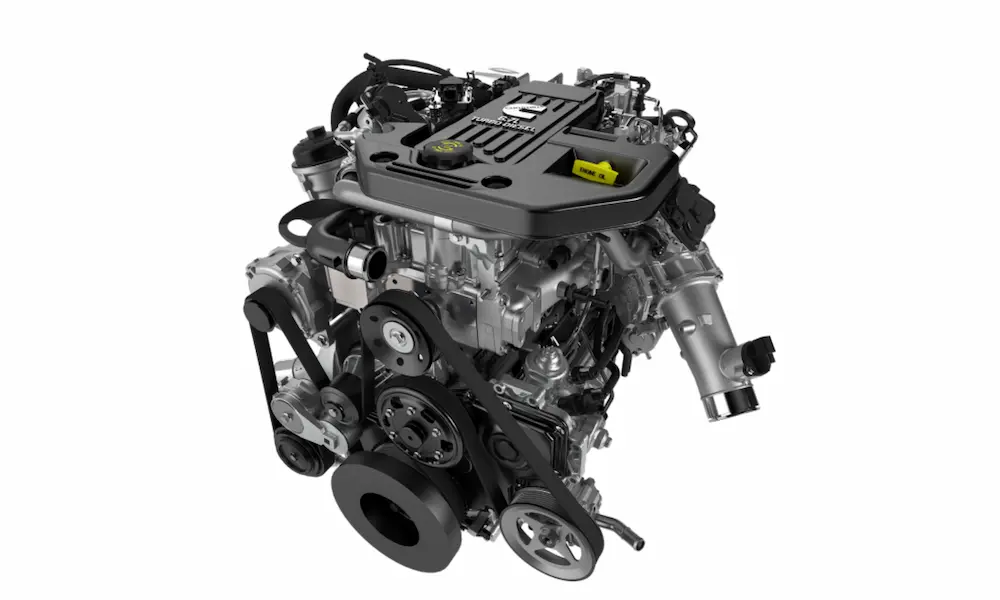
| Ram 2500/3500 | 6.7L Cummins Diesel | 2013–Present | MS-90032 |
| Jeep Wrangler JK/JL | 3.6L Pentastar V6 | 2013–Present | MS-90032 |
| Jeep Grand Cherokee | 3.6L / 5.7L / 6.4L | 2013–Present | MS-90032 |
| Dodge Challenger/Charger | All variants incl. Hellcat | 2013–Present | MS-90032 |
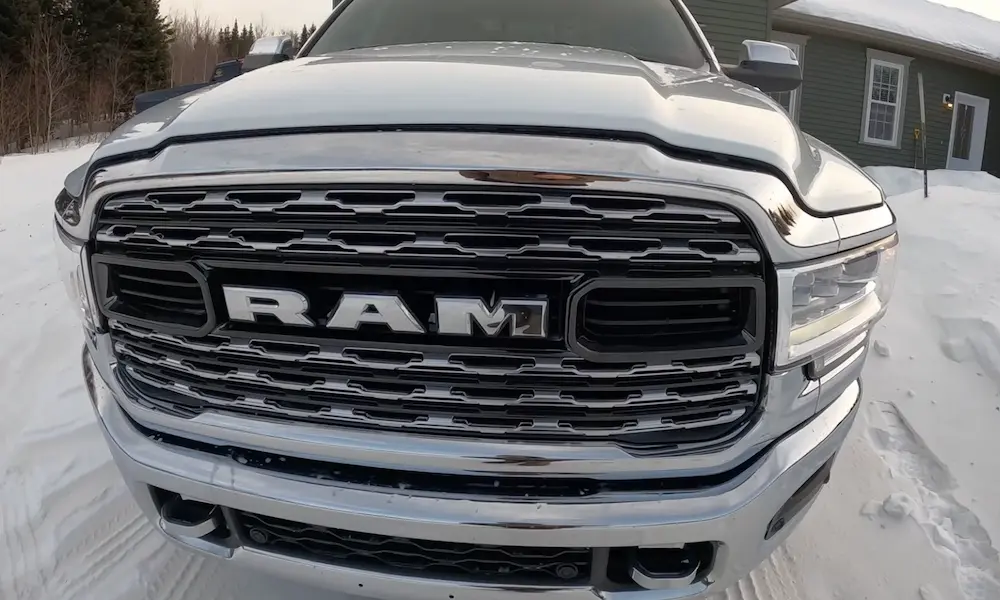
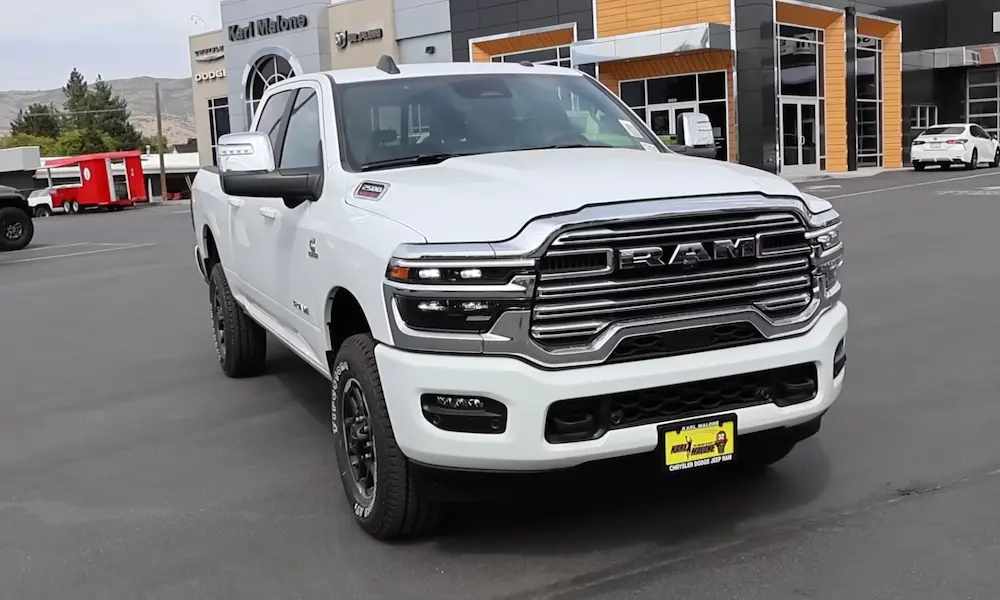
For Ram trucks especially, picking the right coolant is critical. The thermal stress of towing means a bad coolant choice shows up faster and punishes harder.
The Mixing Problem That Destroys Cooling Systems
This is where most coolant mistakes happen. Mixing MS-90032 (OAT) with the old MS-9769 (HOAT) creates a chemistry conflict that can wreck your cooling system.
When carboxylate acids from OAT fluid meet the silicates in HOAT fluid, the silicates can rapidly precipitate out of solution. The result is a gelatinous sludge that flows into the tightest spots first:
- Radiator tubes get blocked, causing localized overheating
- Heater core passages — the smallest in the system — clog completely, killing cabin heat and often requiring full replacement
- Water pump seals get shredded by the abrasive precipitate
The dangerous part? Color won’t save you here. The Mopar HOAT coolant is orange. So is Zerex Dex-Cool — which is OAT. Mixing two orange coolants could be completely safe (OAT + OAT) or catastrophic (OAT + HOAT), depending on the chemistry behind the label. Always check the spec sheet, not the jug color.
Water Quality and Flush Procedures
Use Distilled Water Only
Mopar’s own documentation requires distilled or deionized water when mixing concentrated MS-90032. Here’s why tap water is a bad idea:
- Calcium and magnesium react with organic inhibitors to form hard water scale that insulates radiator tubes and raises engine temps
- Chlorides cause localized pitting in aluminum even when inhibitors are present
- Softened water adds sodium ions that increase conductivity and encourage galvanic corrosion
How to Flush Properly
A drain-and-fill isn’t enough. About 30–40% of your coolant volume stays trapped in the engine block and heater core after you drain the radiator. To do it right:
- Drain the system completely
- Refill with distilled water, run the engine to operating temp with the heater on max
- Repeat until the drained fluid runs clear
- Refill with the correct concentrate-to-water ratio (target 50/50)
- Top off with distilled water only
This process ensures no legacy HOAT inhibitors survive to contaminate your fresh MS-90032.
Signs Your MS-90032 Is Degrading
MS-90032 lasts a long time, but it’s not immortal. Watch for these warning signs:
- pH drift below 7.0 — the fluid turns acidic and starts attacking aluminum. The normal range is 7.5–9.0. Use test strips to check
- Combustion gas contamination — a failing head gasket forces CO2 and NOx into the cooling system, forming carbonic and nitric acids that burn through the inhibitor package fast
- Electrolysis damage — bad electrical grounds can make coolant a return path for stray current, causing severe pitting in your radiator and heater core that no inhibitor can stop
- Oxidation from air leaks — a faulty radiator cap lets oxygen in, turning ethylene glycol into glycolic and formic acids that drop the pH and speed up corrosion
Check your coolant with a refractometer or test strips at least once a year, especially if you tow heavy or run a high-performance engine.