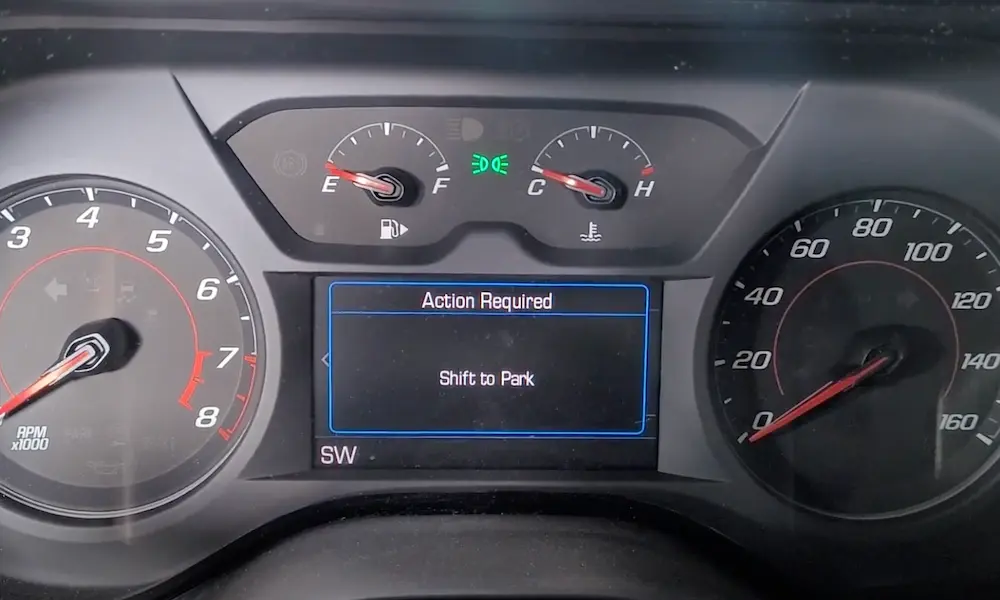
Seeing “Service All Wheel Drive System” flash across your dashboard isn’t fun. Your car’s trying to tell you something’s wrong with how it sends power to all four wheels. Don’t panic—in most cases, you can still drive safely while you figure out what’s happening. Let’s break down what triggers this warning and how to fix it without emptying your wallet.
What Triggers the Service All Wheel Drive System Warning?
Your AWD system isn’t just gears and differentials anymore. It’s a sophisticated network of sensors, computers, and electronic clutches working together to keep you moving.
When you see the “Service All Wheel Drive System” message, your car’s computer has detected something it doesn’t like. Here’s the catch: it’s rarely the actual AWD hardware that’s broken. Instead, you’re usually dealing with a sensor hiccup, wiring issue, or software glitch that’s confusing the system.
Modern AWD systems like those in the Chevy Equinox, GMC Terrain, or Dodge Durango rely on constant data streams from wheel speed sensors, steering angle monitors, and temperature gauges. If any of these inputs go haywire, the computer plays it safe—it shuts down AWD entirely and defaults your vehicle to two-wheel drive.
Think of it like your home security system. One faulty door sensor can trigger the whole alarm, even though your house is perfectly secure. Same principle here.
The Real Culprits Behind AWD System Failures
Wheel Speed Sensors Are Usually the Problem
Here’s something that’ll save you money: about 60% of “Service All Wheel Drive System” warnings trace back to wheel speed sensor issues. These little magnetic sensors sit behind each wheel, counting how fast it’s spinning.
Road salt, ice buildup, and corrosion love to mess with these sensors. If you live anywhere with winter weather, ice can pack into your wheel hub and temporarily block the sensor’s magnetic field. The AWD computer loses that wheel’s speed data and immediately shuts down.
The ABS (anti-lock brake) system uses these exact same sensors. That’s why you’ll often see your ABS light and Stabilitrak warning pop up alongside the AWD message. It’s not three separate problems—it’s one sensor causing a cascade of warnings.
Corroded Wiring and Connection Problems
GM vehicles (Equinox, Terrain, Insignia) have a nasty tendency to develop corrosion at the Rear Differential Control Module. This module sits underneath your car, bolted right to the differential housing. It’s constantly exposed to water spray, road chemicals, and temperature swings.
When moisture sneaks into the electrical connector, you’ll see green crusty buildup on the pins. That corrosion creates electrical resistance, and suddenly the module can’t communicate with the rest of your car’s network. The computer throws a “Lost Communication” code (U0100) and lights up your dash.
Here’s the frustrating part: the differential itself might be perfectly fine. You’re just dealing with a $50 wiring problem that looks like a $600 differential issue.
The Cold Weather Connection
Ever notice the warning appears more in winter? That’s not coincidence. Battery voltage drops when it’s cold, and these AWD control modules are incredibly sensitive to voltage fluctuations.
A battery reading below 12.4 volts can cause the transfer case control module or rear differential module to briefly “brown out” during operation. It sets a false code, triggers the warning, and leaves you scratching your head because everything seems fine once the car warms up.
What Happens When Your AWD System Fails?
You’re Now Driving a Two-Wheel Drive Vehicle
The good news: your car won’t explode or lock up the wheels. The system’s designed to fail safely. When the “Service All Wheel Drive System” warning activates, the electronic clutch that sends power to your rear wheels (or front wheels on RWD-based vehicles) simply disengages.
You’re now driving a front-wheel-drive Equinox or a rear-wheel-drive Durango. The car will move, steer, and brake normally under most conditions.
The bad news: you’ve lost a significant safety margin. That rainy highway merge where you’d normally punch the gas? Prepare for wheel spin and torque steer instead. Your winter driveway that was manageable before? You might not make it up this time.
Stability Control Often Goes Offline Too
Because the AWD fault is frequently linked to ABS sensor problems, your Electronic Stability Control (ESC or Stabilitrak) probably isn’t working either.
ESC automatically brakes individual wheels to correct skids. Without it, your car won’t help you during emergency lane changes or sudden swerves. The physics of the turn are entirely on you now—no computer assistance.
This isn’t a “pull over immediately” situation, but it does mean you need to drive more conservatively until you get it fixed. Leave extra following distance. Slow down in curves. Skip aggressive lane changes.
Some Features Get Locked Out Completely
If you’re driving a Dodge Durango or Jeep Grand Cherokee, the “Service All Wheel Drive System” warning disables several features. You can’t select Low Range for off-roading. The neutral shift procedure for flat-towing won’t work (and towing anyway could destroy your transfer case).
On newer vehicles with Adaptive Cruise Control, that feature might shut down too. The car’s logic is simple: if it can’t manage traction properly, it won’t risk automated acceleration events.
Diagnosing the Problem: Why Your Check Engine Scanner Won’t Help
Here’s where most DIYers get stuck. You grab your trusty $30 OBD-II scanner from the glove box, plug it in, and… nothing. No codes. No explanation.
That’s because the “Service All Wheel Drive System” warning doesn’t necessarily trigger powertrain codes (P-codes). The actual fault is stored as:
- C-codes (chassis systems)
- U-codes (network/communication errors)
- B-codes (body control modules)
Your basic scanner can’t see these. You need a tool that can interrogate the ABS module, the Rear Differential Control Module, and the Transfer Case Control Module. Without full-system scanning capability, you’re guessing.
The Diagnostic Sequence That Actually Works
Start with the battery. Test voltage with the engine off (should read 12.6V or higher) and with the engine running (13.8-14.4V). A weak battery or corroded ground strap causes phantom electrical gremlins that’ll make you replace parts you don’t need.
Extract codes from ALL modules. Don’t just scan the engine computer. Pull codes from the ABS module, body control module, and AWD-specific controllers. Look for patterns:
| Code Type | What It Means | First Check |
|---|---|---|
| C0035-C0050 | Wheel speed sensor circuit | Inspect sensor wiring at affected wheel |
| U0100, U0102 | Lost communication with module | Check connector corrosion at rear differential/transfer case |
| C056D (GM specific) | Internal control module fault | Check for software updates before replacing hardware |
| P0D22 (EV models) | High-voltage charging system | Requires dealer diagnostics for HV safety |
Inspect the obvious stuff. Jack up the car and look at the rear differential module connector (GM) or transfer case connector (Dodge/Jeep). Pull the connector apart and inspect for green corrosion, pushed-out pins, or water intrusion. Look for damaged wiring from road debris or rodent chewing.
Monitor live data. With the vehicle running and wheels off the ground (safely supported), watch the wheel speed sensor readings. All four should match when spinning at the same rate. Even a 2-3 mph variance is enough to trigger a fault.
Common Fixes and What They’ll Cost You
The Cheap Fix: Wheel Speed Sensors
If you’re lucky, you’ve got a failed wheel speed sensor. The part typically costs $40-$100, and replacement is straightforward—remove the wheel, unbolt the sensor, plug in the new one.
Total cost if you DIY: $50-$150
Total cost at a shop: $150-$300
This fixes about 40% of “Service All Wheel Drive System” warnings, especially on higher-mileage vehicles or those in rust-belt states.
The Medium Fix: Wiring Repair
Corroded connectors at the control module can often be cleaned, dried, and treated with dielectric grease. If the wiring harness itself is damaged, you’re looking at a repair or replacement section.
Total cost for connector service: $100-$200
Total cost for harness repair: $200-$400
The Expensive Fix: Control Module Replacement
When the Rear Differential Control Module (GM) or Transfer Case Control Module (Dodge/Jeep) actually fails internally, you’re facing significant expense.
For GM vehicles: The module itself costs $189-$500 depending on whether you buy used, aftermarket, or OEM. But here’s the kicker—the new module must be programmed to your specific vehicle using GM’s Service Programming System. You can’t DIY this without dealer or specialist access.
Total dealer cost: $400-$800
For Dodge/Jeep vehicles: Aftermarket improved modules are available that fix the common clicking and position sensor issues. These often come pre-programmed or don’t require VIN-specific coding.
Total cost with aftermarket module: $200-$500
The Software Solution
Before you throw parts at the problem, check for Technical Service Bulletins. GM has released software updates that fix false C056D codes—a purely digital repair that costs whatever the dealer charges for a reflash (usually $100-$150).
You might have perfectly good hardware being confused by buggy software. Always verify your vehicle’s software calibration level is current before authorizing expensive replacements.
Vehicle-Specific Quirks You Should Know
GM Theta Platform (Equinox, Terrain, Trax)
These vehicles use a front-wheel-drive architecture with a Rear Drive Module. The propeller shaft to the rear wheels spins constantly, but the rear wheels only engage when the electronic clutch activates.
Watch for Code 73 on the Driver Information Center—that’s the specific identifier for AWD faults. If you see Code 84 (Engine Power Reduced) simultaneously, the car’s entered limp mode to protect the powertrain. Don’t drive aggressively.
The Rear Differential Control Module location makes it vulnerable to road spray and salt. Inspect those connectors annually if you live where they salt roads.
Dodge Durango and Jeep Grand Cherokee (WK2)
These use a longitudinal layout with a traditional transfer case. You might hear clicking from underneath when you start or shut off the engine—that’s the shift motor trying to find its position.
If the Transfer Case Control Module can’t verify motor position, it disables the system. The aftermarket has responded with improved modules that address the OEM failure points.
Maintenance matters here. These vehicles have a 10,000-mile inspection interval for transfer case fluid and CV joints. Skipping fluid changes can lead to clutch overheating, which triggers the warning.
Opel/Vauxhall Models (Insignia, Mokka)
European-market GM vehicles show numeric codes on the Driver Information Center:
- Code 73: Service All Wheel Drive System
- Code 81: Service Transmission (often accompanies AWD issues)
- Code 84: Engine Power Reduced
The repair procedures mirror their American counterparts, but parts availability can be trickier depending on your location.
Electric Vehicle AWD Systems: A New Complexity
The 2024-2025 Chevrolet Equinox EV and Cadillac Lyriq represent a fundamental shift. There’s no mechanical connection between front and rear axles—just independent electric motors.
When these vehicles show “Service All Wheel Drive System,” you’re potentially dealing with high-voltage inverter faults or charging system problems. Code P0D22 (hybrid/EV powertrain fault) has appeared in some early-production units with fewer than 2,000 km.
This isn’t a DIY repair territory. High-voltage systems require special safety procedures and equipment. If you own an EV with this warning, it’s a warranty claim—don’t mess with it yourself.
Can You Still Drive With the Warning On?
Short answer: yes, but carefully.
You won’t damage anything by continuing to drive in two-wheel-drive mode. The system failed “open,” meaning the clutch simply disengaged. There’s no mechanical binding or risk of component destruction from normal driving.
But your safety margin is significantly reduced. You’ve lost:
- AWD traction for acceleration
- Stability control intervention (usually)
- Predictable handling in low-traction conditions
Drive conservatively. Avoid aggressive maneuvers. Don’t attempt off-roading or steep, slippery inclines. Get it diagnosed within a few days rather than weeks.
If you see “Engine Power Is Reduced” alongside the AWD warning, the vehicle is speed-governed—usually limited to 30-40 mph. Don’t attempt highway driving in this state.
Preventing Future AWD System Problems
Maintenance Actually Matters
“Sealed for life” is marketing speak, not engineering reality. If your vehicle has a service interval for transfer case or rear differential fluid, follow it. Degraded fluid can’t cool the clutch packs properly, leading to thermal faults.
Inspect the underbody components annually. Look for damaged wiring, loose connectors, or fluid leaks around the differential or transfer case housing.
Keep Your Battery Healthy
A weak battery causes voltage instability that confuses sensitive electronic modules. Test your battery twice a year—before summer heat and before winter cold. Replace it proactively at 4-5 years rather than waiting for failure.
Clean battery terminals and ground connections annually. That green crusty stuff isn’t just ugly—it’s creating electrical resistance that can trigger phantom faults.
Address ABS Problems Immediately
Since the AWD system depends entirely on wheel speed data from the ABS sensors, any ABS warning light should be diagnosed quickly. A $50 sensor replacement now prevents a $600 misdiagnosis of the AWD system later.
Watch for Software Updates
Check with your dealer periodically for Technical Service Bulletins related to your specific vehicle. Manufacturers frequently release software patches that fix false warnings or improve system logic.
Some dealers will update your software for free during routine oil changes if you ask. It takes 20 minutes and could prevent an expensive wild goose chase later.
When It’s More Than Just AWD
The “Service All Wheel Drive System” warning rarely exists in isolation. It’s a symptom within a broader ecosystem of interconnected vehicle systems.
If you’re also seeing transmission warnings, it might be an output speed sensor shared by both systems. If Adaptive Cruise Control stops working, the computer has disabled it because it can’t safely manage automated acceleration without traction control.
This interconnectedness is why proper diagnosis matters so much. Replacing the transfer case when you actually have a $40 ABS sensor problem isn’t just expensive—it wastes your time and leaves the real issue unfixed.
The Bottom Line on Service All Wheel Drive System Warnings
This warning isn’t the disaster it appears to be. Most of the time, you’re dealing with a sensor, wiring connector, or software calibration issue rather than catastrophic mechanical failure.
Start with the simple stuff: check your battery, scan all modules (not just the engine computer), and inspect obvious wiring and connectors. Don’t let a shop sell you a $600 differential module until you’ve ruled out the $50 wheel speed sensor.
Drive carefully while the warning’s active—you’ve lost important safety features. But you’re not in immediate danger if you adjust your driving style accordingly.
And if you’re still under warranty? Use it. Let the dealer figure it out on the manufacturer’s dime. These systems are complex enough that factory diagnostic equipment and access to engineering bulletins makes a real difference in diagnosis accuracy.
Your AWD system is sophisticated, but it’s not fragile. With proper diagnosis and targeted repair, you’ll be back to all-weather confidence without breaking the bank.