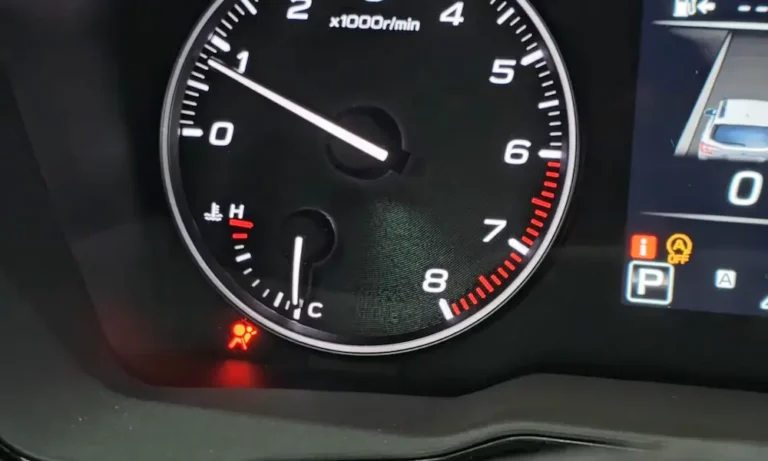
You’re driving your Subaru when suddenly that little airbag light starts glowing on your dashboard. It’s not just annoying—it’s concerning. Your car’s safety systems might not be working properly, but don’t panic. This guide will walk you through why your Subaru’s airbag light is on, what it means, and how to fix it safely.
What Does the Subaru Airbag Light Mean?
When your Subaru’s SRS (Supplemental Restraint System) airbag light comes on, it’s warning you about a potential problem with your vehicle’s airbag system. This system includes:
- Front and side airbags
- Seat belt pretensioners
- Impact sensors
- Airbag control module
- Occupant detection system
Your car runs a self-diagnostic check every time you start it. If something’s not right, the light stays on to let you know your airbags might not deploy correctly in an accident.
Common Causes of Subaru Airbag Light Problems
1. Faulty Clock Spring
The clock spring is a spiral cable that connects your steering wheel’s electrical components (including the airbag) to your car’s wiring. It’s designed to maintain contact while allowing your steering wheel to rotate.
Signs of a bad clock spring:
- Airbag light stays on
- Horn doesn’t work
- Steering wheel controls are intermittent
- You might hear clicking or grinding noises when turning the wheel
Watch this detailed guide on diagnosing clock spring issues in Subarus.
2. Passenger Seat Occupancy Sensor Issues
Modern Subarus use weight sensors in the passenger seat to determine if someone’s sitting there. This system:
- Enables the airbag when an adult is detected
- Disables the airbag when a child or empty seat is detected
Common problems include:
- Water damage from spills
- Seat damage or modifications
- Wiring issues
- Sensor degradation over time
If you’ve spilled liquid on your passenger seat, this could trigger the airbag light as moisture interferes with the sensors’ operation.
3. Overhead Console LED Board Problems (2005-2012 Models)
This is incredibly common in 2005-2012 Outbacks, Legacies, and Imprezas. The LED board in your overhead console can develop cracked solder joints, triggering the airbag light.
Signs of this issue:
- One or more of the overhead console LEDs don’t light up
- The airbag light comes on intermittently or permanently
This detailed forum post shows how some owners have fixed this themselves by resoldering the connections.
4. SRS Control Module Issues
The airbag control module is the brain of your Subaru’s safety systems. Problems include:
- Software glitches
- Crash data stored in memory (even from minor incidents)
- Water damage
- Electrical shorts
When your vehicle experiences a collision, the module stores crash data that sometimes needs to be professionally cleared or reset.
5. Loose Connections or Damaged Wiring
Loose wiring connections, particularly under the seats or in the steering column, can trigger the airbag light. Sometimes these connections simply work themselves loose over time.
Check for:
- Visible damage to wiring harnesses
- Loose plugs under the seats
- Connectors that may have been left unplugged after service work
How to Diagnose Subaru Airbag Light Problems
Basic Troubleshooting Steps
- Check for recent changes: Did you recently have work done on your car? Did something spill? Did you move heavy items that might have disconnected something under the seats?
- Inspect visible components: Look under the seats for disconnected wiring harnesses or damage. Many sensors and connections are located there.
- Check your fuses: Locate your fuse box (typically under the dash or hood) and check if the SRS fuse is blown. For 2021 Outback owners, check Fuse #20.
- Cycle the ignition: Sometimes, turning your ignition from OFF to ON several times can clear temporary errors that triggered the light.
Professional Diagnosis
For proper diagnosis, you’ll need an OBD-II scanner that can read SRS codes. Standard parts store scanners often can’t read these specialized codes.
Professional diagnostic tools can retrieve codes like:
- B1017 (driver airbag circuit resistance high)
- B1870 (occupant detection sensor malfunction)
These specific codes help pinpoint the exact source of the problem.
How to Fix the Subaru Airbag Light
DIY Solutions for Minor Issues
1. Reset Temporary Glitches
For temporary electrical glitches, try this simple reset procedure:
- Turn your ignition to the “ON” position (don’t start the engine)
- Wait 10 seconds
- Turn the ignition “OFF”
- Wait another 10 seconds
- Repeat this cycle 3 times
This cycling procedure sometimes clears minor errors.
2. Check and Reconnect Wiring
If you find loose connections:
- Disconnect your car battery (negative terminal first)
- Wait 15 minutes for the system to fully power down
- Reconnect any loose plugs or connectors
- Reconnect the battery (positive terminal first)
3. Fix LED Board Solder Joints (2005-2012 Models)
For the overhead console LED board in older Subarus:
- Remove the overhead console
- Locate the circuit board
- Identify cracked solder joints
- Reflow solder with a high-temperature soldering iron (around 375°C)
There are detailed DIY guides for this specific repair.
Professional Repairs Required For:
1. Clock Spring Replacement
The clock spring should be replaced by a professional due to:
- Risk of accidental airbag deployment
- Need for precise alignment during installation
- Requirement to properly reset the SRS system afterward
Professional replacement costs typically range from $200-500 depending on your Subaru model.
2. Occupancy Sensor Replacement or Repair
Passenger seat sensors usually require:
- Professional diagnostic equipment to pinpoint the issue
- Special calibration after replacement
- Proper system reset using Subaru-specific tools
For airbag sensors that need to be replaced because of water damage, expect to pay between $300-600 for proper sensor replacement and calibration.
3. SRS Module Reset or Replacement
Only dealerships and specialized shops can properly:
- Read all SRS codes
- Clear crash data from the module
- Reprogram or replace faulty SRS modules
- Ensure complete system functionality
The SRS module reset procedure requires specialized equipment and knowledge.
The Risks of Ignoring Your Subaru’s Airbag Light
Driving with the airbag light on means:
- Compromised Safety: Your airbags may not deploy in an accident, or they could deploy improperly.
- Failed Vehicle Inspections: In many states, an illuminated airbag light will cause your vehicle to fail safety inspections.
- Insurance Issues: Some insurance policies require all safety systems to be functioning properly. A documented airbag system fault could potentially affect claims.
- Decreased Resale Value: When selling your car, a functioning safety system is expected by buyers.
Preventative Measures for Subaru Airbag Systems
To prevent airbag light issues:
- Be careful with liquids: Avoid spilling drinks near the console or seats, as moisture can damage sensors.
- Regular maintenance: Have your Subaru’s computer systems checked during routine service.
- Use caution with aftermarket accessories: Seat covers, steering wheel covers, and other add-ons can interfere with airbag sensors and deployment.
- Address minor issues promptly: Intermittent airbag lights often become permanent problems if ignored.
When to Visit the Dealership vs. Independent Shop
Dealership is Best For:
- Newer Subarus still under warranty
- Software updates and reprogramming
- Complex electronic diagnostics
- Original parts with full warranty
Independent Shops Can Handle:
- Basic diagnostics and code reading
- Wiring repairs and connections
- Most component replacements
- Often at lower cost than dealerships
Some independent shops specialize in Subaru repairs and may have the same diagnostic equipment as dealerships at a lower price point.
Understanding Subaru Airbag System Recalls
Subaru has issued several airbag-related recalls over the years. The most significant was the Takata airbag recall affecting:
- 2003-2014 Forester
- 2003-2014 Legacy and Outback
- 2004-2014 Impreza
- 2003-2014 Baja
- 2006-2014 Tribeca
If your airbag light is on, check if your vehicle is affected by contacting your dealer or visiting the NHTSA recall website.
Model-Specific Subaru Airbag Light Issues
Subaru Outback and Legacy (2005-2012)
- Most common issue: Overhead console LED board solder joints
- Secondary issue: Clock spring failures after 100,000 miles
Subaru Impreza and WRX (2008-2014)
- Most common issue: Passenger seat occupancy sensor failures
- Secondary issue: Impact sensor connections
Subaru Forester (2014-2018)
- Most common issue: Intermittent SRS light activation due to loose connections
- Secondary issue: Software glitches in the SRS module
Subaru Crosstrek (2018-2023)
- Most common issue: Passenger seat weight sensor problems
- Secondary issue: Control module requiring software updates
Cost Comparison for Subaru Airbag Light Repairs
| Repair Type | DIY Cost | Independent Shop | Dealer Cost |
|---|---|---|---|
| Reset codes | $0-100* | $75-150 | $100-200 |
| LED board fix | $15-30 | $150-250 | $300-450 |
| Clock spring | $100-200* | $250-450 | $350-600 |
| Seat sensors | Not recommended | $300-600 | $400-800 |
| SRS module | Not recommended | $200-500 | $400-900 |
*Requires specialized tools and knowledge
Tools Needed for Subaru Airbag Diagnosis
| Tool Type | Consumer Level | Professional Level |
|---|---|---|
| OBD-II Scanner | $30-100 (Basic) | $200-3,000 (Advanced SRS capability) |
| Multimeter | $20-50 | $100-300 |
| Wire repair kit | $15-30 | $50-200 |
| Soldering equipment | $25-50 | $100-300 |
| Factory service manual | $20-50 | Dealer subscription |
Conclusion
An illuminated Subaru airbag light isn’t something to ignore, but it doesn’t always mean expensive repairs are needed. Start with basic troubleshooting, understand your specific model’s common issues, and make an informed decision about DIY fixes versus professional help.
Remember that your Subaru’s airbag system is a crucial safety feature that you and your passengers depend on. When in doubt, having it professionally diagnosed is the safest approach.