If you’re a Subaru owner or considering buying one, you’ve probably heard whispers about head gasket issues. These problems have followed Subaru for years, creating concern for many drivers. But what’s the real story behind these failures, which models are actually affected, and has Subaru finally fixed the issue? Let’s dive into everything you need to know about this infamous problem.
Why Subaru Engines Are Unique
Subaru’s boxer engine design sets it apart from most other manufacturers. In this configuration, pistons move horizontally (like a boxer’s punches) instead of vertically.
This design offers several advantages:
- Lower center of gravity for better handling
- Naturally balanced operation for smoother performance
- Compact design allowing for Subaru’s symmetrical all-wheel drive
But this unique design also created specific challenges when it came to head gaskets.
The History of Subaru Head Gasket Problems
The story begins in the mid-1990s when Subaru made a seemingly small design change that would create big headaches for years to come.
First Wave of Failures (1996-1999)
Subaru’s troubles began when they switched from multi-layer steel head gaskets to single-layer gaskets with a graphite coating on their 2.5-liter engines. This decision, likely made for cost reasons, would prove problematic.
The first generation of affected engines (EJ25D) experienced internal head gasket leaks where coolant would seep into the combustion chambers. This resulted in:
- Coolant loss
- Engine overheating
- Potential catastrophic engine damage
Affected models during this period included:
- Legacy (1996-1999)
- Outback (1996-1999)
- Impreza (1998)
- Forester (1998)
Second Wave (1999-2004)
The second wave affected the EJ251, EJ252, and EJ253 engines from 1999 to 2004. These engines typically suffered from external leaks rather than internal ones.
While less immediately catastrophic, these external leaks still posed serious problems if:
- Coolant mixed with engine oil (reducing lubrication)
- Engine overheated from coolant loss
- Oil contamination led to bearing damage
Models affected during this period included:
- Impreza (1999-2003)
- Forester (1999-2004)
- Legacy and Outback (1999-2004)
- Baja (2003-2005)
What Causes Subaru Head Gasket Failure?
The main culprit wasn’t the boxer engine design itself but rather the materials used in the head gaskets.
The Graphite Coating Issue
The fundamental problem was the graphite coating on these single-layer gaskets. This coating would:
- Chip and peel at approximately 100,000 miles
- Lose its ability to maintain proper seals
- Create pathways for fluid leaks
This degradation typically happened between 120,000-150,000 miles, though some failures occurred as early as 60,000 miles.
Contributing Factors
Several factors could accelerate head gasket failure:
- Engine Overheating: The number one catalyst for gasket failure
- Poor Maintenance: Irregular coolant changes allowing corrosive buildup
- Battery Acid Exposure: Battery corrosion releasing vapors that damage nearby gaskets
- Low-Quality Replacement Parts: Aftermarket parts that didn’t meet OEM specifications
Signs of Subaru Head Gasket Problems
Catching head gasket issues early can save you thousands in repair costs. Here are the key symptoms to watch for:
Visible Leaks
The most obvious sign is external leakage. Look for:
- Oily residue on the sides of the engine block
- Coolant traces near the head-to-block interface
- Puddles under the car (may be oil, coolant, or a mixture)
These leaks often appear first on the passenger side of the engine near the firewall.
Cooling System Issues
Head gasket problems frequently manifest through cooling system symptoms:
- Unexplained coolant loss with no visible leaks
- Bubbles in the coolant overflow reservoir
- Sweet smell from the radiator or overflow tank
- Frequent overheating during normal driving conditions
Engine Performance Problems
As the condition worsens, you’ll notice performance issues:
- White smoke from the exhaust (coolant burning in cylinders)
- Rough idle or engine misfires
- Loss of power, especially under load
- Engine warning lights on the dashboard
Fluid Contamination
Check your fluids regularly for these telltale signs:
- Milky, frothy oil on the dipstick (indicates coolant in oil)
- Oil in the coolant (creates a “chocolate milk” appearance)
- Excessive pressure in the cooling system
Cost of Subaru Head Gasket Repairs
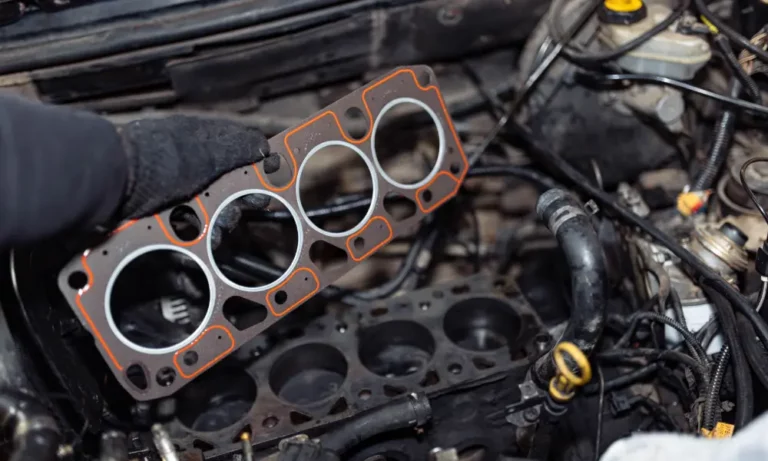
Head gasket replacement represents one of the most expensive routine repairs for Subaru owners.
Typical Repair Costs
The total cost varies widely based on location, shop rates, and whether additional repairs are needed. Here’s what you might expect to pay:
| Expense Category | Cost Range |
|---|---|
| Labor (20-40 hours) | $2,000-$4,000 |
| Head Gasket Kit | $300-$500 |
| Machine Shop Work | $400-$600 |
| Additional Parts | $200-$400 |
| Total | $1,200-$4,500 |
According to various owner reports, the average cost at an independent shop ranges from $1,800-$2,500, while dealership repairs often exceed $3,000.
Why It’s So Expensive
Several factors contribute to the high cost:
- Engine Removal Required: The boxer engine design makes in-car repairs nearly impossible to do properly
- Labor Intensive: The job typically takes 20-40 hours of labor
- Additional Components: Timing belt, water pump, and tensioners are usually replaced simultaneously
- Precision Requirements: Cylinder heads often need machining to ensure proper sealing
Which Subaru Models Have Head Gasket Problems?
Not all Subaru models are affected equally. Here’s a breakdown of the most problematic vehicles:
Highest Risk Models (1996-2004)
These models used the original problematic gasket design and have the highest failure rates:
- Impreza (non-turbo 2.5L)
- Forester (non-turbo 2.5L)
- Legacy (non-turbo 2.5L)
- Outback (non-turbo 2.5L)
- Baja (non-turbo 2.5L)
Moderate Risk Models (2005-2011)
Subaru began implementing improvements, but these models still experienced failures at higher-than-average rates:
- Impreza (2005-2011, non-turbo)
- Forester (2005-2010, non-turbo)
- Legacy/Outback (2005-2009, non-turbo)
Low Risk/Fixed Models (2012+)
Modern Subaru engines manufactured after 2012-2014 have effectively resolved these head gasket problems through:
- Redesigned engine blocks and heads
- Multi-layer steel head gaskets as standard equipment
- Improved cooling system design
- Better materials throughout
How Subaru Fixed the Head Gasket Problem
Rather than a single comprehensive fix, Subaru addressed the head gasket issues through a phased approach:
Gradual Improvements (2005-2011)
Subaru began making incremental improvements:
- 2005-2009: Partial fixes with some models receiving updated gaskets
- 2009: Legacy and Outback received multi-layer steel head gaskets
- 2010: Forester received updated gaskets
- 2011: Impreza received updated gaskets
Complete Resolution (2012-2014)
The problem was fully resolved through:
- 2012: Complete EJ25 engine redesign
- 2013: Introduction of FB/FA engine series
- 2014: All Subaru models standardized on MLS head gaskets
Current generation engines (FB20, FB25, FA20, FA24) use properly designed multi-layer steel head gaskets that don’t suffer from the same issues.
Preventing Head Gasket Failure in Older Subarus
If you own a 1996-2011 Subaru with the 2.5-liter non-turbo engine, here are crucial preventive measures:
Cooling System Maintenance
Your cooling system is your first line of defense:
- Replace coolant according to manufacturer intervals (typically every 30,000 miles)
- Use only Subaru Super Coolant or equivalent (avoid mixing coolant types)
- Pressure test the cooling system annually to catch small leaks
- Replace the radiator cap every 60,000 miles (maintains proper system pressure)
Engine Care Practices
These maintenance steps can extend head gasket life:
- Change oil every 3,000-5,000 miles
- Maintain proper coolant-to-water ratio (50/50 mix)
- Address overheating immediately by stopping the vehicle
- Keep battery terminals clean to prevent acid vapor damage
Proactive Replacement
For high-mileage vehicles approaching 100,000 miles, consider proactive head gasket replacement:
- Replace with upgraded multi-layer steel gaskets
- Have timing belt, water pump and tensioners replaced simultaneously
- Ensure cylinder heads are properly machined
- Use OEM or high-quality aftermarket components
Should You Buy a Used Subaru with Head Gasket Concerns?
If you’re shopping for a used Subaru, here’s what to consider:
Pre-2012 Models
For models built before 2012, proceed with caution:
- Request service records to verify if head gaskets have been replaced
- Budget $2,000-$3,000 for potential head gasket service if approaching 100,000+ miles
- Look for vehicles that have already had the work completed with quality parts
- Have a pre-purchase inspection by a Subaru specialist
A compression test and cooling system pressure test can reveal potential head gasket issues before purchase.
2012+ Models
Modern Subaru vehicles can be purchased with confidence regarding head gasket reliability:
- The FB and FA series engines don’t suffer from the same head gasket problems
- Focus your inspection on other components like the CVT transmission
- Maintain regular service schedules to ensure longevity
- Enjoy your Subaru with peace of mind regarding head gaskets
Beyond Head Gaskets: Other Subaru Engine Concerns
While head gasket problems dominated Subaru discussions for years, newer models have different considerations:
Oil Consumption in FB Engines
Early FB engines (2012-2015) experienced higher-than-normal oil consumption. Subaru extended warranty coverage for this issue on many vehicles.
Timing Chain Cover Leaks
Some FA/FB series engines develop oil leaks from the timing chain cover area around 60,000-100,000 miles.
CVT Transmission Reliability
While not engine-related, CVT transmission issues in 2010-2015 models have been reported, with Subaru extending warranty coverage to 10 years/100,000 miles for many affected vehicles.
The Bottom Line on Subaru Head Gasket Problems
Subaru’s head gasket issues represent a significant chapter in automotive reliability history. However, it’s important to understand:
- The problems were largely confined to 1996-2011 non-turbo 2.5L engines
- Modern Subarus (2012+) have resolved these issues completely
- Even affected models can be reliable with proper maintenance and proactive care
- The boxer engine design itself wasn’t flawed—just the gasket materials
For current owners of older Subarus, stay vigilant with maintenance and address small issues before they become major problems. For those considering a Subaru purchase, you can confidently choose any model from 2012 onward without head gasket concerns.
With proper care and understanding, your Subaru can deliver the exceptional performance, handling, and all-weather capability that made the brand famous—without the head gasket headaches that once plagued certain models.