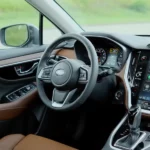
Got a Subaru steering wheel locked situation on your hands? You’re probably sitting in a parking lot, slightly panicked, wondering if your car just gave up on you. It hasn’t. This is actually one of the most fixable problems you’ll face as a Subaru owner — and most of the time, you don’t even need a mechanic. Read on, and you’ll know exactly what to do.
What Actually Causes a Subaru Steering Wheel to Lock?
Before you fix it, you need to know what you’re dealing with. There are two types of Subaru steering locks: mechanical (older keyed models) and electronic (push-button start models built mostly after 2015).
Research shows that 70% to 80% of Subaru steering wheel lockouts come down to user error or maintenance neglect — not a broken part. That’s good news for your wallet.
Here’s what triggers the lock:
- Wheels turned against a curb when you parked — this puts torsional stress on the steering column
- Using the steering wheel to pull yourself out of the seat after shutting off the engine
- A weak 12V battery that can’t power the electronic steering column lock (ESCL) actuator
- A dead key fob battery that prevents the car from authenticating your identity
- A faulty brake light switch that stops the car from recognizing your foot on the pedal
- Gear selector not fully in “Park”
The most common culprit? You parked with your wheels cranked, and the locking pin is now under pressure. The fix takes about 10 seconds.
How to Unlock a Subaru Steering Wheel (Keyed Ignition)
If your Subaru uses a physical key, the jiggle-and-turn method is your best friend.
Here’s what to do:
- Insert your key into the ignition
- Apply gentle pressure to the steering wheel — find the direction it has a tiny bit of “give”
- Hold the wheel firmly in that direction while simultaneously turning the key
- The locking pin will release once the lateral pressure is off it
Don’t force the key. If you crank it too hard, you risk snapping it in the ignition — and that’s a much worse day than a stuck steering wheel.
Key looking worn? A worn-down key might not depress the ignition tumblers far enough to release the lock. Get a new key cut from the original code, not a copy of a copy.
How to Unlock a Subaru Steering Wheel (Push-Button Start)
Push-button Subarus use an Electronic Steering Column Lock (ESCL) that communicates with the Body Control Module (BCM). It’s smarter, but it has more ways to get confused.
Try this sequence first:
- Make sure your gear selector is fully in “Park”
- Hold your key fob directly against the start button — this activates the induction transponder and works even with a dead fob battery
- Press the brake pedal firmly all the way down
- Press the start button
Still stuck? Try gently rocking the steering wheel left and right while pressing the start button. Sometimes the ESCL motor just needs a nudge to get the bolt moving.
For 2017 Outback owners specifically — there’s a known quirk where you need to shift from Park to Drive and back to Park to reset the shift solenoid interlock before the start sequence works.
The Battery Problem Nobody Talks About
Your 12V battery is the unsung villain in a lot of Subaru steering wheel locked situations. The ESCL motor needs a solid burst of current to retract that locking bolt. A battery that’s weak enough to light up your dashboard — what technicians call “the Christmas tree effect” — might not have enough juice to actually unlock the column.
Here’s how battery voltage affects the system:
| Voltage State | System Behavior | What You’ll See |
|---|---|---|
| Above 12.4V | Normal operation | Smooth start, no issues |
| 11.0V – 12.0V | Intermittent failure | Slow or failed unlock, code B22A3 |
| Below 10.5V | ESCL motor stalls | Dashboard flickering, code B22A6 |
| Fluctuating | Communication errors | CAN-bus faults, code B22A5 |
If you suspect the battery, connect a steady power supply — not a jump pack — before attempting to start the car. Replace your battery every 4–5 years proactively. Subaru electronic locks are genuinely sensitive to voltage drops.
Your Key Fob Is Probably Dead
A dead CR2032 battery in your key fob is a surprisingly common reason your Subaru steering wheel won’t unlock. When the fob’s signal is too weak, the Keyless Access ECU can’t verify your identity, and the BCM won’t send the unlock command.
Key fob facts worth knowing:
- CR2032 batteries last 3–4 years under normal conditions
- Storing your fob within 6.6 feet of your car drains it faster because the car and fob constantly “talk” to each other
- Holding the fob directly against the start button bypasses the RF signal — the car reads the chip via induction instead
Replace your fob battery every 24–36 months and keep it away from the car when you’re not using it.
The Brake Light Switch Nobody Checks
Here’s a sneaky one. Your push-button Subaru won’t release the steering lock unless it confirms your foot is on the brake. That signal runs through a 10A fuse labeled “STOP” in your cabin fuse panel.
A faulty brake light switch — one with internal corrosion or a missing rubber bushing on the pedal assembly — tells the BCM that your foot isn’t on the pedal even when it clearly is. The result? The system refuses to initiate the unlock sequence.
Quick check: Have someone look at your brake lights while you press the pedal. If they don’t light up, that’s your problem. Check the “STOP” fuse first. If it’s blown, you’ve found your culprit.
What the Diagnostic Codes Mean
If the basic fixes don’t work, a scan tool will pull B22A series trouble codes that point directly at the issue.
| DTC Code | What It Means | Likely Fix |
|---|---|---|
| B22A1 | ESCL unit internal failure | Replace ESCL actuator or column |
| B22A3 | Power supply circuit issue | Test battery and BCM-to-ESCL wiring |
| B22A4 | Ground path fault | Clean and tighten ground points |
| B22A5 | CAN-bus communication error | CAN network integrity test |
| B22A6 | Locking bolt timed out | Relieve mechanical tension, reset ECU |
| B100D | Security authorization mismatch | Reprogram ESCL and BCM |
B22A6 is the most common code for everyday drivers. It means the motor tried to retract the bolt but didn’t get a confirmation signal in time — almost always because of mechanical binding from a curbed or turned wheel.
The 2016–2017 Legacy and Outback Recall You Should Know About
Subaru’s steering column history includes one serious manufacturing issue. In May 2016, Subaru issued a stop-sale and recall for certain 2016 and 2017 Legacy and Outback vehicles due to improper machining of the steering column shafts during manufacturing.
The risk wasn’t a locked steering wheel — it was the opposite. The steering wheel could spin freely while the wheels did nothing. That’s a total loss of directional control at any speed.
If you own one of these vehicles and haven’t had the recall addressed, check your VIN at nhtsa.gov immediately. This one isn’t optional.
Locked Steering Wheel vs. Power Steering Failure — Know the Difference
These feel similar but they’re completely different problems. Mixing them up leads to misdiagnosis and wasted money.
| Symptom | Probable Cause | What It Feels Like |
|---|---|---|
| Wheel won’t move at all | Mechanical or ESCL lock | Completely rigid |
| Wheel moves but requires serious effort | Power steering pump or EPS motor failure | Heavy but not frozen |
| Resistance in one direction only | Damaged steering rack or tie rods | Uneven pulling |
| Clicking noise at low speeds | Worn CV axles | Sound without stiffness |
The EPS warning light — a steering wheel icon with an exclamation mark — tells you the assist motor is offline. That’s a power steering issue, not a steering lock. Your wheel will still turn, just with more effort.
How to Avoid This Happening Again
Most Subaru steering wheel locked situations are completely preventable. These habits keep you out of trouble:
- Straighten your wheels before shutting off the engine — this removes lateral load from the locking pin
- Use the parking brake instead of relying on the steering lock to hold the car on hills
- Replace your key fob battery every 2–3 years — don’t wait for it to die at the worst moment
- Maintain your 12V battery — replace it every 4–5 years and test it annually
- Don’t use the steering wheel as a grab handle when getting in or out
- Use dry graphite lubricant (not WD-40 long-term) in keyed ignition cylinders — oil-based sprays attract debris and create sludge over time
If you own a 2019–2024 Ascent or Forester, the system stores freeze-frame data when a fault occurs. A professional OBD-II scan can tell you whether a voltage drop caused the failed unlock — which saves a lot of guesswork before you start replacing parts.
The Subaru steering wheel locked problem sounds dramatic but it’s rarely serious. Nine times out of ten, a gentle wiggle of the wheel and a proper key fob technique gets you on your way in under a minute.