Got a crack in your Subaru windshield that showed up out of nowhere? You’re probably dealing with a known defect — and there’s a good chance Subaru owes you a free replacement. This post breaks down exactly which vehicles are affected, what the settlement covers, and how to get your windshield fixed without paying a dime.
What’s the Subaru Windshield Recall Actually About?
The Subaru windshield recall situation isn’t one single event. It’s a decade-long story of cracking glass, frustrated owners, a massive class action lawsuit, and ultimately, a settlement covering nearly 3 million vehicles.
Here’s the short version: Subaru owners started noticing their windshields cracking from tiny chips — chips that on any other car would need a $20 repair. Instead, cracks spread across the entire glass. Owners reported this happening repeatedly, even after replacements.
The Powell, et al. v. Subaru of America, Inc. lawsuit alleged the windshields were defective and dangerous under normal use. After five years of litigation, a settlement received final court approval on April 21, 2025.
Which Subaru Models Are Included?
The settlement covers 2019–2022 model years across four popular Subaru models. Here’s the full breakdown:
| Model | Model Years Included |
|---|---|
| Subaru Ascent | 2019, 2020, 2021, 2022 |
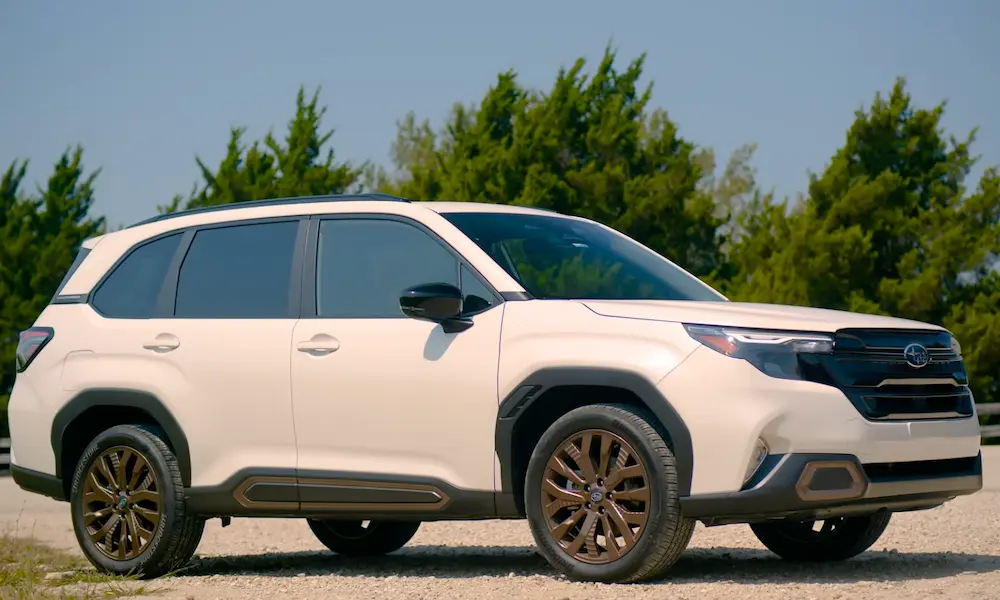
| Subaru Forester | 2019, 2020, 2021, 2022 |
| Subaru Legacy | 2020, 2021, 2022 |
| Subaru Outback | 2020, 2021, 2022 |
If your vehicle appears in this table, you’re automatically enrolled in the warranty extension. You don’t need to sign up or fill out any forms. The coverage ties directly to your VIN.
Earlier model years also had windshield problems. The 2015 and 2016 Legacy and Outback — specifically those with the All-Weather Package — had a separate warranty extension due to cracking caused by a flawed interaction between the frit ceramic material and the wiper de-icer heating elements.
What Does the Settlement Actually Cover?
The big win here is the 8-year / 100,000-mile warranty extension for the front windshield. It took effect on February 5, 2025, and it’s measured from your vehicle’s original in-service date.
A few important details:
- It’s a one-time replacement. Once Subaru replaces your original windshield under this program, the extended warranty ends.
- Your car needs OEM glass installed. If you already swapped in aftermarket glass, you’re not eligible.
- Salvage or total loss vehicles don’t qualify.
- EyeSight recalibration is included. More on that shortly.
- The warranty transfers to new owners if you sell the car. That’s a significant benefit for the used car market.
What If You Already Paid for a Replacement?
The claims deadline for cash reimbursement was January 31, 2025 — so that window has closed. But if you’re reading this before your windshield cracks, you’re still in good shape for a free future replacement under the extended warranty.
For those who did file claims, reimbursement worked in two tiers:
| Tier | What You Needed | Payout |
|---|---|---|
| Tier 1 | Proof of payment + photo of the crack | At least 125% of documented costs |
| Tier 2 | Proof of payment only (no photo) | 25%–100% of costs (subject to $2M pool cap) |
The takeaway? Always photograph a crack before getting it repaired. That single step determines how much you get back.
Why Do Subaru Windshields Keep Cracking?
This is the question that drove the lawsuit in the first place.
Plaintiffs in the Powell case argued Subaru prioritized weight reduction over durability when designing the windshield. The evidence pointed to three main culprits:
- Acoustic glass layers — effective at reducing wind noise, but less capable of absorbing structural stress
- Reduced glass thickness — a weight-saving measure tied to fuel economy targets
- Ceramic frit materials — the black-printed perimeter interacted poorly with heating elements in some configurations
Modern cars flex constantly. Cornering, braking, and hitting potholes all put torsional stress on the body. If a windshield already carries high residual stress from manufacturing, even a grain of sand hitting the glass can trigger a crack that runs the full width of the windshield.
Subaru denied the windshields were defective and argued damage came from road hazards. The court denied Subaru’s motion to dismiss, and eventually, both sides settled.
How Technicians Decide If Your Crack Is Covered
Subaru issued Technical Service Bulletin 12-257-25R to give dealers a consistent way to evaluate windshield damage. Not every crack qualifies — technicians use a classification system to sort out what’s a manufacturing issue versus a rock strike.
| Damage Type | What It Looks Like | Coverage |
|---|---|---|
| Type 1 | Crack starting from the de-icer terminal | Standard 3yr/36k only |
| Type 2 | Crack with chips along the glass edge | Standard 3yr/36k only |
| Type 3 | Small chip (under 5mm) within a straight crack | 8yr/100k extension ✓ |
| Type 4 | Radiating “star” or “spider web” pattern | Not covered |
The Type 3 Crack — and the Ballpoint Pen Test
Type 3 is the key. It’s defined as a crack where a small chip — typically less than 5mm — sits within the body of the crack line itself. This pattern indicates that minor external damage combined with structural stress caused the glass to fail.
Technicians use a simple “ballpoint pen test” to find it. They drag a pen tip along the crack. If it snags on a tiny chip buried within the crack line, that’s a Type 3. If the damage shows a radiating star pattern typical of a hard impact, that’s a Type 4 — not covered.
When the technician can’t clearly see an impact point but a qualifying crack exists, the bulletin instructs them to give the consumer the benefit of the doubt.
When you go to the dealer, specifically request an evaluation for “Type 3 Qualifying Crack” status under TSB 12-257-25R. Don’t assume they’ll volunteer that framing.
EyeSight Recalibration: Why It’s a Big Deal
Here’s where a cracked windshield gets expensive fast — unless Subaru’s covering it.
Subaru’s EyeSight Driver Assist system uses two cameras mounted behind the upper windshield. These cameras handle adaptive cruise control, pre-collision braking, and pedestrian detection. They rely on the specific optical properties of the glass directly in front of them.
Swap the windshield, and those cameras are in a slightly different position. Even a few millimeters of shift can cause the system to misjudge distances or miss hazards entirely.
Recalibration is mandatory after every windshield replacement. The process takes about an hour and normally costs $400–$500. Under the Powell settlement, Subaru covers this cost entirely when the replacement happens through the warranty extension.
Don’t Use Aftermarket Glass on an EyeSight Vehicle
This is worth saying clearly: discount glass shops can void your EyeSight system.
Aftermarket or “OEE” glass might fit your car perfectly but still fail to meet the optical standards the cameras require. Owners have reported EyeSight warning lights staying on permanently after using non-OEM glass. In worse cases, improperly calibrated pre-collision braking has triggered randomly on highways.
Only Genuine Subaru OEM glass should go on an EyeSight-equipped vehicle. The updated part numbers from TSB 12-257-25R reflect engineering revisions that address the stress cracking issues directly.
Updated OEM Part Numbers for Affected Models
| Vehicle | Configuration | Updated Part Number |
|---|---|---|
| Legacy / Outback | Standard mirror | 65010AN00B |
| Legacy / Outback | De-icer + standard mirror | 65010AN01B |
| Legacy / Outback | De-icer + smart mirror | 65010AN02B |
| Forester | Standard | 65009SJ171 |
| Forester | De-icer + EyeSight | 65009SJ191 |
| Forester | EyeSight only | 65009SJ211 |
| Forester | EyeSight + de-icer (high trim) | 65009SJ400 |
| Ascent | De-icer + auto-dimming mirror | 65009XC02B |
| Ascent | De-icer + smart mirror | 65009XC03B |
Always confirm the part number using your VIN. Trim levels and sensor configurations vary, and the wrong glass creates problems even if it physically fits.
The WRH-22 Safety Recall: A Completely Different Issue
Separate from the cracking lawsuit, NHTSA issued safety recall 22V712000 — known internally as WRH-22. This one is far more serious structurally, even though it only affected 42 vehicles: 27 Outbacks and 15 Imprezas from the 2022 model year.
The problem? A supplier delivered incorrect paint clearcoat with the right label on it. The clearcoat didn’t harden properly. Because windshield adhesive bonds to the clearcoat, these 42 windshields weren’t properly bonded to the car body at all.
In a crash, that windshield could detach entirely. That’s catastrophic for two reasons:
- The windshield is a structural member that supports the roof in rollovers
- A detached windshield means the passenger airbag has nothing to deploy against
Because the defect was in the paint itself, repair was impossible. Subaru offered every affected owner either a full vehicle exchange or a complete repurchase. That’s an extraordinary remedy — and it shows how critical windshield bonding is to overall vehicle safety.
| Recall Detail | Information |
|---|---|
| NHTSA Campaign ID | 22V712000 |
| Subaru Internal ID | WRH-22 |
| Vehicles Affected | 42 (27 Outback, 15 Impreza) |
| Model Year | 2022 |
| Root Cause | Incorrect body clearcoat — hardness failure |
| Risk | Windshield detachment during collision |
| Remedy | Full vehicle exchange or repurchase |
Steps Every Subaru Owner Should Take Right Now
Whether your windshield is fine today or already showing a crack, here’s exactly what to do:
1. Check your recall status. Enter your VIN at NHTSA.gov/recalls to confirm whether your vehicle has any open recalls, including WRH-22.
2. Photograph any crack immediately. Capture the full crack and try to include the origin point. This documentation matters if a warranty or reimbursement claim comes up later.
3. Take it to an authorized Subaru dealer. Don’t go to a third-party glass shop first. The warranty requires dealer inspection and OEM glass.
4. Ask specifically for a Type 3 evaluation. Request that the technician assess the damage under TSB 12-257-25R. Don’t assume they’ll bring it up on their own.
5. Insist on OEM glass. If a replacement is approved, confirm the part number matches the updated versions in TSB 12-257-25R for your specific model and trim.
6. Confirm EyeSight recalibration is included. It should be covered under the settlement warranty replacement — but verify before you drive away.
The extended warranty is transferable if you buy or sell a used Subaru in the affected range. Check the official settlement site for the latest status and documentation requirements.