Are you wondering when to schedule your next Subaru WRX service? Maintaining your high-performance sports sedan doesn’t have to be confusing. With the right knowledge about service intervals, costs, and maintenance options, you can keep your WRX running at peak performance while protecting your investment.
Key Service Intervals for Your Subaru WRX
The current Subaru WRX maintenance schedule operates on a 6,000-mile or 6-month interval (whichever comes first). This represents a change from older Subaru models that used 7,500-mile intervals, reflecting the more demanding nature of the turbocharged engine.
Basic Service (Every 6,000 Miles/6 Months)
Your WRX’s most frequent service includes:
- Engine oil and filter replacement
- Tire pressure check and adjustment
- Fluid level inspection and top-off
- Battery service
- Light, wiper, and washer function checks
- Steering and suspension inspection
- Road test
These basic services typically cost between $90-150 at a dealership, but you can save significantly by doing them yourself if you’re mechanically inclined.
Intermediate Service (Every 12,000 Miles/12 Months)
At this interval, your WRX needs additional attention:
- Tire rotation
- Brake system inspection (pads, lines, hoses, fluid)
- Cabin air filter replacement
- Clutch operation inspection (manual transmission)
- Engine and cabin air filter inspection
- Coolant system inspection
- Wheel alignment check
Expect to pay between $200-400 at a dealership for this more comprehensive service.
Major Service (Every 30,000 Miles/30 Months)
This significant service milestone includes:
- All previous services
- Brake fluid replacement
- Engine air filter replacement
- PCV valve inspection/replacement
- Fuel system inspection
- Drive belt inspection
- Transmission fluid inspection (CVT models)
- Clutch fluid replacement (manual transmission)
- Cooling system inspection
Major services typically run between $400-800 at a dealership due to the additional labor and parts required.
Comprehensive Service (Every 60,000 Miles/60 Months)
The most extensive regular service includes:
- All previous services
- Spark plug replacement
- Transmission fluid replacement
- Differential fluid replacement
- Comprehensive brake system service
- Fuel injector service
- Major system diagnostics
This service generally costs between $600-1,200 at dealerships due to the extensive work involved.
Regional Variations in WRX Service Schedules
Service intervals can vary depending on where you live:
| Region | Service Interval | Miles Equivalent |
|---|---|---|
| United States | 6,000 miles/6 months | 6,000 miles |
| Canada | 10,000 km/6 months | ~6,200 miles |
| Australia | 15,000 km/12 months | ~9,300 miles |
| Europe | 15,000 km/12 months | ~9,300 miles |
Always check your owner’s manual for the specific recommendations for your region or consult with your local Subaru service center.
Do You Have “Severe” Driving Conditions?
Your WRX might need more frequent service if you regularly drive in what Subaru considers “severe” conditions:
- Short trips (under 5 miles) in freezing temperatures
- Extensive idling or low-speed driving in stop-and-go traffic
- Driving on unpaved or dusty roads
- Operation in extreme hot or cold weather
- Regular trailer towing
- Frequent mountain or steep grade driving
- Driving in coastal areas or on roads treated with salt
Under these conditions, Subaru recommends more frequent services:
- Oil changes every 3,000 miles or 3 months
- Brake fluid replacement every 15,000 miles or 15 months
- More frequent air filter replacement
- Increased inspection frequency for various components
Dealer vs. DIY Maintenance: What’s Best for Your WRX?
Dealer Service Benefits
Having your WRX serviced at a dealership offers several advantages:
- Factory-trained technicians with WRX-specific knowledge
- Access to specialized diagnostic tools and equipment
- Genuine Subaru parts and warranty coverage
- Comprehensive multi-point inspections
- Warranty protection for new vehicles
However, dealership service typically costs 30-50% more than independent shops or DIY options.
DIY and Independent Shop Benefits
Maintaining your WRX yourself or using an independent shop can offer:
- Lower labor costs (often 50-75% less than dealers)
- Flexibility in parts selection (OEM, aftermarket, or upgraded components)
- Service on your schedule
- Valuable mechanical knowledge and experience
A basic DIY oil change kit for a WRX runs about $50-70, including oil, filter, and drain plug washer. Over time, DIY maintenance can save thousands compared to dealership service.
Model-Specific Considerations
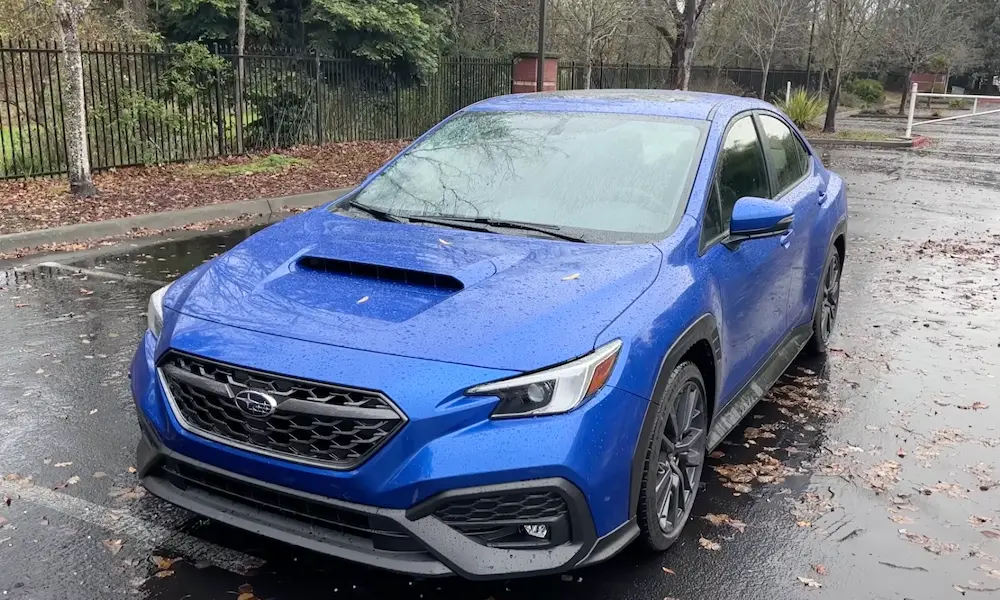
2022-2025 WRX (VB Generation)
The newest WRX generation features:
- 2.4L turbocharged boxer engine
- Oil capacity: Approximately 5.1 quarts with filter
- Recommended oil: 0W-20 or 5W-30 synthetic
- Service interval: 6,000 miles or 6 months
Common issues requiring attention include carbon buildup on intake valves (long-term concern), thin paint requiring careful maintenance, and textured cladding susceptible to damage.
2018-2021 WRX (VA Generation)
The previous generation has similar maintenance needs but with a few differences:
- 2.0L turbocharged boxer engine
- Similar 6,000-mile service schedule
- Head gasket concerns (though less common in newer models)
- Timing chain design (no replacement required, unlike timing belt engines)
Digital Maintenance Tracking Tools
MySubaru App Integration
Modern WRX owners can use the MySubaru app for maintenance management:
- Automated maintenance reminders
- Service history tracking
- Dealer appointment scheduling
- Real-time vehicle health monitoring
- Access to owner’s manuals and how-to videos
Basic app functionality is free, while advanced features require a MySubaru Connected Services subscription.
In-Vehicle Maintenance Displays
Current WRX models feature integrated maintenance displays:
- Oil life monitoring
- Service interval countdown
- Maintenance item tracking
- Integration with MySubaru services
Key Fluids to Monitor in Your WRX
Proper fluid maintenance is critical for your WRX’s performance and longevity:
| Fluid Type | Replacement Interval | Importance |
|---|---|---|
| Engine Oil | Every 6,000 miles | Critical for turbo engine health |
| Brake Fluid | Every 30,000 miles or 30 months | Safety-critical, absorbs moisture over time |
| Transmission Fluid | Every 60,000 miles | Ensures smooth shifting and component life |
| Differential Oil | Every 60,000 miles | Crucial for AWD system performance |
| Coolant | Inspect at 30,000 miles | Prevents overheating and corrosion |
Performance Driving Considerations
If you enjoy spirited driving or take your WRX to track days, consider these maintenance adjustments:
- Use high-quality synthetic oil (5W-30 recommended for track use)
- Change oil within 1,000 miles after track events
- Consider 3,000-4,000 mile oil change intervals
- Monitor brake fluid condition closely
- Inspect brake pads more frequently
- Check coolant system thoroughly before track events
How Maintenance Affects Your Warranty
To protect your WRX’s warranty coverage:
- Follow the manufacturer’s maintenance schedule
- Use appropriate fluids and filters that meet Subaru specifications
- Keep detailed maintenance records of all service
- Ensure timely completion of recommended services
While you don’t have to use the dealership for service to maintain warranty coverage, you do need to follow Subaru’s maintenance requirements and keep proper documentation.
Maintenance Recommendations by Driving Style
Daily Commuter (Normal Driving)
- Follow the standard 6,000-mile service interval
- Use synthetic oil as specified in your owner’s manual
- Balance service between dealer and independent shop based on cost and convenience
- Use the MySubaru app to track maintenance needs
Performance Enthusiast (Spirited Driving)
- Shorten service intervals to 3,000-5,000 miles
- Use high-quality synthetic oil
- Consider performance-oriented shops or DIY maintenance
- Pay special attention to brake system and cooling system maintenance
Track Day Participant (Extreme Use)
- Service after every track event or every 2,000-3,000 miles
- Use track-specific oil with high temperature resistance
- Have your car checked by performance specialists
- Inspect brakes, cooling, and suspension components before and after track use
Preventive Maintenance Tips for Long-Term WRX Health
Keep your WRX running strong with these practices:
- Use premium fuel (91+ octane) as recommended by Subaru
- Allow proper warm-up before hard driving
- Cool down after high-performance driving
- Address minor issues before they become major problems
- Clean your engine bay periodically to spot leaks early
- Check your oil level regularly between changes (WRXs can consume oil)
10-Year Cost of WRX Maintenance
According to industry data, the average 10-year maintenance cost for a Subaru WRX is approximately $6,679, which is about $914 above the industry average. This reflects the performance-oriented nature of the vehicle and its more demanding maintenance requirements.
By following the proper service schedule and considering some DIY maintenance, you can potentially save 40-50% on these long-term costs while keeping your WRX in optimal condition.
The Importance of OEM vs. Aftermarket Parts
When servicing your WRX, part selection matters:
- OEM (Original Equipment Manufacturer): These Subaru parts match exactly what came on your car. They typically cost more but ensure compatibility and quality.
- Aftermarket: These non-Subaru parts vary widely in quality and price. High-quality aftermarket parts can sometimes outperform OEM, while budget options may compromise reliability.
For critical components like timing components, engine internals, and electronics, OEM parts are often worth the premium. For items like filters, brake pads, and fluids, high-quality aftermarket options can save money without sacrificing performance.
Choosing the Right Oil for Your WRX
Oil selection is particularly important for turbocharged engines:
- Factory recommended: 0W-20 synthetic for normal driving
- Performance driving: 5W-30 full synthetic with high temperature resistance
- Track use: Consider specialized racing oils with highest temperature protection
Don’t skimp on oil quality – the extra $20-30 for premium synthetic oil is cheap insurance for your engine’s health, particularly when pushing the car’s performance limits.
Special Considerations for Modified WRXs
If you’ve modified your WRX with performance parts, adjust your maintenance schedule accordingly:
- Aftermarket ECU tunes typically require higher octane fuel
- More powerful setups need more frequent oil changes
- Upgraded turbo systems may require different oil weights
- Performance brakes often need different pad materials
- Lowered suspensions require more frequent alignment checks
Always consult with your tuner or performance shop about maintenance adjustments needed for your specific modifications.
Remember, maintaining your Subaru WRX properly not only ensures peak performance but also protects your investment and helps maintain its value over time. Whether you choose dealer service, independent shops, or DIY maintenance, the key is consistency and quality.