Shopping for a Subaru Forester? The answer to where it’s made isn’t as simple as it used to be. For decades, every Forester came from one place: Japan. But that’s changing fast. If you’re buying in 2025 or beyond, you need to know this shift affects your purchase.
The Short Answer: It Depends on When You’re Buying
Here’s the deal: where is the Subaru Forester manufactured now has two answers.
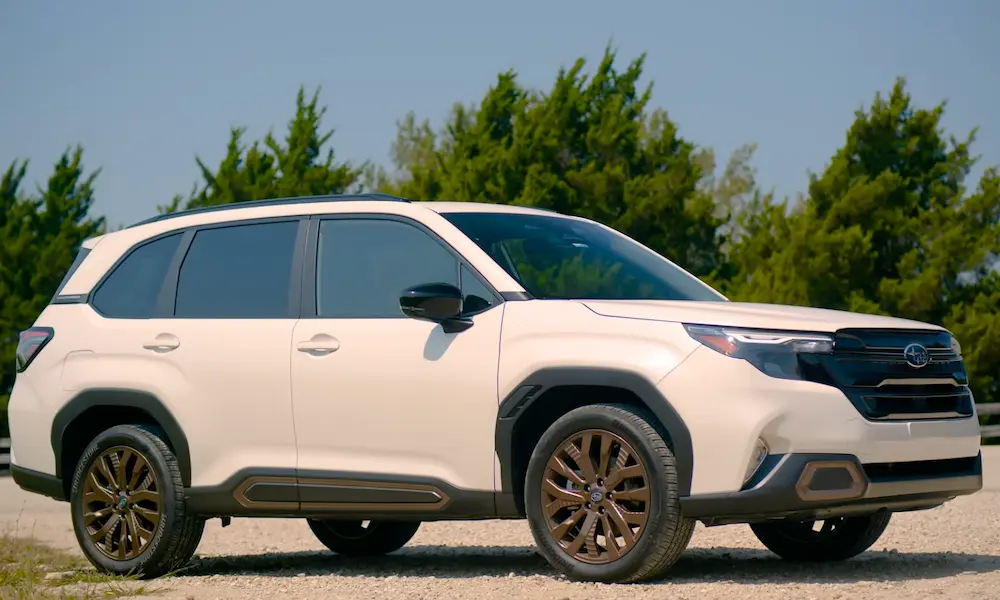
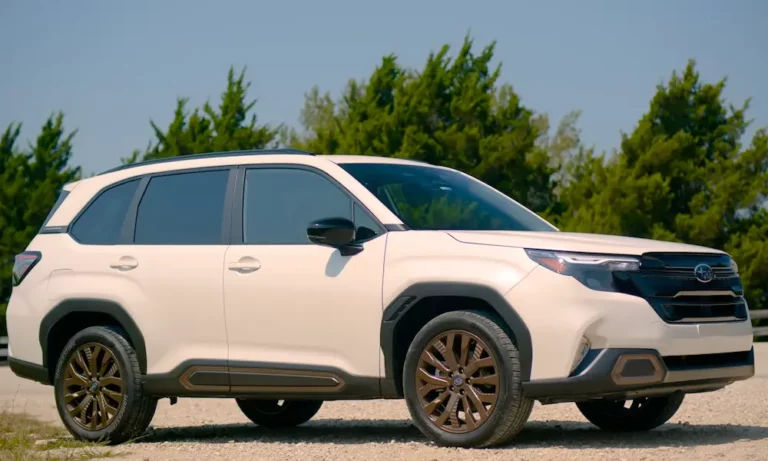
If you’re buying a 2025 model, it’s made at the Yajima Plant in Gunma, Japan. That’s where Foresters have rolled off the line for years alongside other Subaru stalwarts like the Legacy and Outback.
But starting in fall 2025, everything changes. The 2026 Forester will be the first to come from Subaru of Indiana Automotive (SIA) in Lafayette, Indiana. This marks a massive shift in Subaru’s production strategy.
Why Subaru Is Moving Forester Production to America
This isn’t a random decision. Subaru’s making a calculated move to protect its bestseller.
The Forester is Subaru’s crown jewel in North America. Building it stateside makes sense when you consider the risks of sourcing 100% of your top model from one Japanese plant. Currency swings, shipping delays, and potential tariffs all become non-issues when you manufacture in your biggest market.
There’s another angle here: Subaru’s freeing up capacity in Japan for electrification. The Gunma plants are being retooled to handle mixed assembly lines for both gasoline vehicles and BEVs. That’s hard to do when you’re cranking out thousands of high-demand Foresters every month.
The Legacy-for-Forester Swap
Here’s what makes this transition interesting: Subaru discontinued the Legacy sedan after 36 years of U.S. production. The final Legacy rolled off the SIA line in September 2025.
The timing isn’t coincidental. The production capacity used for the slower-selling Legacy is being reallocated entirely to the Forester. It reflects what’s happening in the market: sedans are out, SUVs and crossovers are in.
This is a zero-sum game. Subaru can’t just add another model to the Indiana plant without sacrificing something else. The Legacy lost that battle to market demand.
Where Each Forester Component Actually Comes From
This is where it gets technical, but stick with me.
Even if your 2026 Forester is assembled in Indiana, its “heart” is still Japanese. The Oizumi Plant in Gunma Prefecture manufactures every Subaru Boxer engine and transmission. These complete power units are then shipped to assembly plants.
So what does “Made in USA” really mean for the Forester? It means final assembly happens in Lafayette. The body panels, interior components, and chassis work are done stateside. But the engine and transmission? Those are 100% Japanese-engineered and manufactured.
This hybrid approach lets Subaru leverage American assembly efficiency while protecting its core technology and intellectual property in Japan.
The 2025-2026 Transition Timeline: What You Need to Know
Let’s break down exactly when this shift happens, because it matters if you’re shopping now.
| Timeline | Model Year | Manufacturing Location | Key Details |
|---|---|---|---|
| Late Spring 2024 – Fall 2025 | 2025 Forester (ICE) | Yajima Plant, Japan | All-new sixth generation, Japanese-built |
| October 2025 | 2026 Forester (ICE/Wilderness) | SIA, Lafayette, Indiana | First U.S.-built Foresters begin production |
| Spring 2026 | 2026 Forester Hybrid | SIA, Lafayette, Indiana | First hybrid Forester for North America |
This creates a unique crossover period in late 2025. You might walk into a dealership and find both Japanese-built 2025 models and new American-built 2026 models sitting side by side.
How to Tell Where Your Forester Was Made
Want to know your Forester’s origin? Check the VIN.
A VIN starting with “J” means it was manufactured in Japan. A VIN starting with “4S4” indicates U.S. manufacture at the SIA plant.
This matters more than you might think. Some buyers prefer the established Japanese manufacturing heritage. Others like supporting American manufacturing. Your VIN tells the story.
What About Foresters in Other Countries?
If you’re not in North America, nothing’s changing for you.
The Yajima Plant remains the sole global export hub for Europe, Australia, and other markets. European buyers get different powertrain options, including the 2.0-liter e-Boxer mild hybrid. The upcoming full-hybrid model using Toyota technology will also come from Japan.
Canadian buyers face an interesting situation. While they’ll start receiving Foresters from the U.S. plant, Subaru’s simultaneously shifting Outback production from the U.S. back to Japan. This move aims to sidestep Canadian tariffs levied in response to U.S. trade policy.
The Failed Thailand Experiment: Why It Matters
Here’s something most buyers don’t know: Subaru tried regional production before and it flopped.
In 2019, Subaru’s partner Tan Chong International opened a CKD (Completely Knocked-Down) assembly plant in Bangkok. The plan was to supply Foresters to Thailand, Malaysia, Vietnam, and Cambodia by assembling kits shipped from Japan.
It didn’t work. By 2024, the partners agreed to cease production due to falling sales. With only 344 Subaru vehicles sold in Thailand in the first four months of 2024, the dedicated assembly plant wasn’t viable.
This failure makes the Indiana investment even more significant. Subaru’s not a giant automaker with resources for multiple regional plants. They’re retreating from low-volume regional production and doubling down on their massive North American market.
Inside the Gunma Manufacturing Complex
Let’s clear up some confusion about Subaru’s Japanese facilities.
The Gunma Manufacturing Division isn’t one factory—it’s a cluster of specialized plants around Ota, about 60 miles north of Tokyo. This concentration is core to Subaru’s philosophy, allowing tight integration between engineering and manufacturing.
There’s conflicting info online about which plant makes the Forester. Some sources incorrectly cite the “Subaru-cho” plant (also called the Main Plant). But Subaru’s official corporate data is clear: the Yajima Plant manufactures the Forester, along with the Legacy, Outback, Impreza, and Crosstrek.
The Main Plant at Subaru-cho handles different models: the Levorg, WRX, and BRZ. The confusion likely stems from people assuming the “main” plant builds the main models. Not so.
What This Manufacturing Shift Really Means
Subaru’s corporate leadership spelled out their goal: “ensure production flexibility covering not only Japan but also the U.S.” That’s corporate-speak for risk management.
Having all your Forester production in one Japanese plant is risky. Natural disasters, port congestion, pandemic-related shutdowns—any of these could cripple your bestseller’s supply chain. Split production between Japan and Indiana, and you’ve got built-in resilience.
There’s also the electrification angle. Subaru’s retooling the Yajima Plant for mixed assembly lines that can handle both gasoline vehicles and BEVs. That’s complex, expensive work. Moving high-volume Forester production to Indiana frees up the capacity and focus to make that transition happen.
The Hybrid Forester: A New Chapter
The 2025 Forester Hybrid represents another first. While European markets have had mild-hybrid Foresters, North America never got one—until now.
Production of the U.S.-market hybrid starts at SIA in spring 2026. This gives Subaru dual-country hybrid production capabilities, with gasoline-hybrid manufacturing happening in both Japan and America.
The hybrid uses next-generation powertrain technology, though Subaru’s being tight-lipped about whether it’s their in-house system or Toyota-sourced tech like the upcoming European version.
What Buyers Should Actually Care About
All this manufacturing talk boils down to a few practical points.
First, if you’re buying in 2024 or early 2025, you’re getting a Japanese-built Forester. There’s no getting around it. The 2025 model year came from Yajima, period.
Second, if you’re waiting for the 2026 or buying later, you’re getting an Indiana-built Forester. The U.S. production started in October 2025 for conventional models and spring 2026 for hybrids.
Third, regardless of where final assembly happens, the core powertrain components—the Boxer engine and transmission—come from the Oizumi Plant in Japan. So there’s always Japanese engineering under the hood.
The Bigger Picture: Subaru’s North American Bet
Subaru of Indiana Automotive produces about half of all Subarus sold in the U.S.. The plant’s been operating for over 35 years. Adding the Forester to its lineup isn’t expansion—it’s consolidation of Subaru’s most important market around its most important product.
The plant historically built models tailored for North America: Ascent, Outback, Legacy, Impreza, and higher-trim Crosstreks. The Forester was always the conspicuous exception, despite being the bestseller.
That exception is over. The SIA plant is now Subaru’s North American SUV and crossover hub. It’s a regional-for-regional facility designed to serve the U.S. and Canadian markets, not a global export base.
Does Manufacturing Location Affect Quality?
Here’s the million-dollar question: does it matter if your Forester comes from Japan or Indiana?
SIA has a solid track record. The plant has produced six million vehicles with quality ratings comparable to Japanese-built Subarus. The critical powertrain components still come from Japan, maintaining that engineering heritage.
Some buyers will always prefer Japanese manufacturing. That’s fine—just buy a 2025 model before they’re gone. Others appreciate American manufacturing and the jobs it supports. The 2026 serves that preference.
The truth is, modern automotive manufacturing is so standardized and quality-controlled that country of origin matters less than it used to. What matters more: proper dealer service, how you maintain the vehicle, and whether you got the features you actually want.
What This Means for Resale Value
Will a Japanese-built Forester hold value better than an American-built one? It’s too early to say definitively.
Historically, the “Made in Japan” badge carried cache. But SIA’s been building quality Subarus for decades. The Ascent, Outback, and Legacy built there don’t suffer resale penalties compared to Japanese-built models.
The wild card is the hybrid. If the hybrid powertrain proves reliable and fuel-efficient, those models might command premiums regardless of where they’re assembled. If there are teething problems with first-year hybrids, that could hurt values.
Your best bet? Don’t overthink manufacturing location for resale. Focus on getting the trim level, color, and features you want. Proper maintenance and lower mileage matter infinitely more for resale than whether final assembly happened in Gunma or Lafayette.
The Final Word on Forester Manufacturing
So where is the Subaru Forester manufactured? Starting in 2026, the answer depends entirely on your market and when you buy.
North American buyers purchasing 2026 models or later get Indiana-built Foresters from SIA. Everyone else globally—and North American buyers of 2025 models—gets Japanese-built Foresters from Yajima.
The core powertrain always comes from the Oizumi Plant in Gunma, regardless of final assembly location. That means Japanese engineering remains at the heart of every Forester.
This shift represents Subaru’s biggest manufacturing decision in recent memory. It’s a strategic pivot to de-risk their supply chain, meet surging demand, and position their Japanese plants for the electric future.
For buyers, it changes the equation. Check your VIN. Ask your dealer. Know where your Forester comes from if it matters to you. But don’t lose sleep over it. Both plants build quality vehicles with the same Japanese-engineered powertrain that made the Forester a legend in the first place.