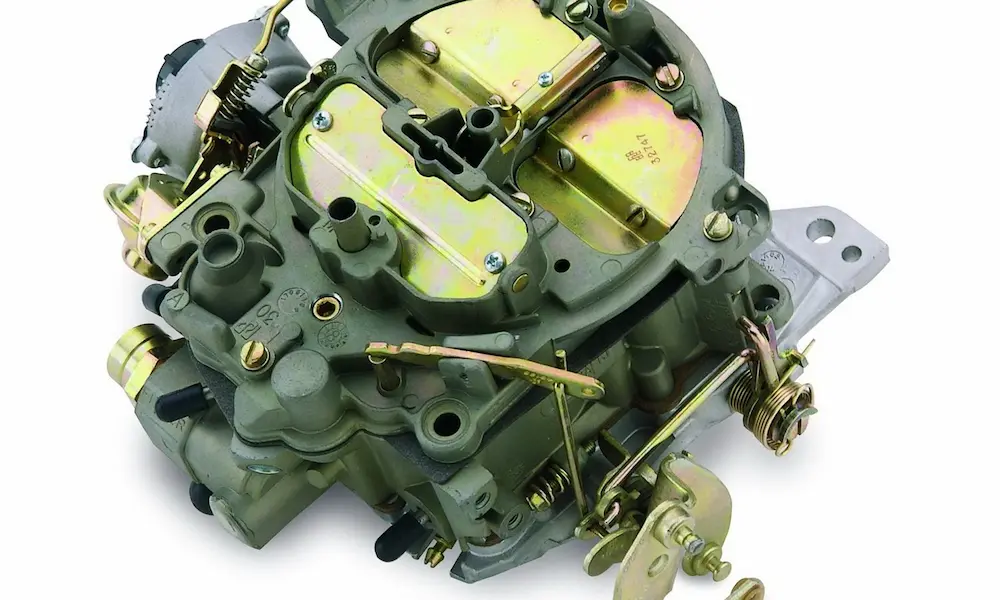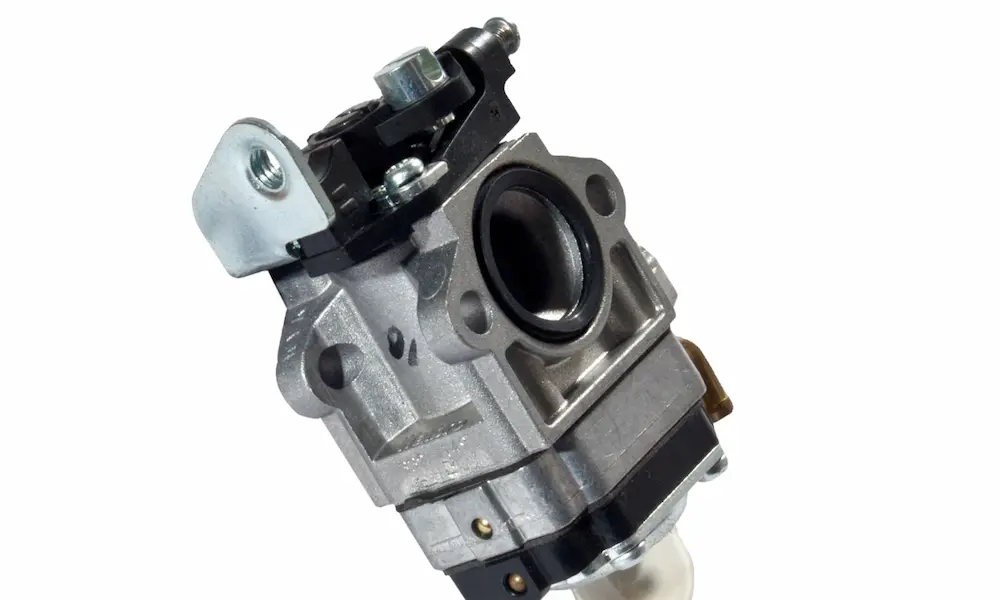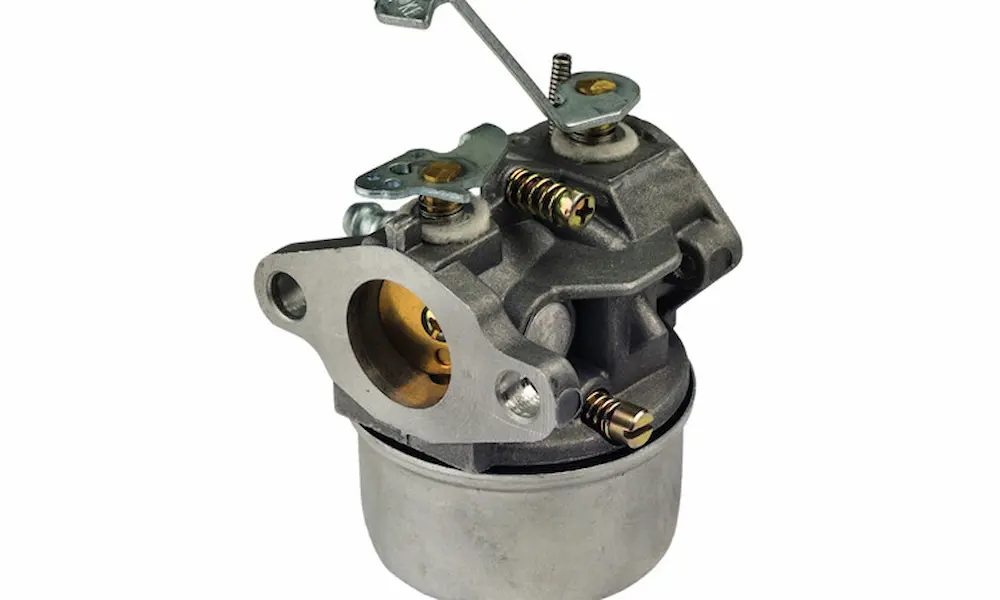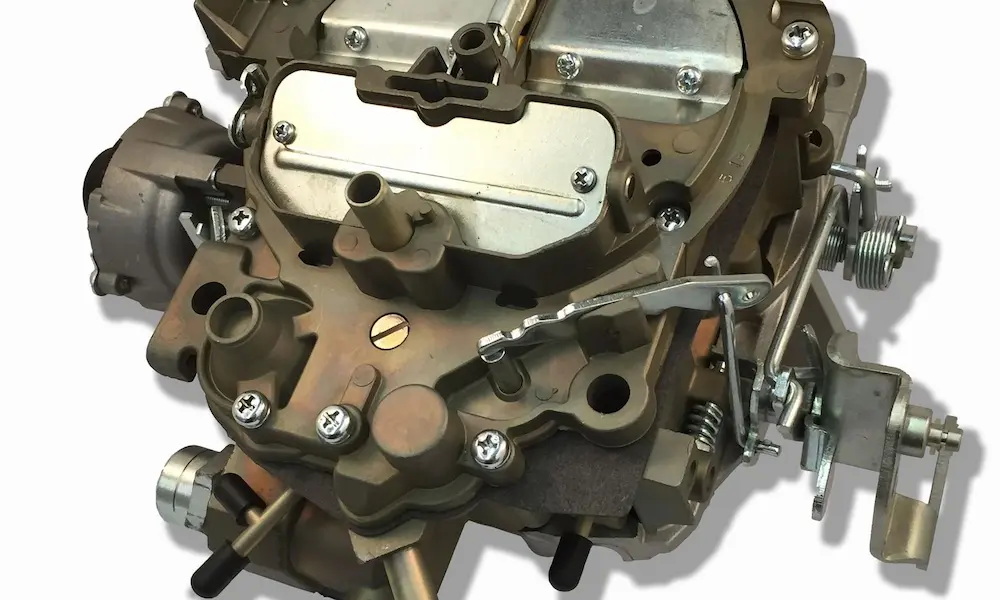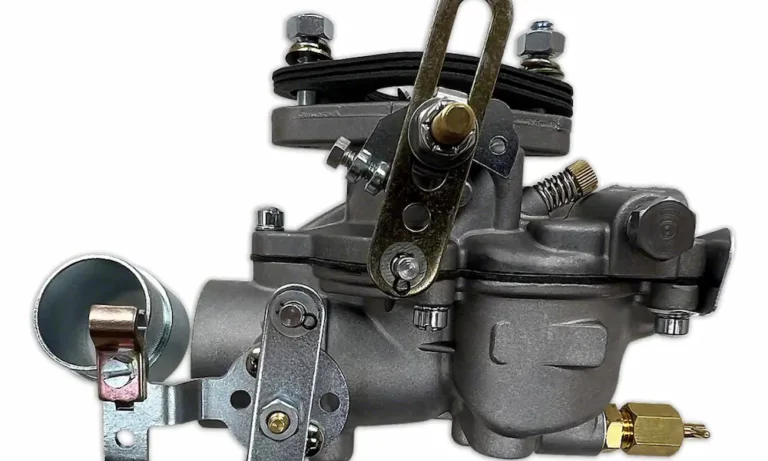
Staring at a mystery carburetor with a faded tag and no idea what you’ve got? Zenith carburetor identification trips up even experienced mechanics. Get the wrong number, order the wrong kit, and you’re back to square one. This guide walks you through every method — tags, casting codes, letter prefixes, and OEM stamps — so you nail the right part the first time. Stick around to the end.
Model Number vs. Identification Number: Don’t Mix These Up
This is the single biggest mistake people make with Zenith carburetor identification.
The Model Number tells you the design series and physical shape — updraft, downdraft, or sidedraft. Think of it as the carburetor’s family name. Examples: Series 28, 68, 161, 228, 267.
The Identification Number is what you actually need. It’s a five-digit number — like 12522, 13456, or 14991 — that specifies the exact internal jetting, venturi diameter, and throttle geometry. Two carburetors that look identical on the outside can have completely different internals.
Without the five-digit ID number, you’re guessing. And guessing costs money.
How to Find the Identification Number on Your Zenith Carb
Zenith used three different tagging methods depending on when the carburetor was made.
Early Rectangular Tags (1920s–1935)
These carburetors carry a thin, rectangular metal tag with the ID number stamped directly into it. It’s usually on the exterior of the body. Check carefully — these tags are over 90 years old and often corroded.
Round Riveted Tags (1932–1980)
This is the most common type you’ll encounter. Zenith used a small circular metal tag — about the size of a dime — riveted to the top or side of the carb body.
Here’s what the tag actually tells you:
- Outer ring number → the OEM manufacturer’s part number (like an Allis-Chalmers or Wisconsin Motors part number)
- Inner ring number → the five-digit Zenith Assembly ID Number (this is what you need)
Tags made before 1956 are usually brass. After 1956, they switched to aluminum — sometimes color-anodized for assembly line identification. If yours looks plain silver, the anodized coating likely got stripped during a carburetor cleaning.
Watch out for this: On TSX series tractor carbs, a tag reading “TSX / 6 51 / 241B” does NOT mean model TSX-651. The “6 51” is a date code (June 1951). The actual model is TSX-241B. Ordering parts for “TSX-651” gets you nothing useful.
Roll-Stamped Numbers (Post-1980)
After 1980, Zenith dropped the riveted tags. They stamped the ID number directly into the carburetor casting in a semi-circular arc. These numbers are always recessed into the metal — never raised. If you see raised numbers, that’s part of the casting mold, not the ID stamp.
What to Do When the Tag Is Missing
Missing tags happen constantly on carbs that’ve been rebuilt multiple times. Your fallback: measure the throttle bore diameter and venturi diameter with a caliper, then cross-reference those dimensions against Zenith’s factory specification records.
Decoding Zenith Date Codes
Date codes confirm your carb’s age and help verify if it’s original equipment or a replacement.
On most domestic carburetors, date stamps use a month-year format. On European applications — like the Zenith 32 NDIX used on the Porsche 356 — date codes appear vertically on the float bowl opposite the accelerator pump. A stamp reading “11-59” means November 1959. A stamp reading “22-64” means the 22nd week of 1964.
Reading the Casting Size Codes
Cast directly into the carburetor body, these single or double-digit numbers tell you the throttle bore diameter and flange bolt spacing. This determines whether your carb physically fits your manifold.
| Casting Code | Throttle Bore Diameter | Flange Bolt Spacing (Center-to-Center) |
|---|---|---|
| 5 | 13/16 in | 1-13/16 in |
| 6 | 1-1/16 in | 2-1/4 in |
| 7 | 1-1/16 in | 2-1/4 in |
| 8 | 1-3/16 in | 2-3/8 in |
| 9 | 1-5/16 in | 2-3/8 in |
| 10 | 1-7/16 in | 2-11/16 in |
| 11 | 1-9/16 in | 2-11/16 in |
| 12 | 1-11/16 in | 2-15/16 in |
| 13 | 1-13/16 in | 3-5/16 in |
| 14 | 1-15/16 in | 3-5/16 in |
| 16 | 2-3/16 in | 3-9/16 in |
A size 8 carb fits engines around 100–200 cubic inches. A size 10 handles larger displacement industrial engines needing serious airflow. Bolt a size 10 onto an engine designed for a size 5 and you’ll get terrible low-end response and constant stalling — air velocity through the venturi drops too low to atomize fuel properly.
The Letter Code System: What Those Letters Actually Mean
Zenith modified the same base castings for hundreds of applications by adding letter codes to the model designation. These letters tell you the throttle shaft orientation, fuel type, governor connections, choke style, and more.
Primary Feature Letter Codes
| Letter | What It Means |
|---|---|
| A | Throttle shaft runs parallel to the choke shaft |
| B | Throttle shaft sits perpendicular to the choke shaft |
| BB | Same as B, but choke plate opens opposite direction |
| DA | Two-barrel carb with one shared throttle shaft |
| DB | Two-barrel carb with two independent throttle shafts |
| G | Engineered for natural gas or dual-fuel (gas + natural gas) |
| I | Built specifically for International Harvester equipment |
| J | Includes a back-suction economizer for fuel efficiency |
| LP | Configured for liquid petroleum gas (propane) |
| M2 | Marine carb with corrosion-resistant brass hardware |
| M3 | Marine carb with heavy brass fuel bowl, iron throttle body |
| M4 | Full brass marine construction — maximum saltwater resistance |
| T | Sealed, balanced bowl vent — critical for dusty environments |
| U | Universal aftermarket replacement with slotted mounting flange |
Suffix Codes (After the Size Number)
| Suffix | What It Means |
|---|---|
| C | Automatic choke with bimetallic thermostatic spring |
| G | Gas valve for LPG systems |
| R | Facet-brand regulator installed |
| RP | Pierce-brand mechanical governor |
| RZ | Mechanovac-brand governor |
| SD | Cold-weather LPG starting device |
The T code (sealed bowl vent) deserves special mention for tractor restorers. Standard carbs vent the fuel bowl to open air. In a dusty field, that means abrasive grit enters the fuel supply and destroys cylinder walls. The T-code routes filtered air internally — a genuine engineering upgrade for agricultural use.
The J code (back-suction economizer) leans out the mixture under partial throttle by using manifold vacuum to reduce pressure on the fuel surface inside the bowl. It’s a clever passive fuel-saving mechanism designed for constant-speed industrial engines.
OEM Manufacturer Codes: Who Ordered This Carb?
Zenith cast a numeric OEM code into each carburetor to identify the original purchasing manufacturer. These codes provide historical provenance — essential for concourse restorations.
| OEM Code | Manufacturer | OEM Code | Manufacturer |
|---|---|---|---|
| 1 | Standard / Universal | 32 | International Harvester |
| 2 | Ford Motor Company | 34 | Continental Motor Company |
| 3 | Dodge | 41 | Lycoming Manufacturing |
| 4 | Chrysler | 66 | Diamond T Company |
| 7 | Buick | 96 | Willys-Overland |
| 10 | Packard | 108 | Minneapolis-Moline |
| 12 | REO Motor Car Company | 128 | Allis-Chalmers |
| 14 | Chevrolet | 205 | Cadillac |
| 24 | Mack Trucks | 213 | Caterpillar Tractor |
| 25 | Wisconsin Motor Company | 266 | Kaiser-Frazer |
| 26 | Waukesha Motor Company | — | — |
Finding an OEM code on an unmarked carb lets you trace it back to its original application — useful when the tag is long gone.
Updraft, Downdraft, and Sidedraft: Identifying the Architecture
Updraft (Series 61, 62, 67, 68, 161, 267)
Air gets drawn upward through the carb into the engine. The carb mounts below the intake manifold. This was the original design when mechanical fuel pumps didn’t exist — the fuel tank sat high, gravity fed the bowl, and flooding safely drained to the ground instead of into the cylinders.
The Zenith 267 series features larger venturis (18–30mm internally) and a bigger fuel bowl for high-displacement industrial engines. The 68 series runs compact and light — standard on smaller Continental engines.
Downdraft (Series 28, 33, 63, 228)
Air and fuel fall downward into the intake manifold. Gravity assists the fuel charge, improving throttle response and horsepower. This became the standard as reliable mechanical fuel pumps arrived. Zenith’s 28 and 228 series powered stationary generators, welding equipment, and mid-century commercial trucks.
Sidedraft (Series 36, 63, 161 variants)
Air flows horizontally. Used when hood clearance prevents a tall downdraft setup. Also common on European applications.
Common Applications: Wisconsin, Allis-Chalmers, and Ford
Wisconsin Engines
Wisconsin air-cooled engines used Zenith almost exclusively for decades.
- Zenith 11532 replaces Wisconsin OEM parts L57-1, L57E, and L57G on VG4D and VH4D engines
- Zenith 12098 replaces L63-1, L63-AH, L63-AV, and LZ63-8 across AENL, THD, TJD, and VH4D engines
Allis-Chalmers Tractors
- D-10 and D-12 (1961–1968): Zenith 12522
- D-17 (higher horsepower): Zenith 14991
- LPG lift trucks: Zenith 12812
Ford Tractors
Zenith 13881 replaces Marvel-Schebler TSX662, TSX769, and TSX977 on Ford 601, 801, 901, and 4000 series tractors with 172 cubic-inch gas engines.
Spotting a Universal Replacement vs. Original Equipment
Zenith eventually dominated the Marvel-Schebler replacement market by engineering one adaptable casting to replace dozens of different TSX variants. If your carb has these features, it’s a universal aftermarket unit — not the original factory carb:
- Slotted mounting flanges (accepts stud spacing from 2-5/16 in to 2-11/16 in)
- Reversible throttle linkage brackets
- Externally adjustable main load needle with a T-handle screw
That T-handle needle lets a mechanic tune fuel delivery to match different engine displacements using the same physical carb. It’s brilliant engineering — and a dead giveaway you’re looking at a replacement unit.
Material Identification: What’s Your Carb Made Of?
The metal tells you a lot about the era and intended use.
Cast iron: Early series 61, 161, and 62. Heavy, vibration-resistant, but rusts internally when fuel sits with moisture.
Die-cast aluminum or zinc alloy: Later series 68 and 267. Lighter and rust-proof, but vulnerable to white oxidation from standing water. Never soak these in hot caustic chemical dip baths — it destroys the soft alloy.
Brass: Earliest vintage carbs (like the Zenith O-4 on Model T Fords) and all M2/M3/M4 marine variants. Safe for ultrasonic cleaning and polishing.
Float Problems and the Ethanol Issue
Two float types appear in Zenith carbs: hollow brass pontoons and shellac-coated cork.
Checking a brass float for cracks: Grip the arm, submerge the float in very hot water. If you see bubbles streaming out, the float has a hairline crack and it’s absorbing fuel.
Cork floats and modern fuel: This is a critical modern problem. Ethanol in today’s pump gas dissolves the orange shellac coating on vintage cork floats. The cork becomes a sponge, sinks permanently, and holds the needle valve wide open — flooding your engine constantly. Replace old cork floats with modern synthetic closed-cell foam, or reseal the cork with an ethanol-resistant sealant.
Quick Diagnostic Guide: Flooding, Bogging, and Hesitation
Engine Flooding
- High fuel pressure: Updraft Zenith carbs were designed for gravity feed or 2–4 PSI pumps. A modern electric pump at 6–8 PSI overpowers the float and floods the bowl.
- Worn needle and seat: The seat orifice must match your exact ID number. An oversized seat from a different model allows too much fuel at idle.
- Cracked fuel inlet: Zenith uses tapered pipe threads. Overtightening — especially with PTFE tape acting as a lubricant — splits the housing. Don’t over-torque these fittings.
Throttle Bog on Acceleration
On updraft carbs, rapid throttle opening causes a hesitation that mechanics often blame on a failed accelerator pump. The real culprit is usually fuel puddling — low idle air velocity lets fuel droplets fall out of suspension and stick to the manifold walls. Snapping the throttle sweeps that puddle directly into the combustion chamber, drowning the spark momentarily.
The fix: open the base idle speed screw slightly to prop the throttle plate open further at idle. This maintains enough air velocity to keep fuel suspended through the venturi.
Testing the Accelerator Pump
Warm the engine fully, then shut it off. Remove the air cleaner, lock the choke open, and manually stroke the throttle linkage. You should see a continuous fuel stream from the discharge jet. If you’re testing a carb that’s sat for several days, modern volatile fuel evaporates from the bowl quickly — you’ll get a false negative. Fill the bowl first.
Automatic Choke Won’t Open
On integral chokes, a clogged vacuum passage to the exhaust heat stove leaves the bimetallic spring cold permanently. The choke stays closed, the engine runs rich, and plugs foul fast. Clean that vacuum passage thoroughly during every rebuild.
On divorced chokes (spring mounted directly on the exhaust manifold), changing the base gasket thickness alters the effective length of the choke rod. A thicker gasket means the choke plate never opens fully. Always match the factory gasket thickness spec exactly.
Reading a Full Zenith Identification: A Worked Example
Let’s put it all together with a real example: Zenith 267-J-9-T-R-C
- 267 → Model series (updraft, large industrial)
- J → Back-suction economizer fitted
- 9 → Size 9 casting (1-5/16 in throttle bore, 2-3/8 in flange spacing)
- T → Sealed, balanced bowl vent
- R → Governor connection on the right side (fuel bowl side)
- C → Automatic choke installed
That single string of characters tells you the complete mechanical picture before you’ve touched a wrench.
Zenith carburetor identification rewards patience and attention to detail. Locate the five-digit ID number first, decode the letter codes second, confirm the casting size third — and you’ll have everything you need to rebuild it correctly and get that engine running the way it should.