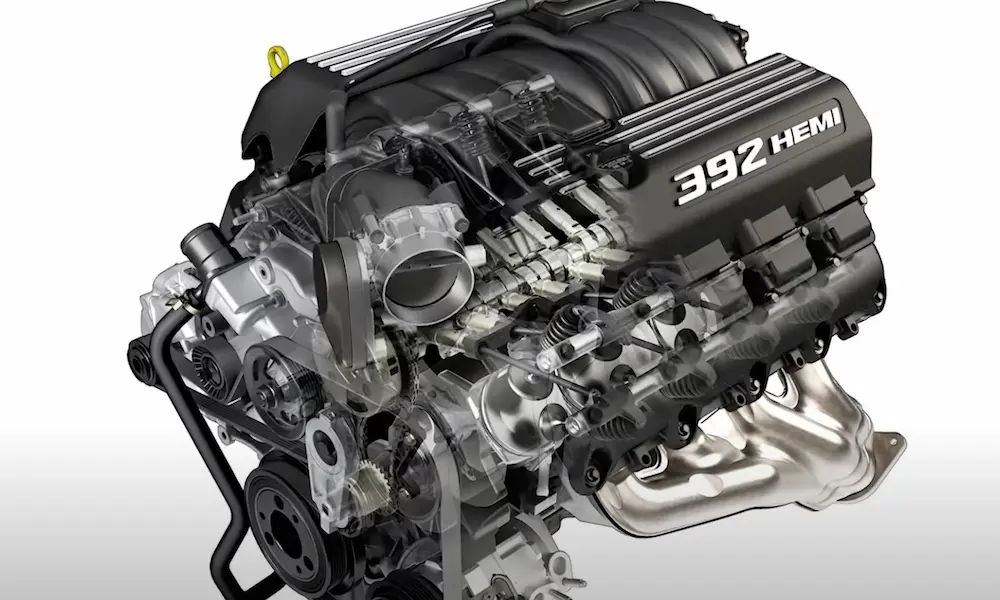
Rebuilding a 5.7 Hemi engine isn’t just swapping parts — it’s a precision process where the wrong move costs you thousands. Whether you’re chasing the “Hemi tick,” dealing with a wiped cam lobe, or just want a bulletproof long block, this guide covers everything you need to know. Read through to the end — the break-in section alone can save your fresh build.
First Things First: Pre-Eagle or Eagle?
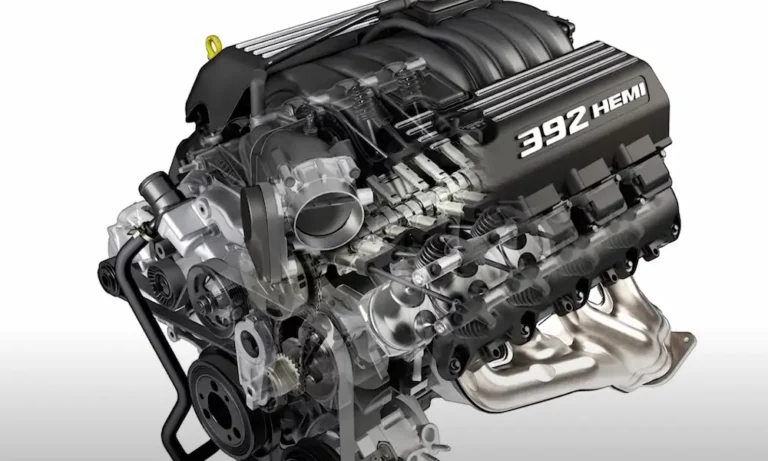
Before you order a single part for your 5.7 Hemi engine rebuild, you need to know which version you have. The 2003–2008 “Pre-Eagle” and the 2009+ “Eagle” engines share a name but not much else internally.
The easiest check? Look at the 8th digit of your VIN. A “T” means Eagle. Anything else points to Pre-Eagle. You can also look at the front of the block — the Eagle has a large circular hole above the cam journal for the Variable Cam Timing (VCT) solenoid.
Here’s a quick breakdown of the key differences:
| Feature | Pre-Eagle (2003–2008) | Eagle (2009+) |
|---|---|---|
| Variable Cam Timing | No | Yes |
| Reluctor Wheel | 32x | 58x |
| Cam Front Journal | 57mm | 61mm |
| Crank Snout Length | Standard | 0.460″ Longer |
| Oil Pump Capacity | Standard | 20% Higher Volume |
The DodgeGarage Gen III Hemi Quick Reference Guide breaks down block casting numbers if you want to cross-reference yours.
Mixing Pre-Eagle and Eagle parts is a fast way to ruin a rebuild. Very few internal components cross over between generations.
Block Prep: Where Precision Actually Starts
The 5.7 Hemi uses a deep-skirt cast-iron block with cross-bolted main caps — a design borrowed from the legendary 426 Hemi. It’s a stout foundation, but it still needs proper machine work.
Standard bore is 99.5mm (3.917–3.92″), with a max safe overbore of 0.030″. The deck height sits at 9.250″. According to the OnAllCylinders Gen III Hemi engine guide, main bearing housing bore runs 2.751″ across both generations.
Don’t skip torque-plate honing. This means bolting a heavy steel plate to the deck before honing the bores, which replicates the distortion that happens when the heads are torqued down. JASPER Engines points out that skipping this step leads to ring flutter and excessive oil consumption — your bores won’t be round where it matters.
The “Hemi Tick”: What’s Actually Happening
The infamous “Hemi tick” gets thrown around loosely online, but there are two very different problems hiding under that label.
Lifter Bearing Failure
This is the serious one. The hydraulic roller lifters on the Hemi don’t get constant high-pressure oil flow to their needle bearings — lubrication depends heavily on splash and MDS solenoid cycling. Over time, especially in trucks that idle a lot, those needle bearings seize up.
Once the axle fails, the roller skids across the cam lobe instead of rolling. That wipes the lobe flat and sends hardened steel shards through your oiling system. Modern Muscle Xtreme’s lifter failure tech article documents exactly how fast this damage spreads. If you’re rebuilding after a lifter failure, flush the entire oiling system and install a new oil pump — no exceptions.
Exhaust Manifold Leaks
The iron exhaust manifolds and aluminum heads expand at different rates. Every heat cycle, the manifold walks a little. BD Diesel’s Hemi exhaust manifold breakdown shows the rear-most cylinders snap bolts most often. A cold-start tick that disappears as the engine warms up? That’s almost always this problem.
The fix during a rebuild: machine the flanges flat (or replace them), and use Grade 8 or stainless hardware going back in.
Valve Seat Failure (2003–2008 Only)
On early Pre-Eagle engines, the press-fit intake valve seats can drop into the combustion chamber when the aluminum head overheats. The DodgeGarage Gen III Part I guide flags this as a known catastrophic failure mode. The fix is installing oversized seats with a deeper interference fit using higher-quality seat materials.
Head and Deck Surface Finish: The MLS Gasket Rules
The 5.7 Hemi runs Multi-Layer Steel (MLS) head gaskets, and they’re unforgiving about surface finish. Too rough, and combustion gases leak past the gasket’s coating. Too smooth (below 0.4 Ra), and the gasket won’t grip under cylinder pressure.
Here’s what you’re aiming for:
| Spec | Target for MLS Gaskets |
|---|---|
| Surface Finish (Ra) | 0.7–1.2 micrometers (27–47 micro-inches) |
| Mean Roughness (Rz) | 180 Rz Maximum |
| Overall Flatness | .002″ (.05mm) Max Distortion |
AA1Car’s head gasket resurfacing guide explains why this matters so much with MLS gaskets specifically — the viton or silicone coating needs a surface it can seal against, not a mirror and not sandpaper.
Rotating Assembly: Ring Gaps and Rod Bolts
Piston ring gapping is a step that kills fresh builds when ignored. Too tight a gap means the ring ends touch when hot, bind in the bore, and break the piston land.
| Application | Top Ring Gap | Second Ring Gap |
|---|---|---|
| Naturally Aspirated | 0.022″ | 0.022″ |
| Supercharged/Boosted | 0.028″ | 0.028″ |
| Oil Ring Rail (Min) | 0.015″ | — |
One thing worth knowing: Mahle’s ring gap instructions recommend a slightly larger second ring gap than the top ring. This gives blow-by gases an escape path instead of building pressure that lifts the top ring at high RPM.
Connecting rod bolts are one-time-use. They’ve already plastically deformed. Use new Mopar Part No. 6506335AA bolts every time. Rod side clearance should fall between 0.008″–0.018″ for performance builds, per MMX’s piston/rod installation instructions.
Torque Specs: The Numbers That Matter
The 5.7 Hemi is heavy on Torque-to-Yield (TTY) fasteners. These stretch permanently during torquing — which gives more consistent clamping force but means they can’t be reused.
Bottom end:
| Fastener | Initial Torque | Final Step |
|---|---|---|
| Main Caps (M12) | 20 ft-lbs | +90 Degrees |
| Main Cross-Bolts (M8) | 15 ft-lbs | 21 ft-lbs |
| Connecting Rod Bolts | 15 ft-lbs | +90 Degrees |
| Harmonic Balancer | 130 ft-lbs | — |
Cylinder heads:
| Step | M12 Bolts | M8 Bolts |
|---|---|---|
| Step 1 | 25 ft-lbs | 15 ft-lbs |
| Step 2 | 40 ft-lbs | 15 ft-lbs |
| Step 3 | +90 Degrees | 25 ft-lbs |
Full torque references from Brian Tooley Racing’s Gen III Hemi torque spec sheet and 797 Performance are worth bookmarking.
Critical valvetrain note: After torquing rocker shafts to 195 in-lbs, wait at least five minutes before rotating the engine. The hydraulic lifters need that time to bleed down internally — skip this and you’ll drive a valve into a piston on the first crank.
Also remember: the Hemi runs 16 spark plugs (twin-plug heads), intake rockers are 1.60:1, exhaust rockers are 1.66:1, and intake pushrods are shorter than exhaust. Summit Racing’s EZB engine specs has the complete valvetrain breakdown.
Timing Chain: Don’t Get This Wrong
The 5.7 Hemi is an interference engine. Valves and pistons will meet if the timing is off. Here’s how to align the chain correctly:
- Crankshaft sprocket dot → 6 o’clock position
- Camshaft sprocket/phaser mark → 12 o’clock position
- Single marked chain link → aligns with the crank dot at 6 o’clock
- Double marked links → span the cam mark at 12 o’clock
On Eagle engines, use hand tools only on the VCT phaser bolt. Impact wrenches can damage the internal vanes. Phaser bolt torque is 72 ft-lbs. This YouTube VVT actuator installation video walks through the process visually if you want to see it done right.
MDS Delete: Should You Do It?
Many builders delete the Multiple Displacement System during a 5.7 Hemi engine rebuild to improve long-term reliability. Here’s what a proper MDS delete actually involves:
- Replace MDS solenoids in the block valley with expansion plugs
- Swap MDS lifters for non-MDS units — “Hellcat” lifters (Part No. 8784AD) are the popular choice because of their larger roller bearings
- Install a non-MDS camshaft — MDS cam lobes are specific to the deactivating cylinders and won’t work correctly with standard lifters
- Tune the PCM — the computer must be flashed to disable MDS logic, or you’ll get persistent fault codes and possible limp mode
This is confirmed across multiple sources including this Reddit thread on Pre-Eagle vs. Eagle builds.
Break-In: The Part Most People Rush
The first 300 miles determine whether your rings seal properly — forever. Get this wrong and you’ll burn oil for the life of the engine.
Use non-synthetic oil only for break-in. Synthetic oil’s friction modifiers are so effective they can prevent ring seating altogether, leaving glazed bores that never seal. MMX’s Hemi break-in instructions by Byron Walker recommend Shell Rotella T4 15w-40 or a similar high-zinc diesel oil.
Don’t use factory-spec 5W-20 synthetic during break-in.
The break-in process:
- Pre-oil the engine by cranking without ignition until you see oil pressure
- Start the engine and bring it to operating temperature
- Shut it down completely and let it cool
- Do several moderate-to-hard pulls (WOT at low-to-mid RPM) — cylinder pressure is what forces the rings against the bore
- Change the oil and filter at 300 miles, then switch to your normal synthetic
Baby-throttle break-ins don’t seat rings. You need cylinder pressure to do the job.