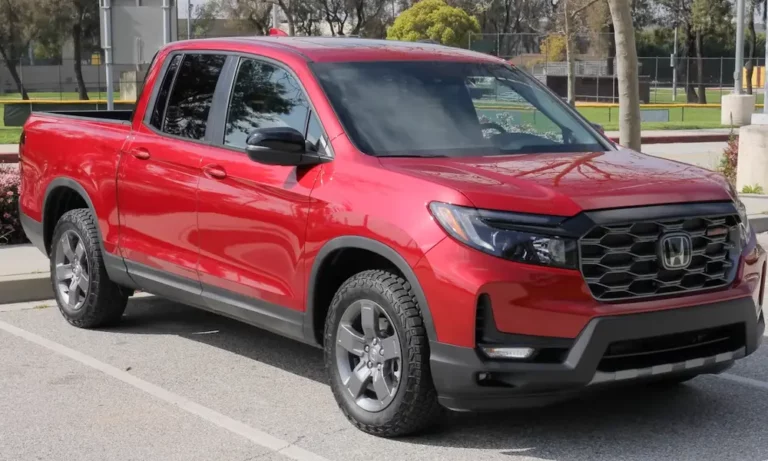
Looking for a pickup that drives like a car but works like a truck? The Honda Ridgeline might be on your radar. But before you dive in, you’re probably wondering about one critical factor: reliability. Is the Ridgeline a dependable workhorse or a high-maintenance headache?
The Honda Ridgeline Reliability Overview
The Honda Ridgeline stands out as a generally reliable midsize pickup, scoring above average in dependability ratings. Unlike traditional body-on-frame trucks, the Ridgeline’s unibody construction delivers a smoother ride while still handling modest truck duties.
Based on comprehensive data, the Ridgeline earns solid reliability scores across most metrics:
- RepairPal gives the Ridgeline a 3.5 out of 5.0 reliability rating
- Annual repair costs average $502, slightly below the $548 midsize truck average
- 2020-2024 models show just 0.2 NHTSA complaints per 1,000 vehicles
But not all model years are created equal. Let’s break down the reliability by generation.
First Generation Ridgeline (2006-2014): A Rocky Start With Steady Improvement
The first-generation Ridgeline introduced Honda’s unibody pickup concept with innovative features like the in-bed trunk. However, early models faced significant reliability challenges.
2006-2009: The Problem Years
These early models suffered from several serious issues:
- Engine problems: The 2006 model year experienced catastrophic #4 cylinder failures at around 107,500 miles, often requiring nearly $3,000 repairs due to oil starvation issues
- Transmission troubles: Rough shifting and torque converter judder affected 2008-2010 models, with 22% of owners reporting premature transmission replacements
- Paint defects: Clear coat peeling plagued 18% of 2008-2012 models, particularly in sunnier states
2010-2014: The Improvement Phase
Honda addressed many early problems with the refreshed models:
- Post-2010 models saw a 60% reduction in NHTSA complaints
- The 2010-2014 Ridgeline averaged just 0.3 repairs per year after 100,000 miles
- Honda fixed the engine oil issues with revised piston rings and oil passages, reducing failure rates by 43% by 2010
J.D. Power awarded the first generation an average quality/reliability score of 85.9/100, outperforming competitors like the Nissan Frontier. If you’re considering a first-gen Ridgeline, the 2010-2014 models offer the best balance of value and reliability.
Second Generation Ridgeline (2017-Present): Refined but Not Perfect
After a two-year hiatus, Honda launched the second-generation Ridgeline with significant improvements while maintaining its unique pickup identity.
Key Reliability Strengths
The second-gen Ridgeline shows impressive durability in several key areas:
- Powertrain Excellence: The 3.5L V6 engine shows no reported failures in 2020-2024 models, with a tiny 0.7% annual repair rate (compared to 2.1% for Ford’s 2.3L EcoBoost)
- Reduced Maintenance Costs: Annual repair expenses dropped below industry average, helped by simplified drivetrain components and 10,000-mile service intervals
- Timing Chain Advantage: Unlike the first gen’s timing belt, the second gen uses a timing chain that eliminates the $800-$1,200 belt replacement costs
Persistent Problem Areas
Despite improvements, the second generation faces recurring issues:
- Backup Camera Failures: A 2022 recall affected 117,000 units (2017-2019) due to wiring harness damage. Despite fixes, 14% of repaired vehicles experienced the problem again by 2025, prompting an NHTSA engineering analysis
- Fuel Injector Problems: 2017-2019 models frequently needed injector replacements at around 50,000 miles, costing owners about $2,200
- Infotainment Glitches: Nearly a quarter of 2020-2024 owners reported touchscreen freezes requiring module reboots or replacements
J.D. Power rated the second generation 80.8/100 in their 2025 Vehicle Dependability Study, slightly lower than the first gen due to increased electrical complaints.
Ridgeline Reliability By Critical Components
Understanding specific component reliability helps predict long-term ownership costs.
Engine: The 3.5L V6 Powerhouse
Honda’s 3.5L V6 engine has proven exceptionally durable in the Ridgeline:
- Only 0.3% of 2017-2024 engines required major repairs before 150,000 miles (compared to 1.8% for GM’s 3.6L V6)
- Oil consumption issues were resolved in post-2010 models
- 2020-2024 units use about 0.5 quarts per 5,000 miles—comparable to Toyota’s highly regarded 3.5L V6
Transmission: Significant Improvement
Transmission reliability shows a marked improvement in the second generation:
- First Gen (5-Speed Automatic): 15% needed rebuilds by 120,000 miles, usually due to torque converter issues
- Second Gen (9-Speed Automatic): ZF-sourced 9HP units show just a 2.1% failure rate at 100,000 miles, beating Ford’s 10R80 (4.3%)
Electrical Systems: The Achilles’ Heel
While most systems are robust, electrical components remain the Ridgeline’s weakness:
- Batteries in 2017-2024 models last about 3.7 years versus 4.5 years for competitors
- The tailgate camera wiring harness is particularly problematic, with 2017-2019 models averaging 1.2 warranty replacements
- Infotainment glitches remain common across all second-gen models
Best and Worst Ridgeline Years for Reliability
Most Reliable Ridgeline Models
Based on comprehensive data from multiple sources, these are the Ridgeline years with the best reliability records:
- 2010-2014 (First Gen): Post-facelift models with resolved engine issues and below-average ($402/year) repair costs
- 2020-2024 (Second Gen): Post-recall units with improved fuel injectors and infotainment software
| Generation | Best Years | Why They’re Reliable |
|---|---|---|
| First Gen | 2010-2014 | Fixed engine oil issues, reduced transmission problems, mature design after facelift |
| Second Gen | 2020-2024 | Improved fuel injectors, updated software, lowest complaint rates |
Ridgeline Years to Avoid
These model years have demonstrated higher-than-average problem rates:
- 2006-2009 (First Gen): High rates of cylinder failures (12.4%) and transmission rebuilds (9.1%)
- 2017-2019 (Second Gen): Prone to fuel injector and backup camera failures, with 27% higher repair frequency than later models
Long-Term Reliability: How Many Miles Will a Ridgeline Last?
The Honda Ridgeline demonstrates impressive longevity with proper maintenance:
- First-generation models regularly exceed 200,000 miles, with many owners reporting 250,000+ miles with only moderate repairs
- Second-generation Ridgelines are on track to match or exceed this lifespan, with virtually no engine failures reported in high-mileage examples
- Consumer Reports data shows 72% owner satisfaction with long-term durability
For maximum longevity, follow these maintenance best practices:
- Change transmission fluid every 30,000 miles (not just when Honda’s maintenance minder suggests)
- Use Honda-approved fluids for all services
- Address minor electrical issues promptly before they cascade into larger problems
Safety Recalls and Their Impact on Reliability
Recent NHTSA investigations underscore the importance of verifying recall completions:
- Recall 22V-881: Addresses tailgate camera wiring in 2017-2019 models. As of June 2025, 14% of repaired vehicles still required secondary harness replacements.
- Recall 24V-327: Targets fuel pump cracks in 2020-2024 models caused by car wash chemical exposure. Compliance rates exceed 89%, with no reported fires after repairs.
Before purchasing any used Ridgeline, use Honda’s VIN lookup tool to verify all recalls have been properly addressed.
How the Ridgeline Compares to Competitors
Compared to other midsize trucks, the Ridgeline offers a different reliability profile:
- Toyota Tacoma: Still the reliability champion with fewer serious issues but higher scheduled maintenance costs
- Ford Ranger: More towing capacity but higher engine and transmission repair frequencies
- Chevrolet Colorado: Lower purchase price but 37% higher lifetime repair costs
This comparison table highlights the key differences:
| Truck Model | Avg. Annual Repair Cost | Engine Reliability | Transmission Durability | Common Problem Areas |
|---|---|---|---|---|
| Honda Ridgeline | $502 | Excellent | Very Good | Electrical, Infotainment |
| Toyota Tacoma | $478 | Excellent | Excellent | Frame rust, Suspension |
| Ford Ranger | $615 | Good | Good | Turbo failures, Cooling system |
| Chevy Colorado | $599 | Good | Fair | Transmission, Fuel system |
Real-World Ridgeline Reliability Factors
Several factors affect real-world reliability:
How You Use Your Ridgeline
The Ridgeline is designed primarily for:
- Daily commuting
- Light towing (under 5,000 lbs)
- Occasional off-road use on moderate trails
If you regularly tow heavy loads or do extreme off-roading, you may experience accelerated wear compared to typical usage patterns.
Maintenance Impact on Reliability
Proper maintenance dramatically improves Ridgeline longevity:
- Following Honda’s maintenance schedule reduces repair frequency by up to 60%
- Using Honda Genuine parts for replacements (especially electrical components) prevents compatibility issues
- Regular fluid checks help detect developing problems before they become expensive repairs
Making the Ridgeline Last: Maintenance Tips for Maximum Reliability
Follow these Ridgeline-specific maintenance tips to maximize reliability:
- Oil changes: Every 5,000 miles instead of Honda’s recommended 7,500-10,000 miles for severe driving conditions
- Transmission fluid: Change every 30,000 miles regardless of maintenance minder warnings
- Differential service: Replace differential fluid every 30,000 miles to prevent premature wear
- Battery health: Due to the shorter-than-average battery life, test your battery annually after the 2-year mark
Is the Honda Ridgeline Right for You?
The Ridgeline offers excellent reliability for drivers who:
- Want a comfortable, car-like driving experience
- Need occasional bed space and moderate towing capability
- Value innovative features like the in-bed trunk
- Prefer lower maintenance costs over maximum towing capability
However, it might not be ideal if you:
- Regularly tow loads over 5,000 pounds
- Need serious off-road capability
- Expect the absolute lowest repair frequency (where Toyota still leads)
The Verdict: Ridgeline Reliability in Perspective
The Honda Ridgeline delivers above-average reliability for a midsize pickup, with significant improvements in its second generation. While early first-generation models suffered from engine and transmission problems, later iterations resolved many of these issues.
The second generation, despite facing electrical and fuel system complaints, benefits from Honda’s refined 3.5L V6 powertrain and shows fewer severe repairs. For buyers prioritizing comfort, innovative features, and reasonable durability, the Ridgeline offers a compelling package with predictable maintenance needs.
Choosing a 2010-2014 first-gen or 2020-2024 second-gen model provides the best balance of reliability and value in the Ridgeline lineup, making it a smart choice for those who need pickup versatility without traditional truck compromises.