Shopping for a used Honda Odyssey? Some years are genuinely great. Others will drain your wallet faster than a road trip with four kids. This guide cuts straight to the best years, the worst ones, and everything in between — so you can buy smart.
Why the Model Year Actually Matters
Not all Odysseys are created equal. Honda made some brilliant engineering calls over the years. It also made some head-scratching ones. Transmission failures, oil-guzzling engines, and software glitches have all shown up at different points in the van’s 30-year history.
Knowing which years to target — and which to skip — can save you thousands in repairs.
Quick Snapshot: Best and Worst Years at a Glance
| Model Year | Verdict | Key Reason |
|---|---|---|
| 2017 | ✅ Best overall | Most refined 4th gen, proven 6-speed |
| 2021–2022 | ✅ Best modern pick | Standard 10-speed, full safety suite |
| 2014–2015 | ✅ Best value | Safety upgrade + reliable 6-speed |
| 2002–2003 | ❌ Avoid | Transmission failures before 100k miles |
| 2005 & 2007 | ❌ Avoid | VCM engine misfires + electrical issues |
| 2018–2019 | ❌ Proceed with caution | 9-speed transmission problems |
| 2025 | ⚠️ Too early to trust | Engine restart failures reported |
The Best Year for Honda Odyssey: 2017
The 2017 Honda Odyssey is the sweet spot. It’s the final year of the fourth generation, which means Honda had seven years to iron out every wrinkle. And iron them out, they did.
Here’s what makes it stand out:
- Standard 6-speed automatic across all trims — Honda introduced this in 2014, and the 2017 version has had three extra years of refinement
- Top Safety Pick+ from the IIHS, including a “Good” rating in the small overlap front crash test — the toughest test of its era
- 5-star NHTSA safety rating — Honda earned this distinction across 14 consecutive years
- Proven longevity — with regular maintenance, many 2017 models push past 250,000 miles
The 2017 doesn’t have the flashy tech of the newer generations. But it’s dependable, safe, and holds up incredibly well over time. For most families buying used, it’s the clear winner.
Best Modern Pick: 2021 and 2022
Want the latest features without the early-adopter pain? The 2021 and 2022 models are your answer for the best year for Honda Odyssey in the current generation.
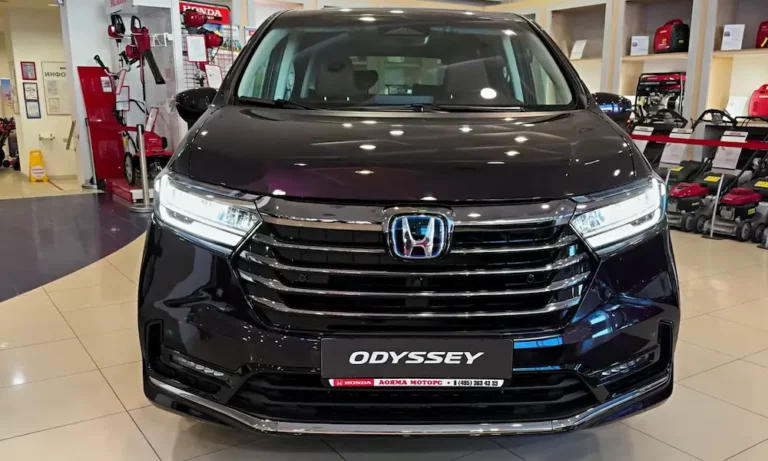
The 2021 model got a facelift with restyled LED headlights and — most importantly — made Honda Sensing standard on every trim. That means forward collision warning, lane departure warning, and adaptive cruise control no matter which version you buy.
The 2022 model earns special mention: it’s the only fifth-generation Odyssey to receive an above-average reliability rating from Consumer Reports.
Both years also feature the Honda-built 10-speed automatic as standard — a significant upgrade over the problematic 9-speed ZF unit used in 2018 and 2019.
Bonus features in these years:
- Magic Slide second-row seats (move side-to-side AND front-to-back)
- CabinWatch camera to monitor rear passengers
- 280-horsepower V6 engine
- Apple CarPlay and Android Auto
Best Value: 2014 and 2015
Budget tighter than a minivan full of soccer gear? The 2014 and 2015 models give you excellent bang for your buck.
The 2014 refresh was a turning point. Honda made two critical changes that year:
- Standardized the 6-speed automatic across all trim levels — fixing the gear-hunting complaints from earlier models
- Upgraded the body structure — the 2014 was the only minivan at the time to earn a “Good” rating in the IIHS small overlap front crash test
It also introduced the HondaVAC — a built-in vacuum cleaner in the cargo area. Genuinely useful with kids.
These models don’t have the latest tech. But they’re safe, durable, and significantly cheaper than a 2017 or newer.
Years to Avoid
2002–2003: The Transmission Nightmare
The second-generation Odyssey had a serious transmission problem. The 4-speed and early 5-speed automatics were mechanically under-built for the van’s weight. Internal bearings would break apart, block fluid passages, and cause total failure — often before 100,000 miles.
Honda faced a class-action lawsuit in 2006 over this issue. The 2002 model year holds one of the highest complaint counts in the Odyssey’s entire history with NHTSA. Skip it.
2005 and 2007: VCM Growing Pains
The third generation introduced Variable Cylinder Management (VCM) — a system that shuts off three cylinders during light-load driving to save fuel. Great idea in theory. Messy in practice.
The deactivated cylinders ran cooler, causing piston rings to contract slightly. Oil seeped in. Carbon built up. Spark plugs fouled. Owners reported adding oil every 1,000–2,000 miles.
The 2005 model also had brake problems and fuel pump failures. The 2007 added electrical gremlins on top. Both years rank among the most complained-about in the van’s history.
2018–2019: The 9-Speed Experiment
The fifth generation launched with two different transmissions. Upper trims got Honda’s new 10-speed. Lower trims got a ZF 9-speed — and owners felt the difference immediately.
The 9-speed used “dog clutches,” a design borrowed from manual transmissions. When the software miscalibrated — which it often did — you’d get rough shifts, delayed acceleration, and sudden power loss. These years also had higher recall rates for fuel pump failures and power sliding doors that could open while driving.
Honda fixed this by standardizing the 10-speed in 2020. If you’re buying a 2018 or 2019, check which transmission it has before you commit.
2025: Wait and See
The 2025 model got a fresh 9-inch touchscreen and updated styling. But early reports flag a troubling issue: the Auto Idle Stop system sometimes fails to restart the engine at intersections. Owners have also reported infotainment glitches and climate control complaints. It’s too early to call it a lemon — but it’s also too early to buy one confidently.
The VCM Oil Consumption Problem: What You Need to Know
VCM has been in every Odyssey since 2005. In early models, it only activated on EX-L and Touring trims. Since 2011, it’s been standard across all trim levels.
The vibrations from running on three cylinders put enormous stress on the engine mounts. These aren’t simple rubber mounts — they’re electronically controlled hydraulic units that can cost over $2,000 to replace when they fail.
Many owners install aftermarket bypass devices like the VCMTuner to disable the system entirely. They report smoother driving and no meaningful drop in fuel economy. If you buy a third, fourth, or fifth-generation Odyssey, it’s worth considering this fix early.
Transmission Reliability: Generation by Generation
The Odyssey’s reliability story is really a transmission story. Here’s the short version:
| Generation | Transmission | Reliability |
|---|---|---|
| 1999–2001 | 4-speed automatic | Poor — high failure rate |
| 2002–2004 | 5-speed automatic | Poor — class-action lawsuit territory |
| 2005–2013 | 5-speed (lower) / 6-speed (Touring) | Moderate — improved but VCM issues |
| 2014–2017 | 6-speed automatic (all trims) | Good — most reliable Odyssey era |
| 2018–2019 | 9-speed (lower) / 10-speed (upper) | Mixed — 9-speed had serious problems |
| 2020–present | 10-speed automatic (all trims) | Good — refined, but expensive to replace |
One important note on the 10-speed: it’s a complex unit designed for replacement rather than repair. A major internal failure can run around $8,500 for a full replacement. Keep up with fluid changes.
Safety: How the Odyssey Has Performed Over Time
Honda’s safety record with the Odyssey is genuinely impressive. The van earned 5-star NHTSA ratings for 14 consecutive years.
The 2014 model was a turning point — it became the only minivan to earn “Good” in the IIHS small overlap front crash test when that test launched. The 2017 IIHS ratings reflect “Good” scores across the board.
The 2025 model still earns “Good” on most IIHS tests, but the updated moderate overlap test flagged concerns about rear-passenger protection. Safety standards keep evolving — and older models don’t always keep up.
So, Which One Should You Actually Buy?
Here’s the simple breakdown:
Buy a 2017 if you want the most reliable used Odyssey available. It’s proven, safe, and built to last. It’s the gold standard for the best year for Honda Odyssey among used car shoppers.
Buy a 2021 or 2022 if you want modern tech, active safety features, and the refined 10-speed transmission. The 2022 is your safest bet in this generation based on reliability data.
Buy a 2014 or 2015 if your budget is limited but you still want solid safety and a dependable drivetrain.
Skip the 2002–2003, 2005, 2007, and 2018–2019 models. The savings up front aren’t worth the repair costs down the road.
The Honda Odyssey earns its reputation — but only when you pick the right year.