Grabbed the wrong aerosol can and hoping it’s fine? It’s probably not. Carburetor cleaner and brake cleaner look almost identical, but using the wrong one can destroy seals, kill your brakes, or even generate toxic gas near a welder. Here’s exactly what separates them and why it matters.
They’re Not the Same Chemical
Both cans sit on the same shelf. Both spray a clear solvent. Both dissolve grease. But the chemistry inside is completely different, and that difference dictates everything.
Carburetor cleaner contains acetone, heptane, and toluene — a slow-evaporating blend designed to soak into baked-on varnish and carbon. Brake cleaner uses a faster, more aggressive formula designed to flash off in seconds and leave absolutely zero residue.
The evaporation rate alone separates their jobs. One lingers on purpose. The other disappears on purpose.
How Carburetor Cleaner Actually Works
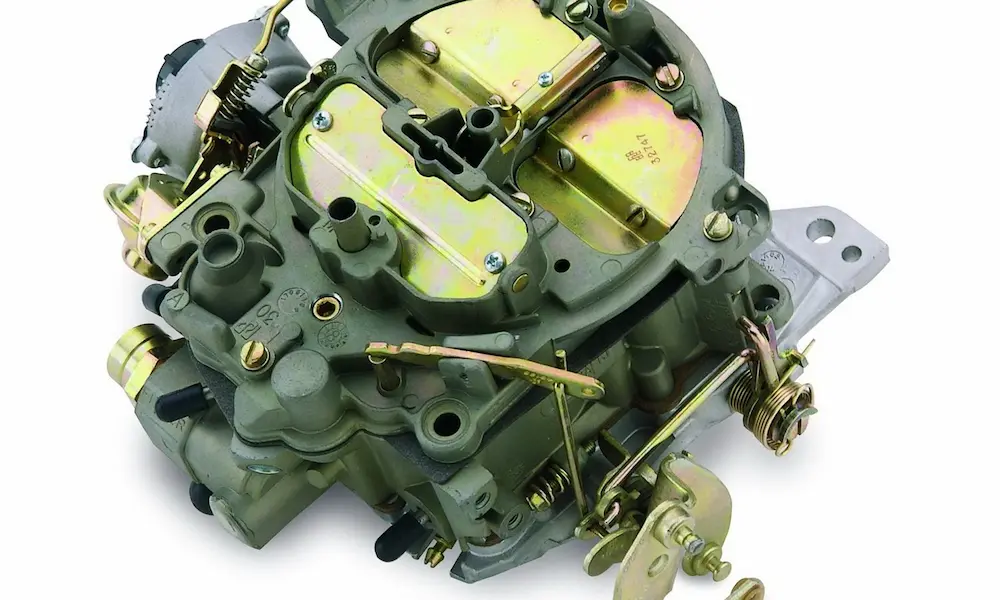
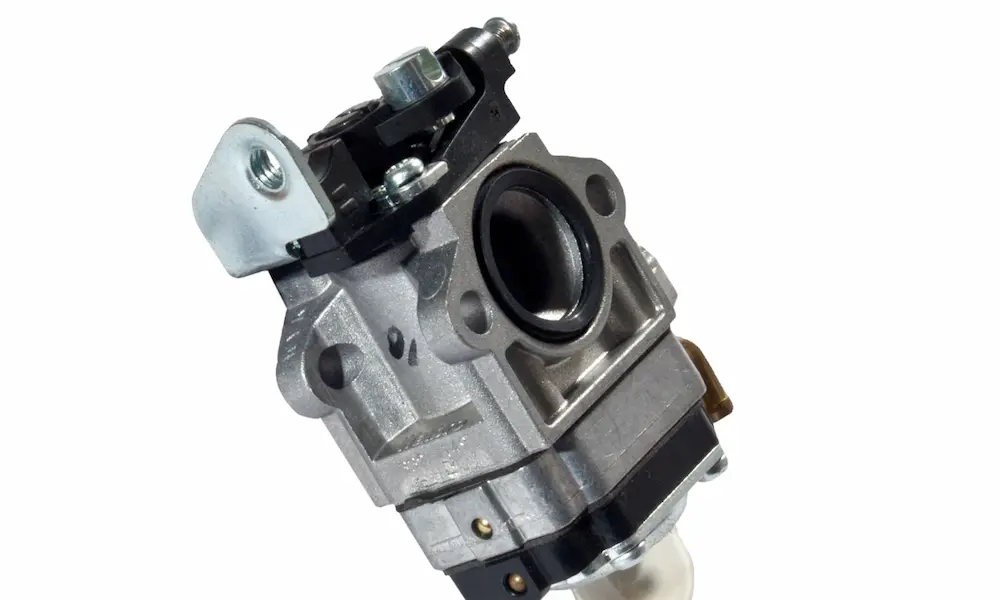
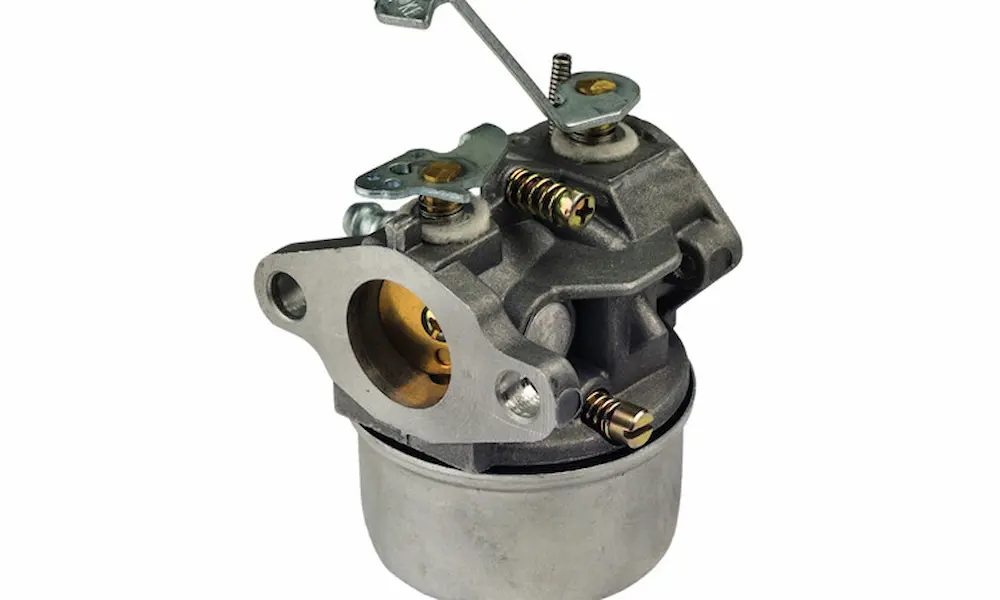
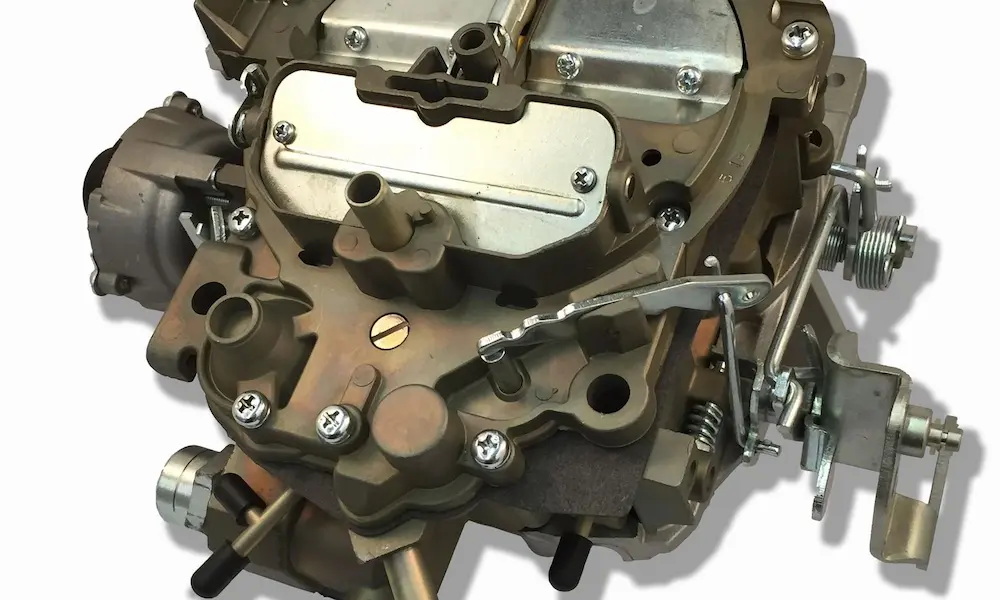
Gasoline sitting inside a carburetor oxidizes over time. It hardens into sticky varnish that clogs the tiny fuel jets and air passages your engine needs to run correctly. A fast-drying cleaner would evaporate before touching those deposits.
Carburetor cleaner is engineered to linger. The toluene and acetone stay wet on the surface long enough to chemically break down the hardened varnish into a liquid slurry you can flush away. The formula also leaves a thin, oily film behind after the volatile components evaporate. That film lubricates throttle shafts and choke linkages while deterring new carbon buildup.
That oily film is a feature. On a carburetor, it’s protective. On a brake rotor, it’s catastrophic.
How Brake Cleaner Actually Works
Brakes work entirely on friction. Any oil, grease, or fluid contaminating the rotor or pad surface reduces your stopping power immediately.
Brake cleaner’s job is aggressive displacement followed by instant evaporation. The high-pressure spray blasts away brake dust and road grime. The solvent — packed with methanol and volatile hydrocarbons — liquefies any oils on contact, then flashes off within seconds.
In a side-by-side comparison, brake cleaner applied to a rubber mat evaporated completely in about six minutes and sixteen seconds. Carburetor cleaner in the same test stayed wet, sticky, and tacky indefinitely. That’s not a flaw. That’s the point.
Chlorinated vs. Non-Chlorinated Brake Cleaner
Brake cleaner splits into two distinct types — and they carry very different risks.
| Feature | Chlorinated Brake Cleaner | Non-Chlorinated Brake Cleaner |
|---|---|---|
| Primary Solvents | Tetrachloroethylene, Methylene Chloride | Acetone, Heptane, Hexane, Methanol |
| Flammability | Non-flammable | Extremely flammable |
| Evaporation Speed | Extremely fast | Fast |
| Residue | Zero | Zero |
| Key Risk | Phosgene gas near welding heat | Peripheral nerve damage, flash fire |
| Regulatory Status | EPA banned most uses in 2024 | Heavily regulated by VOC limits |
Chlorinated formulas were the industry standard for decades because they’re incredibly effective and non-flammable. The problem is what happens when they get near heat.
The Welding + Brake Cleaner Combination Can Kill You
This isn’t a minor safety caution. It’s a genuine, documented lethal hazard.
When chlorinated solvents like tetrachloroethylene or methylene chloride contact welding arc temperatures — or even intense UV radiation from a MIG torch — they thermally decompose into hydrogen chloride gas and phosgene gas.
Phosgene was used as a chemical weapon in World War I. It’s lethal at concentrations as low as 4 parts per million. It’s colorless. It’s nearly odorless at fatal concentrations. And it can take up to 48 hours before symptoms appear — by which point pulmonary edema sets in and the victim effectively drowns in fluid in their own lungs.
The rule is simple: never use aerosol brake cleaner to prep metal for welding. Use liquid acetone wiped on manually, then mechanically abrade the surface.
Non-Chlorinated Cleaner Has Its Own Danger: Nerve Damage
Switching to non-chlorinated brake cleaner avoids the phosgene risk. But n-hexane — a primary solvent in many non-chlorinated formulas — attacks your peripheral nervous system.
The CDC documented cases of automotive technicians developing permanent nerve damage from routine brake cleaner use in California shops. The damage pattern is called distal axonopathy. It starts with numbness and tingling in your toes and fingers, creeps up your limbs, and eventually causes muscle weakness, coordination loss, and in severe cases, paralysis.
The toxic metabolite is 2,5-hexanedione, produced when your liver processes n-hexane. And it gets worse: acetone — also present in the same cans — accelerates this conversion. The combination hits harder than either chemical alone.
There’s no treatment other than stopping exposure. Some recovery happens. Some doesn’t.
What Happens When You Use the Wrong Cleaner
Getting carburetor cleaner vs brake cleaner mixed up has real, immediate consequences — not just theoretical ones.
Brake Cleaner on a Carburetor
Brake cleaner evaporates too fast to dissolve hardened varnish. It can dislodge chunks of carbon that migrate into tiny idle circuits and make the clog worse. Worse, the methanol or chlorinated solvents will immediately attack rubber float needles, diaphragms, and gaskets inside the carburetor, causing them to swell out of shape. That ruins fuel metering, floods the engine, and can cause fires.
Carburetor Cleaner on Brakes
Carburetor cleaner leaves an oily film by design. Spray it on a brake rotor or pad and that film embeds into the porous friction material. When you brake, it acts as a lubricant instead of allowing friction. Stopping distances increase. Braking becomes unpredictable. Contaminated pads generally can’t be cleaned and must be replaced entirely.
Use This Application Guide
| Component | Carburetor Cleaner | Brake Cleaner |
|---|---|---|
| Carburetors & Throttle Bodies | ✅ Highly Recommended | ❌ Destroys internal seals |
| Brake Rotors, Drums & Calipers | ❌ Leaves oily film | ✅ Highly Recommended |
| PCV Valves | ✅ Removes sludge | ⚠️ Not recommended |
| EGR Valves | ✅ Removes carbon | ⚠️ Not recommended |
| Clutch Assemblies & Flywheels | ❌ Leaves oily film | ✅ Highly Recommended |
| Intake Manifolds | ✅ Recommended | ⚠️ Not recommended |
| Near Welding Equipment | ⚠️ Flammable — keep clear | ❌ Phosgene risk — never use |
What U.S. Regulations Say
The regulatory picture around these solvents is complex and moving fast.
Federal OSHA sets a permissible exposure limit for methylene chloride at 25 parts per million over an 8-hour shift. NIOSH recommends 100 ppm and the ACGIH recommends just 50 ppm — levels easily exceeded by aerosol use in a closed garage.
For n-hexane, OSHA’s PEL sits at 500 ppm, though documented nerve damage occurs below that threshold during regular shop work.
The EPA made a major move in 2024. Using its authority under the Toxic Substances Control Act, the agency finalized a rule banning methylene chloride from consumer use and most industrial applications. The remaining permitted industrial uses require air monitoring, supplied-air respirators, and compliance with a new 8-hour exposure ceiling of just 2 ppm — down from OSHA’s 25 ppm. Full compliance is required by May 2027.
State VOC regulations create an entirely different patchwork. California’s Air Resources Board caps VOC content in these aerosol cleaners at just 10% by weight. Several northeastern states match that limit. Some less-restricted states still allow above 70% VOC content in the same products.
That means the exact chemical formula inside a can of brake cleaner depends heavily on where in the U.S. it was sold. California cans rely heavily on acetone — which the CARB specifically exempts from VOC classification. Cans sold in Texas may contain far higher concentrations of the more hazardous hydrocarbons.
Use These Solvents Safely
A few non-negotiable practices apply regardless of which cleaner you’re using:
- Wear nitrile gloves, not latex. Latex provides essentially zero protection against organic solvents like toluene and hexane.
- Ventilate actively. Opening a garage door isn’t enough for non-chlorinated formulas. Heavy solvent vapors pool at floor level and can ignite.
- Never use aerosol solvents near welding. Even non-chlorinated formulas are extremely flammable. Chlorinated formulas generate phosgene gas.
- Shield painted panels and plastics. Both cleaners will strip automotive paint, clear coats, and powder coatings on contact.
- Allow carburetor cleaner to soak. Wiping immediately wastes the chemical. The soak time is what breaks down the varnish.
The price difference between carburetor cleaner and brake cleaner is pennies. The cost of using the wrong one — destroyed brake pads, ruined carburetor seals, or a toxic gas exposure — is significantly higher. Read the label, match the solvent to the component, and treat both as the industrial chemicals they actually are.