Think your car’s cabin feels a little dull after dark? Cars with ambient lighting fix that fast — and they do a lot more than just look cool. From fighting driver fatigue to flashing safety alerts, modern interior lighting is smarter than you think. Stick around, because this guide covers everything from luxury flagships to budget-friendly picks — and even how to add it yourself.
What Is Ambient Lighting in a Car?
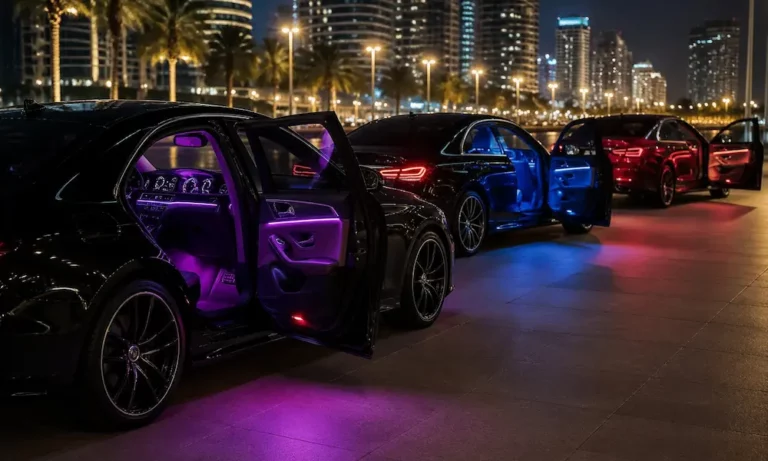
Ambient lighting is a system of soft, indirect LED lights placed along your dashboard, door panels, footwells, and center console. It creates a warm glow inside the cabin instead of harsh overhead brightness.
It’s not just decorative. Well-placed ambient light reduces eye strain during night drives, helps you find cup holders without fumbling, and can even warn you about blind spots — all without distracting you from the road.
The automotive interior ambient lighting market was worth $4.57 billion in 2025 and is projected to hit $6.75 billion by 2031. That’s a 6.72% annual growth rate. Clearly, this isn’t a passing trend.
Why Cars With Ambient Lighting Are More Than Just Pretty
Here’s the thing most people miss: ambient lighting isn’t just about aesthetics. It serves real, practical purposes inside your car.
It Fights Driver Fatigue
Driving at night creates a jarring contrast between your bright instrument cluster and a pitch-black cabin. That contrast strains your eyes fast.
Soft, indirect lighting along the door panels and dashboard reduces that contrast, making the cabin feel more spacious and less stressful. Lexus even offers 64-color “Thematic Ambient Illumination” — soft blues and greens for relaxation, warmer tones to keep you alert.
It Connects to Safety Systems
This is where it gets genuinely impressive. Modern ambient lighting works with your Advanced Driver Assistance Systems (ADAS) to communicate danger without making noise.
Here’s how different brands use it:
| Safety Scenario | Lighting Response | Example Brands |
|---|---|---|
| Blind Spot Detection | Door strip pulses red | Mercedes-Benz, Audi, BMW |
| Exit Warning | Door flashes bright red when handle pulled | Audi, Mercedes-Benz |
| Collision Warning | Dashboard flashes red urgently | BMW, Genesis |
| Lane Departure | Subtle color shift in peripheral lighting | Advanced ADAS prototypes |
| Incoming Call | Gentle pulse in center console | Valeo, Mercedes-Benz |
That exit warning system is a big deal in cities. If you crack the door open and a cyclist’s approaching, the door strip flashes red immediately. No beep needed — your eyes catch it naturally in your peripheral vision.
It Helps Autonomous Vehicles Communicate
As cars creep toward self-driving capability, light becomes the cabin’s main language. Cool blue means the car’s driving. Warm amber means it needs you back. These visual cues help you trust the system — and respond faster when the car needs a hand.
The Best Cars With Ambient Lighting Right Now
Luxury Picks That Set the Standard
Mercedes-Benz EQS — This is the benchmark. Around 190 individual LEDs create a continuous light strip that wraps the entire cabin. It pulses blue when you lower the temperature and red when you raise it. Say “Hey Mercedes” and the cockpit lighting pulses to show it’s listening. It’s genuinely impressive.
BMW XM — Features a side-lit geometric ceiling that creates a 3D lighting effect unlike anything else on the market. You can control it through BMW’s Operating System 8 via touchscreen or voice.
Genesis GV80 — Its “Mood Curator” system syncs ambient lighting with the fragrance dispenser and massage seats. Yes, all three at once. It’s basically a spa on wheels.
Cadillac Escalade IQ — Offers 126 color choices plus laser-etched wood trim panels that glow at night. Very bold, very American luxury.
Porsche Taycan — Lets the lighting pulse and shift colors in sync with whatever’s playing through the audio system. Younger, tech-focused buyers love it.
Mid-Range Cars With Ambient Lighting Worth Considering
You don’t need to spend six figures. The mid-range segment has caught up fast — it accounts for over 40% of the ambient lighting market.
| Model | Lighting Highlights | Availability |
|---|---|---|
| Volkswagen Jetta SEL | 10-color palette across dash, doors, console | Standard on SEL and GLI trims |
| Hyundai Sonata | Customizable color profiles | Standard on 2020+ higher trims |
| Kia Soul GT-Line | Music-synced door panel accent lighting | Standard on GT-Line and Turbo |
| Mazda CX-5 Premium | Subtle warm white on key controls | Standard on Premium and above |
| Toyota Camry XLE | Relaxed LED cabin lighting | Standard on XLE and XSE |
The Kia Sportage SX Prestige deserves a special mention too. It brings multi-zone ambient lighting to a compact SUV at a price most families can actually afford.
Electric Vehicles Are Pushing Lighting Further
EVs are the real catalyst here. Without an engine roaring away, the cabin becomes quieter — which means every visual and sensory detail matters more.
EV platforms also ditch the transmission tunnel, opening up completely flat floors. That gives designers way more flexibility for lounge-inspired cabin layouts where lighting can run continuously from front to rear without interruption.
Lucid Air uses a sweeping glass canopy during the day, then transitions to warm ambient lighting at night for what the brand calls a “California living room” vibe.
Polestar takes a different route — restrained Scandinavian minimalism with clean lines and subtle lighting that feels high-end without trying too hard.
Pickup Trucks With Ambient Lighting? Absolutely.
This one surprises people. American full-size trucks used to be all mud flaps and rubber floors. Not anymore.
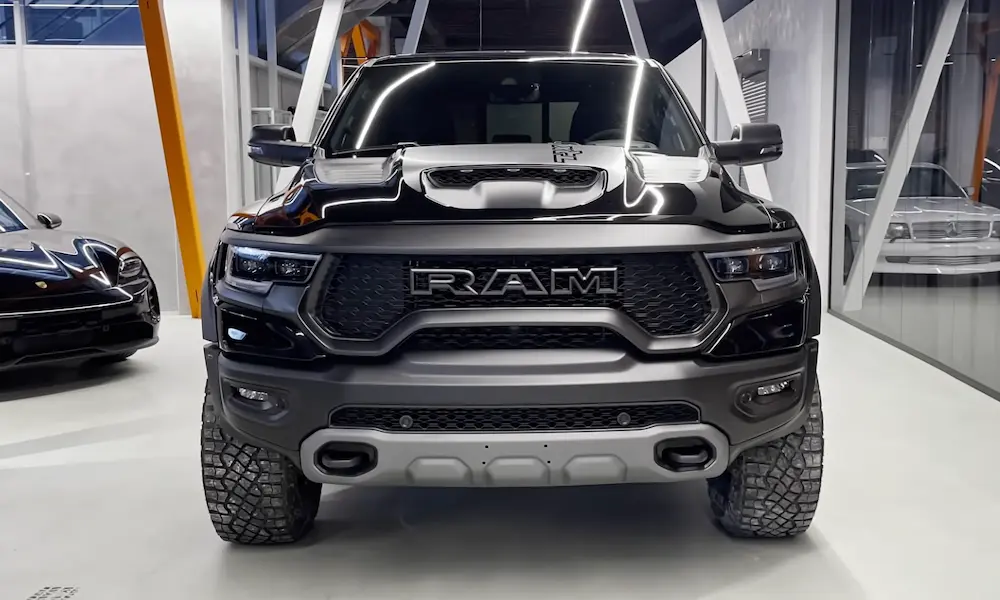
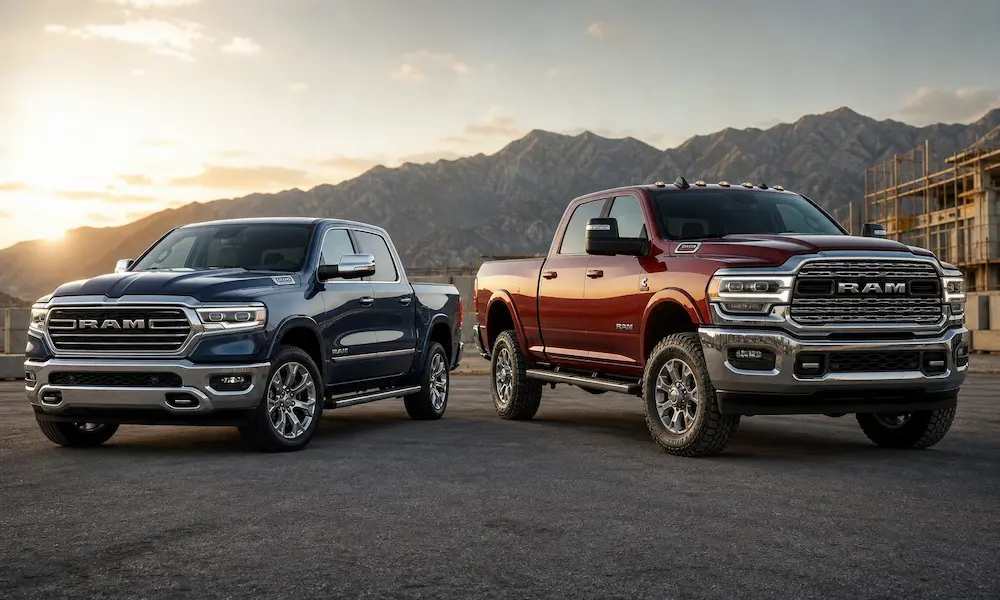
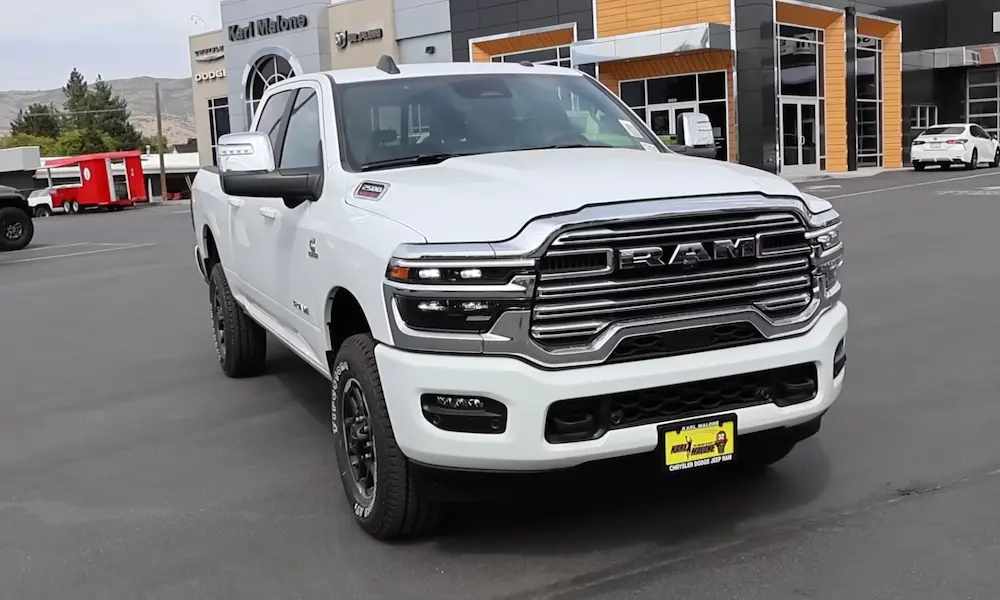
RAM 1500 Tungsten — The most luxurious pickup on the market right now. Its sophisticated ambient lighting system complements a suede headliner, real wood trim, and a 23-speaker Klipsch audio system. It’s a full luxury experience in a truck body.
| Truck Model/Trim | Ambient Lighting | Interior Focus |
|---|---|---|
| RAM 1500 Tungsten | Premium system, standard | Suede headliner, carbon fiber, leather |
| Ford F-150 Platinum | Standard | Leather seats, wood accents |
| Chevy Silverado High Country | Standard | Perforated leather, genuine wood |
| Ford F-150 Raptor | Standard | Performance-oriented rugged materials |
| Chevy Silverado LTZ | Standard | Leather upholstery, Bose audio |
How the Tech Actually Works
You don’t need to be an engineer to understand this, but it’s worth knowing what’s powering these systems.
| Component | What It Does | What You Experience |
|---|---|---|
| LED Modules | Primary light source | Energy-efficient, vivid color |
| PWM Drivers | Controls brightness via power cycling | Smooth, flicker-free dimming |
| ADC Drivers | Reads external light sensors | Auto-adjusts brightness for conditions |
| RGB Controllers | Manages color mixing | Millions of color combinations |
| OLED Surfaces | Ultra-thin flexible lighting | No hotspots, premium even glow |
The big shift happening right now is toward addressable LEDs — where each tiny light in a strip is controlled independently. This enables flowing animation effects that move across your dashboard like a wave. OLED lighting is next, offering paper-thin panels that can follow the complex curves of modern trim without any visible housing.
These systems tie into your car’s infotainment platform. BMW’s OS8 and Mercedes’ MBUX both let you control lighting via touchscreen, smartphone app, or voice command.
Don’t Have Ambient Lighting? Add It Yourself
Good news: the aftermarket makes this surprisingly easy.
Companies like KOBO and Lighting Trendz offer plug-and-play LED kits for popular models including the Tesla Model 3, Ford Mustang, and Honda Civic. Most connect via Bluetooth to a smartphone app — giving you access to millions of colors and animated effects.
Here’s what’s trending in aftermarket ambient lighting right now:
- Flow Series lighting — Animated, moving color patterns across door panels and dashboards
- Starlight headliners — Hundreds of fiber-optic lights mimicking a starry night sky (originally a Rolls-Royce signature, now available for way less)
- Music-sync systems — Lighting that pulses in time with your audio through your car’s Bluetooth connection
- Footwell and underseat kits — Low-profile strips that add glow without touching OEM panels
Modern kits don’t require cutting wires or removing trim panels. They clip into existing gaps and connect to your fuse box or USB port. That makes them genuinely accessible even if you’ve never modded a car before.
What to Watch Out For
Ambient lighting systems aren’t all perfect. A few real concerns exist:
Color consistency — Matching the blue in your footwells to the blue on your dashboard requires precise calibration. Cheap components can produce mismatched tones.
Heat buildup — Dense LED arrays in headliners or door panels generate heat. Quality systems manage this; budget aftermarket kits sometimes don’t.
Distraction risks — Rapidly changing colors or overly bright light can reflect off your windshield and reduce visibility. The NHTSA keeps a close eye on this. Reputable manufacturers design systems to avoid these issues, but poorly installed aftermarket kits can create real problems.
Standardization gaps — There’s no universal rulebook yet for what color means what. Red doesn’t always mean danger across every brand. As these systems become more safety-critical, that inconsistency is something the industry needs to fix.
The Bottom Line on Cars With Ambient Lighting
Cars with ambient lighting have gone from a novelty to a genuine feature worth shopping for. Whether you want a calming drive home after a long day, a safety system that speaks in color, or just a cabin that feels less like a rental car — interior lighting delivers real value.
The market’s growing fast, the tech’s getting smarter, and the price is coming down. If your current car doesn’t have it, aftermarket kits make it easy to add. If you’re buying new, it’s absolutely worth checking the trim level — because once you’ve driven with it, you won’t want to go back.