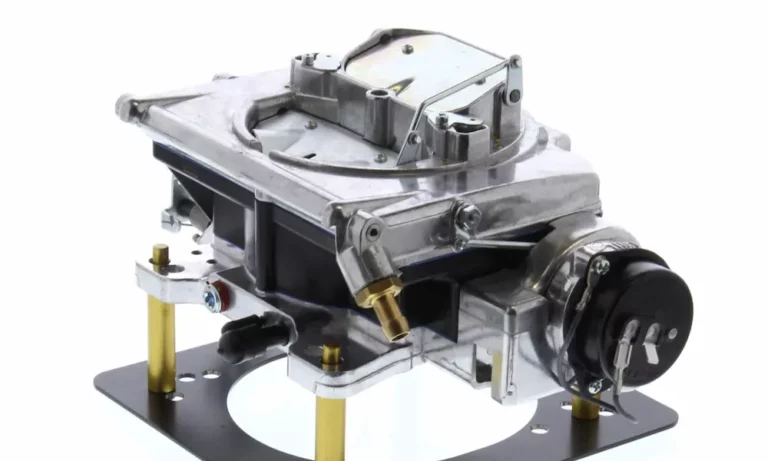
Got a Demon carburetor in your hands and no idea what it is? This guide walks you through every stamp, digit, and casting mark so you can decode it fast and order the right parts the first time. Stick around — the number system is actually clever once you know how it works.
Where to Find Your Demon Carburetor’s ID Number
Before you can decode anything, you need to find the number. Where it lives depends on which model you’ve got.
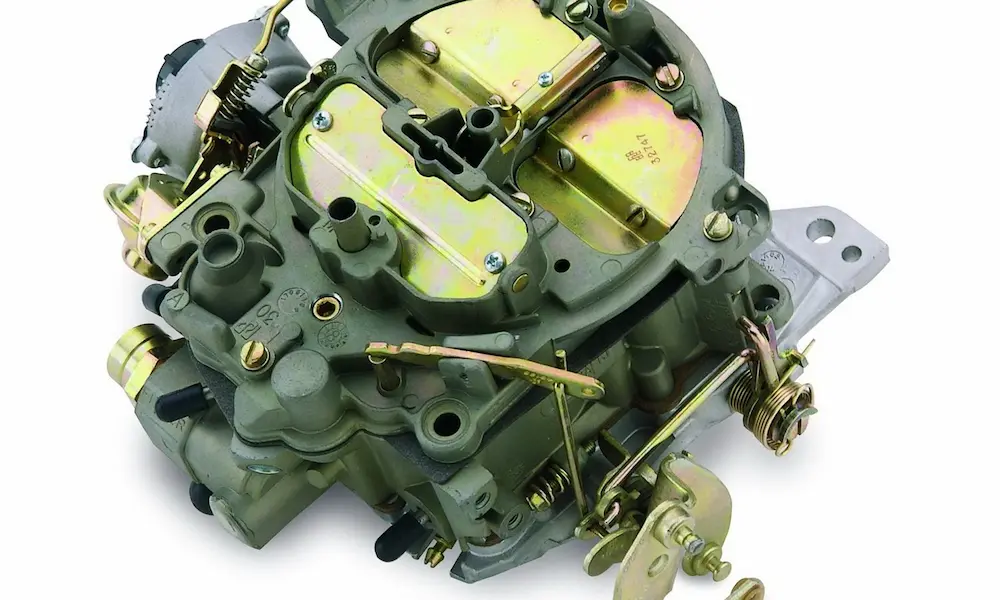
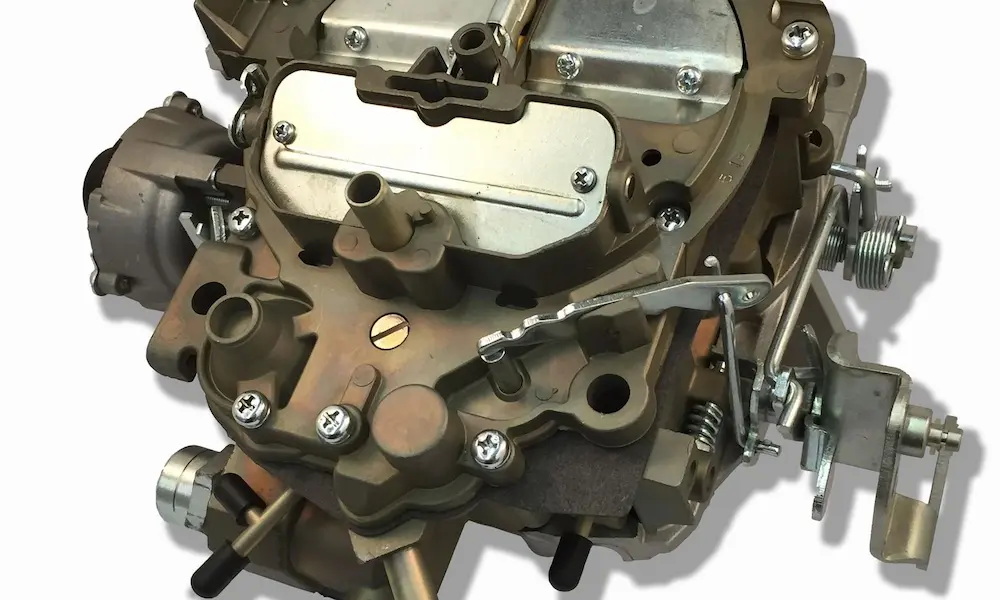
Classic modular four-barrel models (Speed Demon, Mighty Demon, Race Demon, many Barry Grant-era units) carry their alphanumeric identification number stamped or laser-etched onto the outer edge of the air cleaner mounting ring. That’s the flat circular flange where your air cleaner sits.
Street Demon models are different. Their ID markings are laser-etched into the rear of the air horn. You’re looking for a four-to-six-digit alphanumeric list number — something like 1901 or 1901 BK — followed by a five-digit production code.
Modern modular four-barrel models (post-Holley acquisition) use a list number up to nine digits long, plus a separate five-digit production code.
Early Barry Grant-era units are the tricky ones. Many left the factory without a laser-etched list number at all. Check the baseplate for a stamped serial number. If that’s blank too, you’ll rely on cast identifiers and physical measurements — which we’ll cover below.
Decoding the Barry Grant Part Number System
The classic Barry Grant numbering system encodes every key physical detail of the carburetor into a structured alphanumeric sequence of seven to ten characters. Each digit tells you something specific.
First Digit: The Series Code
The first digit tells you which Demon family you’re dealing with.
| First Digit | Series | Best For |
|---|---|---|
| 1 | Speed Demon | Street and mild strip use |
| 2 | Race Demon | Dedicated drag and track racing |
| 3 | Race Demon RS | Racing with removable venturi sleeves |
| 4 | Road Demon | Stock replacement and mild street engines |
| 5 | Mighty Demon | Radical street/strip builds |
| 6 | Road Demon Jr. | Budget-friendly stock replacement |
| 8 | King Demon | High-displacement drag racing |
| 9 | King Demon RS | Large-flange racing with removable sleeves |
Second and Third Digits: Venturi Diameter
These two digits represent the internal venturi diameter in inches, which directly controls airflow capacity. On RS models, they also correspond to the color of the interchangeable venturi sleeves.
| Code | Venturi Diameter | Sleeve Color |
|---|---|---|
| 06 | 1.064″ | Orange |
| 28 | 1.280″ | Green |
| 37 | 1.375″ | Purple |
| 40 | 1.400″ | Red |
| 42 | 1.425″ | Blue |
| 50 | 1.500″ | Gold |
| 56 | 1.562″ | Black |
| 59 | 1.590″ | Silver |
King Demon RS models use a separate sleeve color scale. For example, code 40 = 1.500″ green sleeves, 62 = 1.625″ black sleeves, and 83 = 1.830″ gold sleeves.
Fourth Digit: Throttle Plate Size
- 0 = 1-7/16″ butterfly (small-displacement, 390-style)
- 2 = 1-11/16″ butterfly (standard small block and moderate big block)
- 3 = 1-3/4″ butterfly (high-performance and large displacement)
- 8 = 2″ butterfly (Dominator-flange racing standard)
- 9 = 2.100″ butterfly (ultra-large bore racing)
Fifth and Sixth Digits: Booster Type
- 01 = Down-leg booster (strong upper-RPM signal, race cars)
- 02 = Annular booster (multi-hole discharge, strong low-end torque)
- 03 = Straight-leg booster (progressive signal, street use)
Seventh Digit: Fuel Calibration
- 0 = Gasoline calibration (silver dichromate metering blocks)
- 5 = Methanol calibration (black anodized metering blocks)
Suffix Codes: The Final Characters
Suffixes tell you about secondary actuation, choke type, and any special competition calibration packed into the unit.
| Suffix | What It Means |
|---|---|
| VE | Vacuum secondaries, electric choke |
| VFE | Vacuum secondaries, Ford kickdown, electric choke |
| E | Electric choke |
| F | Ford kickdown linkage |
| DR | Drag race calibration |
| GC | General competition |
| OT | Oval track |
| RR | Road race |
| TR | Tunnel ram |
| BC | Blower calibration |
| C | Crate engine calibration |
So a part number like 1-42-2-02-0-VE reads as: Speed Demon, 1.425″ venturis (blue sleeves), 1-11/16″ throttle plates, annular boosters, gasoline calibration, vacuum secondaries with electric choke.
Identifying Road Demons Without a Visible List Number
The Road Demon identification guide outlines a smart physical method when you can’t find a list number. Look for a single cast digit on top of the main body, right next to the secondary vent tube.
- Cast “6” with a dimple + annular primary booster + straight secondary booster = 525 CFM
- Cast “6” with a dimple + down-leg primary booster + straight secondary booster = 625 CFM
- Cast “7” with a dimple + down-leg primary booster + straight secondary booster = 725 CFM
Every Road Demon part number starts with 4. If the main body shows a cast “6” with a dimple, digits two through five are 2820. A cast “7” with a dimple means digits two through five are 4020. Booster codes follow: 20 = annular primary plus straight secondary, 10 = down-leg primary plus straight secondary. The eighth character is always V for vacuum operation.
Each Series Has Distinct Physical Traits
OnAllCylinders’ breakdown of Demon Carburetion does a solid job explaining how each model differs mechanically — and those differences are your fastest visual ID clues.
Street Demon
Don’t mistake the Street Demon for a traditional four-barrel. It uses a two-piece main body, smaller primary bores, and triple-stack boosters for maximum fuel atomization. Its most distinctive feature is the patented Goggle Valve Secondary — a single siamese-shaped throttle valve replacing traditional secondary butterflies. Instead of a standard power valve, it uses metering rods and step-up pistons controlled by engine vacuum. It’s available in 625 CFM and 750 CFM, and you can get it with either an aluminum or composite polymer fuel bowl. The composite bowl cuts fuel temperatures by up to 20 degrees — a real benefit with modern reformulated gasoline.
Speed Demon
Speed Demons feature CNC-machined metering blocks with replaceable idle-feed restrictors and emulsion bleeds. The billet aluminum baseplate includes the patented Idle-Eze bypass air valve — a small valve that meters additional air through the air cleaner stud hole to let you set idle speed without disturbing throttle blade position relative to the transfer slots. This prevents off-idle stumbles and rich spots that plague a lot of carb setups. Available with vacuum or mechanical secondaries.
Mighty Demon
Spot a Demon with no choke horn or tower? That’s a Mighty Demon. The choke assembly is completely removed to maximize unrestricted airflow. It runs mechanical secondaries, CNC metering blocks, and the same Idle-Eze billet baseplate as the Speed Demon. It arrives wet-flow calibrated for high-compression, aggressive cam, and high-flow intake setups right out of the box.
Race Demon and King Demon RS
The Race Demon uses a standard 4150-style mounting flange. The King Demon steps up to a Dominator-style flange for big-displacement drag applications. On RS variants, the venturi sleeves are fully removable — swap gold sleeves (1,195 CFM) down to black sleeves (995 CFM) by pulling the baseplate. RS models also have threaded, removable boosters for rapid swaps between down-leg and annular designs. King Demons add intermediate feed restrictors just above the idle mixture screws for precise fuel metering during the idle-to-main-circuit transition.
Understanding Wet vs. Dry CFM Ratings
Here’s where a lot of people get confused during demon carburetor identification. Demon carburetors are flow-tested using a wet method — actual liquid simulates fuel density instead of dry air alone.
The CFM rating on a Demon represents a real-world average airflow under typical operating conditions. A “1000 Race Demon” averages 1,000 CFM on the engine, but its dry-air flow rate may actually measure closer to 1,188 CFM at 1.5 inches of mercury on a dry flow bench. Don’t compare those numbers directly to dry-rated competitors — you’ll end up with the wrong carb for your application.
Booster Type: A Visual and Performance ID Tool
Booster design directly affects how fuel atomizes and when it enters the airstream. Knowing which one you’re looking at helps confirm your identification.
- Straight-leg boosters look like simple tubes. They provide a progressive signal — great for street vacuum secondary setups.
- Down-leg boosters sit lower in the venturi bore. They generate a stronger pressure drop at mid-to-high RPM — common in Race Demons.
- Annular boosters are larger and feature multiple discharge holes (eight on Speed Demons, up to seventeen on larger racing designs) around their inner circumference. They create tremendous low-end torque but reduce overall air capacity slightly. Speed Demon 8-hole annular boosters are particularly well regarded for improving throttle response on street builds.
The Demon 98: Identifying the Two-Barrel Vintage Unit
The Demon 98 is a two-barrel retro-style carburetor designed to replace vintage Stromberg 97 or Holley 94 units on classic three-bolt intake manifolds — Ford Flatheads, Chrysler Hemis, Buick Nailheads, and early Y-block engines. It comes in two versions: Model 9801 (primary carburetor with idle circuit and progressive linkage points) and Model 9802 (secondary carburetor optimized for multi-carb setups).
Key factory specs from the Demon 98 instruction manual:
| Specification | Factory Value |
|---|---|
| Throttle bore diameter | 1-3/16″ |
| Main venturi diameter | 0.980″ |
| Main jet size | 0.049″ |
| Power valve trigger | 6.5″ Hg |
| Accelerator pump capacity | 30cc |
| Accelerator pump nozzles | 0.031″ |
| Emulsion holes | Three at 0.028″ |
Rebuild Kits by Model
Once you’ve confirmed your demon carburetor identification, grab the right rebuild kit. Here’s a quick reference:
| Model | Rebuild Kit |
|---|---|
| Road Demon Jr. (525 / 625 CFM) | DEM-190000 |
| Road Demon (625 / 725 CFM) | DEM-190003 |
| Street Demon 625 CFM | DEM-1920 |
| Street Demon 750 CFM | DEM-1919 |
| Speed Demon (vacuum secondary) | DEM-190003 |
| Speed Demon (mechanical secondary) | DEM-190004 |
| Mighty Demon (all models) | DEM-190004 |
Installation Details Worth Checking
Float levels: Invert the fuel bowl to do a dry check. The gap between the inside top of the bowl and the top of the float should be between 0.375″ and 0.400″ (up to 0.500″ on Road Demons). Wet level should sit exactly in the center of the sight glass windows.
Mounting torque: Only five to seven foot-pounds. Don’t overtighten — you’ll distort the base gasket and pull in air leaks you’ll never find.
Throttle linkage travel: At wide-open throttle, you need 0.015″ to 0.020″ of remaining travel in the accelerator pump linkage. If the pump hits bottom before WOT, bend the cam follower to adjust it.
Initial timing: Start at 18 degrees BTDC. If total timing runs too high and causes knock under hard acceleration, back it off until it runs clean.
Fuel bowl asymmetry: Float bowls thread only on one side — you physically can’t install them backward, which saves you from a common rebuild mistake.