Got a clicking dash or one side blowing hot while the other blows cold? Your Dodge Ram blend door actuator location might be the culprit — and finding it isn’t always obvious. This guide covers every Ram generation from 2002 to 2025 so you can stop guessing and start fixing.
What Is a Blend Door Actuator (And Why Does It Matter)?
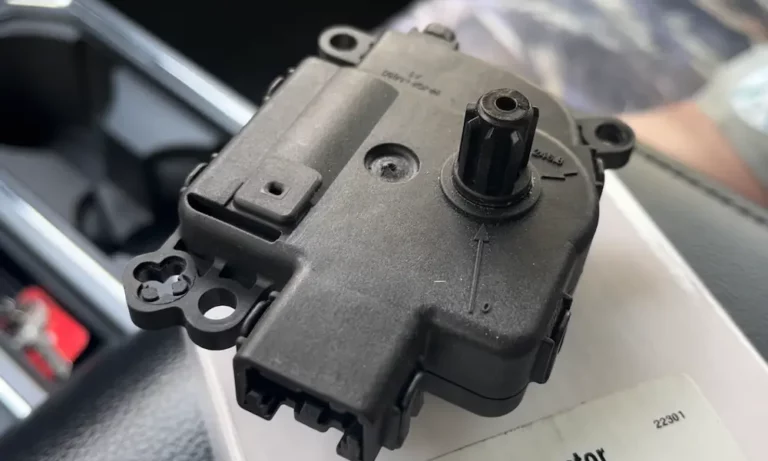
A blend door actuator is a small electric motor that controls the plastic doors inside your HVAC housing. These doors mix hot and cold air to hit your target temperature. They also control airflow direction — dash vents, floor, defrost.
When one fails, you get:
- A clicking or ticking sound behind the dash
- Air stuck on one temperature
- Heat only blowing on one side
- Air stuck coming from only one vent location
The symptoms of a bad blend door actuator are hard to ignore once they start. The tricky part is knowing which actuator failed and where it lives in your truck.
How Many Actuators Does a Dodge Ram Have?
It depends on your year and climate control package. Single-zone trucks have fewer. Dual-zone automatic systems add extra actuators for separate driver and passenger control.
| Vehicle Generation | System Type | Actuator Count | Key Functions |
|---|---|---|---|
| 3rd Gen (2002–2008) | Single Zone | 4 | Recirculation, Blend, Mode 1, Mode 2 |
| 3rd Gen (2002–2008) | Dual Zone | 5 | Driver Blend, Passenger Blend + above |
| 4th Gen (2009–2018) | Single Zone | 4 | Recirculation, Blend, Mode 1, Mode 2 |
| 4th Gen (2009–2018) | Dual Zone | 5 | Driver Blend, Passenger Blend + above |
| 5th Gen (2019–2025) | Dual Zone | 5–6 | Multiple Mode Gates + all above |
Knowing your count matters. If you’re replacing one actuator and the truck has five, the other four aren’t far behind.
3rd Gen Dodge Ram (2002–2008) Blend Door Actuator Location
The third-gen Ram has a reputation in the repair world — and not a good one. The five-door HVAC system in 2002–2008 models is notorious for failures. Here’s where each actuator hides.
Recirculation Actuator Location
This one sits at the far right of the HVAC housing, just above the blower motor. It’s tucked behind the glove box.
To get eyes on it:
- Open the glove box fully
- Release the side stops
- Let the box hang down
- Look through the air intake grate
The bad news? The third-gen recirculation door lacks a physical stop point. During calibration, the motor keeps pushing the door until it snaps the plastic hinge. Sometimes the broken door falls directly onto the blower motor and blocks airflow entirely.
Fixing this usually means pulling the entire plenum box and evacuating the A/C system. Some techs cut into the box for access instead.
Blend Door Actuator Location (Single Zone)
The single-zone blend door actuator sits on the bottom of the HVAC plenum. You access it from the passenger side footwell. It controls the clamshell-style door that sits horizontally over the heater core.
A lower blend door connects to the upper one via a wire rod. When the upper door breaks — and it often does — both lose function.
Blend Door Actuator Location (Dual Zone)
Here’s where it gets painful. The passenger-side blend door actuator in dual-zone trucks hides on the back of the HVAC box, facing the firewall.
It’s one of the hardest actuator locations in any Dodge Ram. Most repairs require a full dashboard removal. There’s no shortcut on this one.
Mode Door Actuator Locations (Mode 1 and Mode 2)
Both mode actuators live on the driver’s side of the central HVAC housing.
- Mode 1 controls whether air goes to the dash vents
- Mode 2 toggles between floor and defrost vents
A failed Mode 1 door traps air in the dash vent position. You lose floor heat and defrost. In cold climates, that’s a safety problem. Access requires pulling the lower driver’s side dash trim panels.
4th Gen Dodge Ram (2009–2018) Blend Door Actuator Location
The fourth-gen Ram cleaned up the dash design but kept most of the same HVAC headaches. The actuators are small black plastic boxes with internal gears that strip over time. A rhythmic clicking sound is the giveaway.
Driver-Side Blend Door Actuator: The Easy One
Good news — this is the most accessible actuator in the whole truck. When it fails, the driver’s side blows cold while the passenger side stays warm (or vice versa).
Here’s how to get to it without pulling the dash:
- Open the lower glove box
- Detach the side tension strap
- Push in the tabs and let the box drop
- The actuator is on the side of the HVAC case, held by two screws
This blend door actuator swap on 2009–2018 Ram trucks takes under an hour with basic tools. The catch: if the plastic door hinge inside the housing is broken (not just the motor), you’re looking at a full dash pull regardless.
Full Dual-Zone Actuator Map (4th Gen)
Here’s the complete layout for five-actuator dual-zone trucks:
- Recirculation Actuator — Far right of the dash, high up behind the passenger air intake
- Driver Blend Actuator — Behind the lower glove box
- Passenger Blend Actuator — Upper portion of the HVAC housing, often needs full dash removal
- Mode 1 Actuator — Driver’s side of the central plenum, face/vent control
- Mode 2 Actuator — Also driver’s side, manages floor and defrost gates
The mode actuators sit near the accelerator and brake pedal assembly. Removing the knee bolster gets you there. A small ratchet with a Phillips bit works well in that tight space.
When You Have to Pull the Dash
Some repairs can’t avoid it. Here’s what a full dash removal involves on fourth-gen trucks:
| Step | What Comes Out | Why |
|---|---|---|
| 1 | Center Console | Lets the dashboard slide or tilt back |
| 2 | Steering Column | Must drop for clearance |
| 3 | A-Pillar Trim | Exposes upper dash mounting bolts |
| 4 | Side Panels and Glove Box | Access to wiring and side mounts |
| 5 | Passenger Airbag/Harnesses | Electrical disconnection before removal |
A skilled tech can do this in several hours. If you’re doing it yourself, block off a full day.
5th Gen Dodge Ram (2019–2025) Blend Door Actuator Location
The fifth-gen Ram DT platform redesigned the HVAC housing completely. The actuators are separate motors mounted on the outside of the distribution housing — cleaner design, but not necessarily easier to reach.
Where Each Actuator Lives
- Driver-Side Temperature Actuator — Left side of the distribution housing, accessible from the driver’s footwell but often blocked by structural bracing
- Passenger-Side Temperature Actuator — Right side of the housing; glove box access is more restricted than in 4th gen trucks
- Mode Actuators — Driver’s side of the central unit, controlling floor, vents, and defrost
- Recirculation Actuator — Mounted on the far-right air inlet housing; a common source of clicking sounds after startup
Fifth-gen owners dealing with driver-side cooling loss should check TSB 24-001-20 before replacing any actuator. The bulletin covers a design flaw where the housing fails to separate cold evaporator air from heat produced by the heater core. The fix is a full housing replacement — a 10-plus hour job that requires pulling the entire dash and evacuating the A/C system.
The Recirculation Door Shortcut
Not every fifth-gen repair needs a full dash pull. For the recirculation door, there’s a faster path:
- Remove the glove box
- Pull the blower motor from the bottom of the housing
- Reach up through the opening
- Remove the two or three 7mm/8mm bolts holding the actuator
- Pop the white plastic tab off the door hinge
This no-dash-removal recirculation door repair saves hours of labor when it applies.
5th Gen Mopar Actuator Part Numbers
| Mopar Part Number | What It Does | Fits |
|---|---|---|
| 68396059AB | Temperature Actuator (Driver or Passenger) | All 5th Gen Engines |
| 68396062AB | Mode and Recirculation Actuator | All 5th Gen Engines |
| 68396045AA | Evaporator Fin Probe Sensor | All 5th Gen Engines |
These parts are position-specific. Double-check which side and which function before ordering. The 5th gen HVAC repair kit from Blend Door USA includes upgraded components if you want to avoid a repeat repair.
Why Dodge Ram Blend Door Actuators Keep Failing
The root cause is simple: the motors are too strong for the plastic doors they move.
During calibration, the actuator drives the door to its physical limits to “learn” the range. It detects resistance by monitoring electrical load. If the plastic hinge or stop pin is brittle — common after years of heat cycling inside the dash — the motor force snaps it.
This design conflict between motor torque and plastic door strength affects every generation. Cold climates make plastic more brittle. Hot climates accelerate material fatigue. Either way, the doors eventually lose.
Some owners upgrade to steel or aluminum replacement doors. These can handle the full actuator torque without breaking. The 4th gen aluminum blend door kit from Blend Door USA is a popular permanent fix. It requires a full housing teardown, but it’s a one-and-done repair.
How to Reset a Blend Door Actuator After Replacement
After swapping an actuator, the HVAC system needs to recalibrate. Skip this step and you risk breaking the new part during its first power-up.
A manual reset works like this:
- Turn the ignition to “On” without starting the engine
- Pull the HVAC fuse from the fuse box for at least one minute — here’s the fuse box location guide for 2019–2024 Ram trucks
- Reinstall the fuse
- Watch the climate control lights — they may flash as the system cycles the doors
- Don’t touch any controls until the cycle finishes
A proper blend door actuator reset takes about two minutes. Professional scan tools are faster and more reliable, but the fuse method works in most cases.
Smart Moves If You’re Already Inside the Dash
If your Ram needs a dash pull for any reason — heater core, evaporator, passenger blend actuator — replace every actuator while you’re in there. New actuators cost $20–$60 each. The labor to get back inside costs hundreds. Swapping all five at once is the obvious call.
The same logic applies to the HVAC housing doors. If you’re touching the housing, upgrade the plastic doors to metal versions. It turns a recurring repair into a permanent fix.