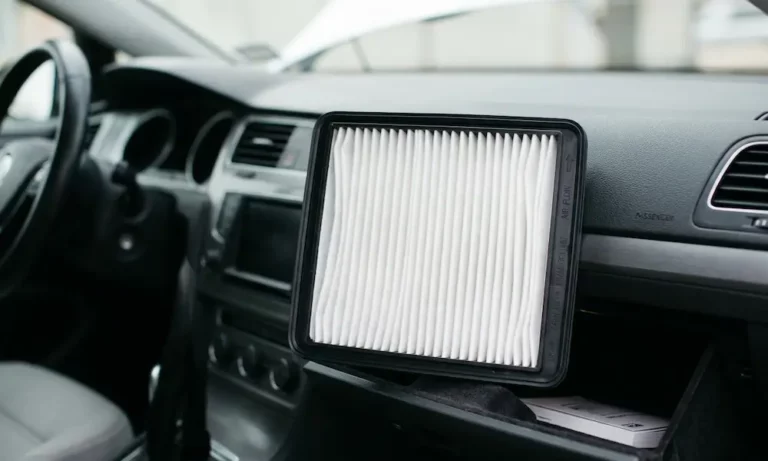
Sneezing every time you turn on the AC? Weak airflow even on max fan? Your cabin filter is probably begging for retirement. This guide walks you through Honda Civic cabin filter replacement for every generation — from the 1990s right up to 2025. Stick around, because there’s one common installation mistake that silently kills your blower motor.
Why Your Cabin Air Filter Actually Matters
It’s not just a dust trap. Your cabin filter blocks pollen, soot, mold spores, and fine particles before they reach you and your passengers. Skip replacing it, and a few ugly things happen:
- Musty smells — organic material collects on the moist evaporator core and grows mold
- Weak airflow — a clogged filter restricts airflow, forcing the blower motor to work harder
- Blower motor damage — that extra strain overheats the resistor and kills fan speeds, usually the low settings first
- Debris in the fan — leaves and twigs fall into the blower and cause rattling or imbalance
The filter also protects your whole HVAC system. In humid climates, a saturated filter holds moisture against the evaporator fins and electrical connectors, speeding up corrosion. A $20 filter replacement now beats a $400 blower motor job later.
How Often Should You Replace It?
The standard recommendation is every 12 months or 15,000–20,000 miles under normal driving conditions. But “normal” depends entirely on where you live.
| Driving Environment | Recommended Interval | Why |
|---|---|---|
| Standard urban/suburban | 15,000 miles | Average road dust and pollen load |
| Industrial or heavy traffic | 10,000 miles | Diesel soot and sulfur particles |
| Rural or agricultural areas | Seasonally | Harvest seasons dump chaff and seeds fast |
| Arid/desert regions | 5,000–7,500 miles | Fine sand loads the filter quickly |
If you notice reduced airflow, a musty smell when the AC kicks on, or increased allergy symptoms in the car — don’t wait for the mileage marker. Replace it now.
Which Filter Should You Buy?
There’s no shortage of options. Here’s a breakdown of the most common types and what they’re actually good for:
| Filter Type | Price Range | Best For |
|---|---|---|
| Standard dust/pollen (e.g., Honda OEM 80292-T0G-A01) | $18–$24 | Everyday drivers wanting a clean, exact fit |
| Activated carbon/odor control (e.g., Fram CF10134) | $27–$36 | Urban commuters bothered by exhaust smells |
| HEPA high-efficiency (e.g., Bosch 18780) | $31–$45 | Allergy sufferers and dusty environments |
| Washable/reusable (e.g., K&N VF2001) | $38–$85 | Long-term owners who want to skip annual purchases |
The Honda OEM filter gives you a guaranteed fit with no guesswork. The Bosch HEPA option filters 99.97% of particles at 0.3 microns — a strong pick if you live somewhere with heavy pollution or wildfire smoke. For odor control, the Fram Fresh Breeze uses activated carbon and baking soda to neutralize nitrogen oxides and exhaust smells.
The One Thing Most People Install Wrong
Before you touch the filter, read this section. It’s the most misunderstood part of Honda Civic cabin filter replacement.
Your Civic uses a top-down airflow pattern. Air enters from the cowl at the base of your windshield, flows downward through the filter, and gets pulled into the blower motor in the passenger footwell. That detail matters for installation.
The Arrow Confusion Problem
Two types of arrows exist on cabin filters, and they mean opposite things:
- “UP” arrows — found on Honda OEM filters and housing covers. Point this arrow toward the ceiling.
- “AIRFLOW” arrows — found on many aftermarket filters. Point this arrow toward the floor, because that’s the direction air travels.
If you install an aftermarket filter with the airflow arrow pointing up, the filter is upside down. The dense particle-catching layer ends up on the wrong side, and the filter loads up fast. That means reduced airflow and a stressed blower motor.
Quick tip: Not sure which way air flows? Pull the filter out, turn the fan to medium, and drop a small piece of paper into the housing. It’ll get pulled downward — confirming that airflow in every standard Honda Civic goes toward the floor.
Step-by-Step: Honda Civic Cabin Filter Replacement by Generation
1996–2000 (6th Gen) — Tool Required
This generation wasn’t built with DIY cabin filter swaps in mind. Many base trim models only came with a mesh screen. If your AC-equipped Civic didn’t have a filter from the factory, you can retrofit one using Honda Part Number 80292-ST3-E01.
You’ll need: 8mm wrench or socket, screwdriver
- Remove the glove box by unscrewing the mounting bolts at the base
- Clear the filter housing fasteners
- Pull the old filter straight out
- Insert the new filter with the “UP” arrow facing the ceiling
- Reassemble in reverse order
2001–2005 (7th Gen) — Dual Filter Design
This generation used two smaller filters in one housing. The total filtration area is the same — it’s just split in two.
- Remove the glove box stop pins on each side
- Let the glove box drop down
- Open the filter housing cover
- Pull the first filter straight out
- Slide the second filter horizontally to the left, then pull it out
- Install new filters in reverse order — slide the second in first, then insert the first straight in
- Rehang the glove box and reattach the stop pins
2006–2015 (8th & 9th Gen) — Tray System, Damper Arm Added
Honda introduced the damper arm in this era — a small strut on the right side of the glove box that controls how it opens. You must disconnect it before you can fully drop the box.
- Empty the glove box completely
- Squeeze the sides of the glove box inward to clear the bump stops — no tools needed
- Unclip the damper arm from its pin on the right side
- Let the glove box hang down
- Press the tabs on the filter housing cover and remove it
- Slide out the old filter and its tray
- Insert the new filter in the tray, confirm arrow direction
- Snap the cover back — listen for the click
- Reconnect the damper arm and pop the glove box back up
Cold weather note: Plastic gets brittle in the cold. Be gentle when unclipping the damper arm or squeezing the glove box walls in winter.
2016–2025 (10th & 11th Gen) — Fully Tool-Less
This is the easiest Honda Civic cabin filter replacement in the car’s history. The whole thing takes under 15 minutes.
- Move the passenger seat all the way back for workspace
- Empty the glove box
- Squeeze the sides of the glove box inward to clear the stops
- Unclip or slide the damper arm off the pin on the right
- On 2022–2025 models, pull the glove box free from its bottom hinge pivots entirely and set it aside
- Press the side tabs on the filter housing cover and pull it out
- Vacuum or wipe out any debris — leaves, dirt, or worse — before inserting the new filter
- Insert the new filter with airflow direction confirmed
- Snap the cover back until it clicks
- Reseat the glove box on its hinges and reconnect the damper arm
Note for 2025 Sport 2.0L owners: Some variants include a 5.5mm bolt on the airbox — but the cabin filter itself stays behind the glove box and the standard process still applies.
What to Do After Installation
Turn the fan on and test all speed settings. Then run through this quick checklist:
Weak airflow after replacement?
The filter might be installed backwards — check the arrow direction again. A HEPA filter with very high density can also overwork an older blower motor.
Whistling noise?
The housing cover probably isn’t fully snapped shut. Press firmly on each corner until you hear the click. A buckled filter can also create a gap.
Fluttering or tapping sound?
A leaf or twig fell into the blower fan during the swap. Pull the filter out again and vacuum the intake thoroughly before reinstalling.
Still smells musty even with a new filter?
The odor isn’t coming from the filter — it’s coming from mold on the evaporator core. A new filter won’t fix that. You need a professional HVAC evaporator cleaning with an antimicrobial spray.
What’s Coming in Newer Civics
The 2025 Civic Hybrid takes maintenance a step further. Its HVAC system balances fresh air intake with recirculation automatically to extend filter life. Some newer models include PM2.5 sensors that alert you when filtration efficiency actually drops — moving away from mileage-based schedules entirely.
Nanofiber filter media is also starting to appear in premium aftermarket options. These offer lower airflow resistance with higher particle capture rates compared to traditional paper or polyester. As the Civic platform keeps evolving, the filter job stays the same: keep the air inside cleaner than the air outside.
Honda Civic cabin filter replacement is one of the cheapest and most effective maintenance tasks you can do yourself. Twenty minutes, a $20–$45 filter, and your blower motor — and your lungs — will thank you.