Hearing that clicking sound when you turn your Honda Civic? That’s your CV joint asking for help — loudly. Honda Civic CV joint replacement sounds intimidating, but it’s straightforward once you know what you’re dealing with. This guide covers everything: symptoms, tools, generation-specific quirks, and torque specs. Read through to the end — the details in the final sections could save you from a costly comeback.
What Is a CV Joint and Why Does It Fail?
Your Civic has two CV axles, one per front wheel. Each axle has an inner joint (connects to the transmission) and an outer joint (connects to the wheel hub).
The outer joint is a ball-type Rzeppa design. It handles the high-angle pivot needed for steering. The inner joint is a tripod design that slides in and out to absorb suspension travel.
Both joints pack molybdenum grease inside an accordion-style rubber or thermoplastic boot. That boot is the weak link. When it cracks, the grease flies out and water gets in. Water emulsifies the grease, oxygen creates rust, and rust acts like sandpaper on precision steel tracks. From there, the joint’s days are numbered.
Boot failures happen because of:
- Age and ozone exposure (neoprene boots dry-rot over time)
- Heat cycling from the nearby brakes
- Road debris punching through the rubber
- High-mileage fatigue
Catch the boot early and you might save the axle. Miss it, and you’re buying a full replacement.
Honda Civic CV Joint Symptoms You Shouldn’t Ignore
Your Civic tells you when something’s wrong. Here’s how to read the signals.
The Clicking Sound on Turns
This is the classic sign. You turn at a parking lot, and you hear a rhythmic click-click-click that matches your wheel speed. It’s loudest at low speed with full steering lock.
The steel balls inside the outer joint are rolling over worn pits in the track. Every revolution, they drop into those tiny craters and pop back out. Straighten the wheel and the noise disappears — that’s your confirmation it’s the outer CV joint.
Vibration Under Acceleration
A failing inner joint shakes differently. You’ll feel a side-to-side shudder during hard acceleration, usually between 20–40 mph. The tripod assembly is off-balance, causing the whole axle to oscillate laterally instead of spinning true.
Grease Splatter on the Wheel
Pop off the wheel and check the inner barrel of the rim. Dark, thick grease splattered across the rim or brake caliper means the boot is already torn. If the joint isn’t yet clicking, you might be able to rebook with a boot kit. If it clicks, buy the whole axle.
Other Symptoms at a Glance
| Symptom | What You Hear or Feel | What It Means |
|---|---|---|
| Clicking on turns | Rhythmic pop at low speed | Outer CV joint — tracks are pitted |
| Shudder under load | Side-to-side vibration | Inner CV joint — axle is oscillating |
| Buzzing at highway speed | Droning hum | Joint imbalance or dry bearing |
| Car pulls under acceleration | Drifts left or right | One axle is failing, the other compensates |
| Grease on the wheel rim | Dark, thick splatter | Boot has ruptured — lubrication is gone |
Tools You Need for Honda Civic CV Joint Replacement
Don’t start without these. Missing the right tool mid-job is frustrating — and sometimes dangerous.
| Tool | Why You Need It |
|---|---|
| 32mm axle nut socket | Removes the main hub nut |
| 1/2-inch breaker bar | Breaks the nut loose before lifting the car |
| Ball joint separator (screw type) | Breaks the taper on older Civics without tearing the boot |
| Dead-blow mallet | Frees splines without damaging threads |
| Torque wrench (1/2-inch drive) | The only acceptable tool for the final 134 ft-lb torque |
| Pry bar | Pops the inner joint past the circlip in the transmission |
| Punch and chisel (dull tip) | Stakes the axle nut collar into the axle slot |
| Oetiker crimp pliers | Required for TPE boots on 2006+ models |
A note on impact guns: professionals use high-output impact wrenches to speed up removal, but never for final installation. The axle nut torque is critical — always finish with a calibrated click-type torque wrench.
Step-by-Step Honda Civic CV Joint Replacement
Step 1: Break the Axle Nut While the Car Is on the Ground
This is the most important trick in the entire job. Don’t lift the car first.
With the tire still on the pavement, engage the parking brake and put the transmission in Park (or first gear for manuals). Use a punch to un-stake the metal tab on the axle nut. Then use your 32mm socket and breaker bar — extend it with a pipe if needed — to break the nut loose about one full turn.
The friction between the tire and ground provides all the counter-torque you need. Once the car is on jack stands, you lose that advantage.
Step 2: Lift the Car and Remove the Wheel
Raise the car on jack stands and pull the front wheel off. You’ll now see the brake caliper, rotor, and hub assembly with the CV axle running through the center.
Step 3: Disconnect the Lower Ball Joint
Here’s where generation matters. Skip ahead to the next section for your specific Civic — the method differs significantly.
Once the ball joint is free, swing the steering knuckle outward. This creates the space needed to slide the outer CV joint out of the hub.
Step 4: Pull the Outer Joint from the Hub
Slide the axle out of the hub. If it’s stuck — common in rust-belt cars — tap the center of the axle tip with a punch and hammer. This vibrates the splines and breaks the rust bond without mushrooming the shaft end. Never use a sledgehammer directly on the threads.
On heavily corroded hubs, a hydraulic hub-puller is safer than any impact method, especially on 10th and 11th-gen models with ABS tone rings that crack easily.
Step 5: Pop the Inner Joint from the Transmission
Insert a pry bar between the transmission case and the inner CV housing. Give it a firm, quick pop. You’ll hear the circlip snap free. Pull the axle straight out — don’t wiggle it or you risk pulling the tripod out of the boot on the new axle.
Plug the transmission bore immediately with a clean rag or plastic plug to prevent fluid loss and contamination.
Step 6: Inspect and Replace the Transmission Seal
Before the new axle goes in, inspect the rubber oil seal in the transmission bore. Replace it if there’s any sign of leakage. Drive the new seal in square using a large socket or seal driver. Pack the back of the seal lip with fresh transmission fluid. A cocked seal leaks immediately.
Step 7: Install the New Axle
Push the inner joint into the transmission. Align the splines, then push with a firm, quick motion. Listen for the click as the circlip seats in the differential groove.
Once installed, grab the inner housing and tug outward firmly. If it slides out, the circlip didn’t seat — try repositioning it slightly and push again.
Don’t pull on the shaft itself. Pulling can drag the tripod out of its race inside the boot, ruining a brand-new axle before the car moves an inch.
Step 8: Torque the Axle Nut and Stake It
Install a new axle nut — axle nuts are single-use. Reusing an old staked nut is risky because the locking collar is already fatigued.
Torque to spec (see the table below). Then use a dull punch to bend the nut’s thin collar into the slot on the axle shaft. This is the “stake.” A dull punch flows the metal into the slot without cutting it — a sharp chisel creates a stress fracture.
| Fastener | Generation | Torque Spec |
|---|---|---|
| Axle/spindle nut | 6th through 11th Gen | 134 ft-lb (181 Nm) |
| Axle nut (9th Gen Si, 2.4L) | 2012–2015 | 181 ft-lb (245 Nm) |
| Lower ball joint nut | 7th through 8th Gen | 36–43 ft-lb |
| Ball joint flange bolts (3x) | 8th Gen and newer | 43 ft-lb each |
| Damper pinch bolt | 6th Gen | 32 ft-lb |
| Lug nuts | All generations | 80 ft-lb (108 Nm) |
The 9th-gen Si spec catches people. If you install a 2.4L Civic Si axle nut at 134 ft-lb instead of 181 ft-lb, you’ll get loose hub play and premature bearing failure.
Generation-Specific Differences You Need to Know
6th Gen (1996–2000): Double-Wishbone Damper Fork
The double-wishbone era requires an extra step. You need to remove the damper fork — the bracket that straddles the CV axle near the strut. Remove the large bolt at the bottom and the pinch bolt at the top. This slides the fork out of the way and opens a “window” for the axle to exit. Torque the damper pinch bolt to 32 ft-lb on reassembly.
7th Gen (2001–2005): The Castle Nut Ball Joint
This generation uses a single castle nut and cotter pin on the lower ball joint. Breaking this taper is the hardest part of the job. Use a screw-type taper breaker, not a pickle fork. A pickle fork tears the ball joint boot, turning a CV job into a ball joint job. Once the taper is free, the knuckle swings out for axle removal.
8th and 9th Gen (2006–2015): Three-Bolt Ball Joint Flange
This is the easiest generation to service. Instead of breaking a taper, you remove three nuts from the ball joint flange. The whole knuckle swings outward without disturbing the ball joint taper at all. Less alignment risk, less part damage.
Watch for the intermediate shaft on Si models. The passenger side uses a two-piece design: a short intermediate shaft bolts to the engine block via a carrier bearing, and the CV axle plugs into that. Unbolt the carrier bracket (two 14mm bolts) from the block. Inspect the carrier bearing — if it feels rough or has play, replace it now. A bad carrier bearing vibrates exactly like a bad CV joint.
10th and 11th Gen (2016–Present): CVT and Turbo Considerations
These Civics use Honda HCF-2 fluid in the CVT. When the axle is out, the bore is open to contamination. A tiny piece of debris in the valve body can cause erratic shifting or worse. Plug the bore immediately — every time.
Also watch the ABS sensor. It sits very close to the outer CV joint on these models. If the axle isn’t fully seated in the hub before the nut is tightened, it can crush the sensor. The result? A dashboard full of ABS, traction control, and power steering faults — none of which have anything to do with the steering rack itself.
Transmission Fluid: Don’t Skip the Top-Off
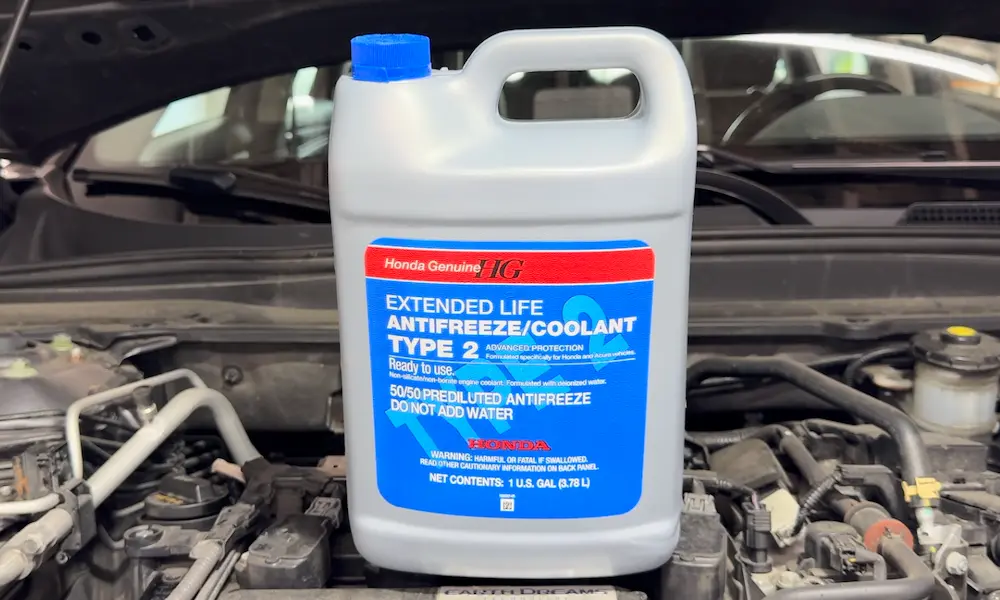
Every axle pull costs you some transmission fluid. Use the right stuff — Honda transmissions are extremely sensitive to fluid type.
| Transmission Type | Required Fluid | Fill Capacity |
|---|---|---|
| Manual (11th Gen) | Honda MTF | ~2.0 US quarts |
| CVT (11th Gen) | Honda HCF-2 | 2.9–3.9 US quarts |
| Manual (8th Gen) | Honda MTF | ~1.6–2.0 quarts |
| Automatic (General) | Honda ATF DW-1 | ~2.5–3.0 quarts |
Using generic multi-vehicle fluid in a Honda automatic causes harsh shifts. Using standard ATF in a CVT can destroy the belt and pulley system. HCF-2 is non-negotiable for 10th and 11th-gen cars.
OEM vs. Aftermarket: The Honest Breakdown
Budget axles are cheaper. They’re also the #1 cause of the “aftermarket shudder” — a vibration felt between 20–40 mph under acceleration.
Here’s why it happens: Honda’s factory axles include a rubber dynamic dampener clamped to the shaft. This absorbs harmonic resonances at specific speeds. Most cheap aftermarket axles skip it. Combined with looser internal tolerances, the result is a vibration that feels like the old problem never got fixed.
| Source | Cost | Expected Life | Vibration Risk |
|---|---|---|---|
| New OEM | $300–$600 | 100,000+ miles | Zero |
| Remanufactured OEM | $70–$150 | 50,000–80,000 miles | Low |
| New aftermarket | $85–$160 | 30,000–60,000 miles | High |
| Used OEM | $50–$100 | Unknown | Moderate |
For a high-mileage daily driver, a budget axle with a lifetime warranty is fine. For a performance car or someone sensitive to NVH, a remanufactured or new OEM unit is worth the extra spend.
The Post-Job Checklist
Don’t skip this. A proper validation catches problems before they become breakdowns.
Static check (car on stands):
- Rotate the wheels by hand — no binding
- Verify brake lines and ABS wires aren’t contacting the new axle
- Check the transmission seal for any fresh fluid seepage
Dynamic road test:
- Slow figure-eights in both directions — no clicking
- Hard 0–60 acceleration run — no shudder
- Highway cruise — no droning hum
- Coast in gear — no rhythmic thump (that would point to a damaged wheel bearing)
Final lift inspection:
- Look for grease sling from the boots (a loose clamp)
- Check for transmission fluid at the inner joint (a failed seal)
- Verify CVT fluid level on 10th and 11th-gen cars with the engine warm
One last thing: get a wheel alignment after any CV axle job. Disconnecting the ball joint or strut bolts always disturbs the suspension geometry. Even a fraction of a degree off in toe will chew through a new tire set in 10,000 miles and put the new CV joints at unnecessarily steep angles. The alignment also confirms everything is straight before the car goes back into daily use.
Honda Civic CV joint replacement is one of those jobs where the right knowledge makes all the difference. Respect the torque specs, protect the transmission from contamination, use quality parts, and verify everything before the car leaves the driveway.