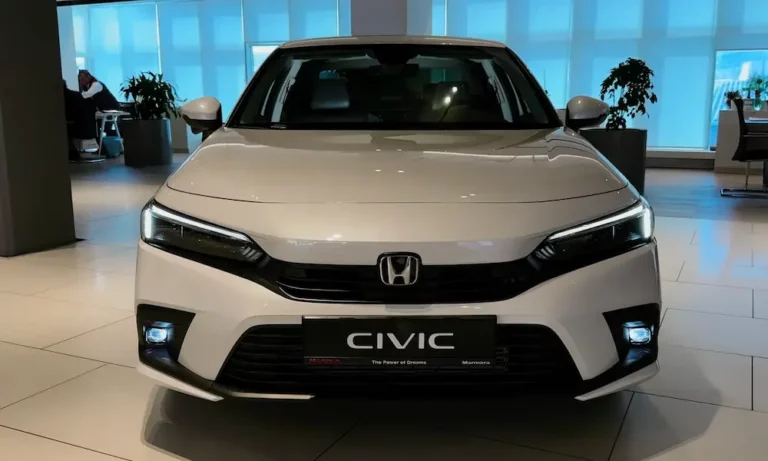
You turn the key in your Honda Civic, the lights come on, the radio works, but nothing happens when you try to start the engine. Frustrating, right? This common problem—having electrical power but no start—affects thousands of Honda Civic owners each year. The good news? Most causes are straightforward to diagnose and fix once you know what to look for.
This guide walks you through a systematic approach to get your Civic running again, starting with the most common culprits and moving to more complex issues.
Understanding “Power But No Start” Symptoms
When your Honda Civic “has power but won’t start,” you’re experiencing one of two main scenarios:
- No-crank condition: You turn the key and absolutely nothing happens—no clicking, no engine movement.
- Cranks but won’t start: The engine turns over when you turn the key, but it never catches and runs.
In both cases, your electrical accessories work (lights, radio, dashboard), which significantly narrows down the possible causes. According to research on Honda Civic no-start conditions, the most common culprits fall into specific categories:
- Electrical power issues (22.7%)
- Starter system problems (22.7%)
- Ignition system issues (13.6%)
- Fuel system problems (13.6%)
- Engine sensor failures (13.6%)
- Safety switch malfunctions (13.6%)
Let’s tackle each of these systematically.
Electrical System Diagnosis
Check Your Main Battery Fuse First
The main battery fuse is the single most important component to check first. This large 80-125 amp fuse is located in the engine bay fuse box and can appear intact visually while being internally damaged.
To properly test it:
- Locate the main fuse in the underhood fuse box
- Remove it completely (don’t just look through the window)
- Check for continuity with a multimeter
A blown main fuse creates exactly your symptoms—some electrical power but no starting capability. Replacement costs under $20, but make sure to investigate what caused it to blow to prevent recurrence.
Battery and Ground Connection Issues
Even with a “good” battery, connection problems can prevent starting. The high current needed to crank your engine requires perfect electrical connections.
Check for:
- Corrosion on battery terminals
- Loose connections at the battery
- Damaged engine-to-chassis ground straps
Honda Civics have several critical ground connections that commonly fail:
- Main battery-to-chassis ground
- Engine-to-chassis ground straps
- ECU-specific grounds
A failing engine-to-chassis ground is particularly common and creates exactly these symptoms—electrical systems work but not enough current flows for the starter. Clean and tighten all ground connections, especially those between the engine block and chassis.
Starter System Problems
Starter Relay Issues
The starter relay controls high-current flow to the starter motor and is a frequent failure point in Honda Civics. It’s located in the interior fuse panel in the driver’s side footwell.
A failed relay typically produces a single “click” when you try to start. To test it:
- Find the starter relay in the interior fuse box
- Swap it with an identical relay (often the horn relay works)
- Try starting the vehicle
If your Civic starts with the swapped relay, you’ve found the problem. Honda Civic starter relays are particularly prone to failure due to the high electrical loads they handle.
Ignition Switch Problems
The ignition switch must provide 12-volt signals to multiple starter system components. Signs of ignition switch failure include:
- Needing to wiggle the key to start
- Having to hold the key in specific positions
- Intermittent starting issues that worsen over time
Testing requires checking for voltage at the starter relay control terminals while holding the key in the start position. Replacement involves removing some dashboard components but is typically straightforward.
Fuel System Diagnosis
Main Fuel Relay (PGM-FI Relay)
Honda’s main fuel relay (officially called the PGM-FI relay) is notorious for failure due to cracked solder joints. This relay controls both the fuel pump operation and ECU power supply.
The relay is located in the driver’s side under-dash fuse box, behind the kick panel above the hood release lever. When functioning properly, you should hear a distinct “click” when turning the key to “on.”
Many experienced Honda technicians replace this relay first when encountering no-start conditions because:
- Failure rates are extremely high
- Replacement cost is minimal
- It’s an easy part to access and replace
A failing main relay often creates intermittent problems that worsen with heat, making diagnosis challenging when the vehicle is cold.
Fuel Pump Operation
Even with a good main relay, fuel pump failure can prevent starting. The fuel pump should produce an audible priming sound for 2-3 seconds when you first turn the key to “on.”
No priming sound, combined with the main relay clicking, indicates potential pump failure. Normal fuel pressure should be between 55-65 PSI for most Honda Civic engines.
Low pressure can result from:
- Pump failure
- Clogged fuel filter
- Restricted fuel lines
Engine Sensor and Control Systems
Crankshaft Position Sensor
The crankshaft position sensor provides critical timing information to the ECU. When it fails, the ECU doesn’t know when to fire injectors and spark plugs.
Symptoms include:
- Engine cranks but won’t start
- No RPM reading on the tachometer during cranking
- Check engine light (in some cases)
The sensor location varies by engine but is typically near the crankshaft pulley or behind the timing cover. Testing requires either scan tool data analysis or oscilloscope waveform examination.
Engine Control Module Communication
Modern Honda Civics rely heavily on the ECU for starting sequences. The ECU must receive proper signals from multiple sensors before allowing fuel delivery and ignition.
Communication problems between the ECU and various sensors can create no-start conditions without obvious mechanical failures. A diagnostic scan tool can identify:
- ECU communication errors
- Missing sensor signals
- Stored fault codes (even ones that don’t trigger the check engine light)
Safety Switch Systems
Automatic Transmission – Neutral Safety Switch
Vehicles with automatic transmissions use a neutral safety switch that prevents starting unless the transmission is in Park or Neutral. Switch failure can:
- Prevent starting in any position
- Allow starting in incorrect positions
- Work intermittently
Test by attempting to start in both Park and Neutral positions and verifying backup light operation. The switch is typically mounted on the transmission or steering column, depending on your specific Civic generation.
Manual Transmission – Clutch Safety Switch
Manual transmission Civics use a clutch safety switch that requires clutch pedal depression for starting. This switch can fail mechanically or may have been bypassed by previous owners.
Testing involves checking if the car starts with and without clutch pedal depression and examining the clutch pedal area for the switch’s presence.
Systematic Diagnostic Approach
| Problem Area | First Check | Secondary Check | Common Symptoms |
|---|---|---|---|
| Electrical System | Main battery fuse | Ground connections | Lights work but no crank |
| Starter System | Starter relay | Ignition switch | Single click or no response |
| Fuel System | Main relay | Fuel pump operation | Cranks but won’t catch |
| Engine Sensors | Crankshaft sensor | ECU communication | Cranks normally, no start |
| Safety Switches | Neutral safety switch | Clutch switch | No crank in certain positions |
For effective diagnosis:
- Start with the most common causes (main fuse, fuel relay)
- Perform visual inspections first
- Test each system methodically
- Pay attention to intermittent problems that worsen with heat or vibration
Advanced Diagnostic Methods
For persistent problems, these techniques can help:
Testing The Main Relay Without Removing It
- Turn ignition to “ON” (not start)
- Listen for the relay click and fuel pump priming sound
- If you hear the click but no pump sound, the relay may have internal damage
- If no click occurs, check for voltage at the relay control terminals
Ground Circuit Testing
- Use a multimeter to check resistance between the engine block and chassis
- Readings should be below 0.5 ohms
- Check all ground straps for corrosion or damage
- Clean ground connection points with wire brush and reattach firmly
Starter Circuit Voltage Drop Test
- Connect voltmeter positive lead to battery positive terminal
- Connect negative lead to starter motor positive terminal
- Crank engine (have helper do this)
- Voltage drop should be less than 0.5V
- Higher voltage drop indicates resistance in the starting circuit
Common Honda Civic No-Start Problems by Generation
Different Honda Civic generations have their own specific weak points:
| Generation | Years | Common No-Start Issues |
|---|---|---|
| 6th Gen | 1996-2000 | Main relay failures, distributor issues |
| 7th Gen | 2001-2005 | Immobilizer problems, fuel pump failures |
| 8th Gen | 2006-2011 | Starter motor failures, ground issues |
| 9th Gen | 2012-2015 | Fuel pump relay, battery connection problems |
| 10th Gen | 2016-2021 | Push-button start failures, electronic issues |
Diagnostic Tools Worth Having
To properly diagnose a Honda Civic that won’t start:
- Digital multimeter – Essential for checking voltage, continuity, and resistance
- Basic scan tool – Even an inexpensive OBD-II reader can help identify sensor issues
- Circuit tester – Useful for quickly checking for power at various points
- Battery load tester – Confirms if the battery can deliver adequate cranking amps
When your Honda Civic won’t start but has power, work through this guide systematically. Most no-start conditions stem from common failure points that you can diagnose and often fix yourself. For intermittent problems, focus on connections, ground quality, and temperature-sensitive components like the main fuel relay.
Remember that the main battery fuse and fuel relay account for a significant percentage of Honda no-start conditions and should be prioritized early in your diagnosis. With patience and the right approach, you can get your Civic back on the road without expensive diagnostic fees.