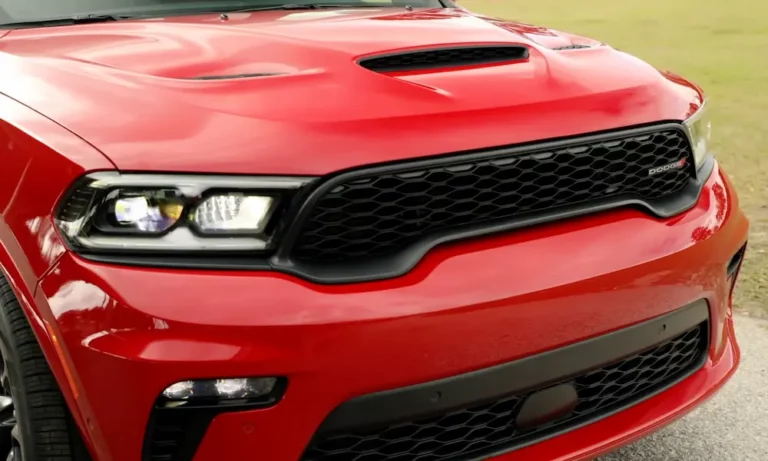
Shopping for a used Dodge Durango? You’re probably wondering if it’ll make it past 100,000 miles without falling apart. Here’s the truth: a well-maintained Durango can hit 200,000 to 300,000 miles—but only if you pick the right year and keep up with maintenance. Let’s break down what actually determines how long these three-row SUVs last.
What’s the Average Lifespan of a Dodge Durango?
Most Dodge Durangos last between 200,000 to 300,000 miles when you treat them right. That translates to roughly 13 to 20 years if you’re driving the typical 15,000 miles annually.
But here’s the catch—not all Durangos are created equal. The generation and specific model year you choose makes a massive difference. Third-generation models (2011-2020) consistently outlast their predecessors, with some owners reporting zero major issues well past 200,000 miles.
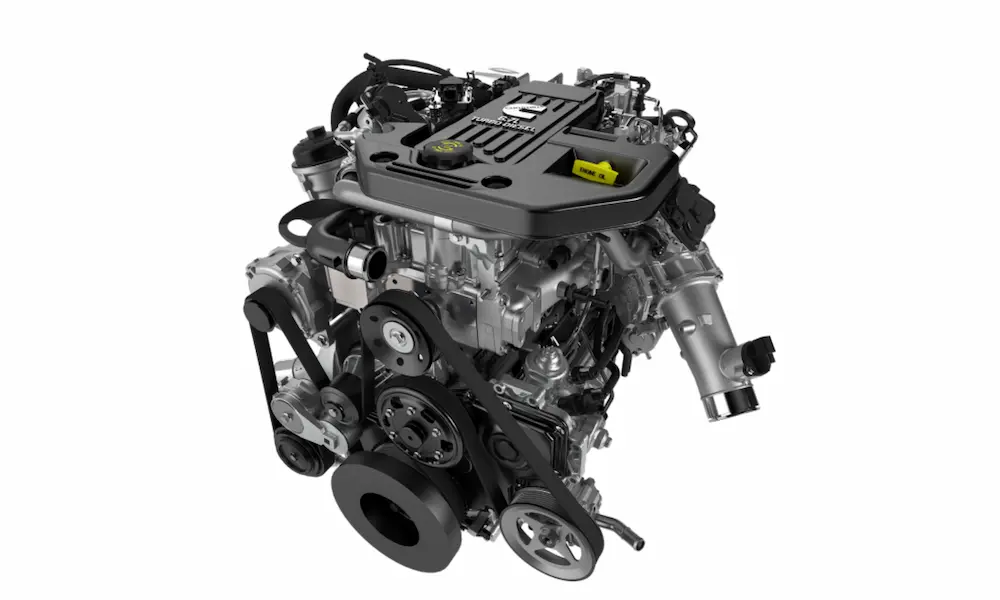
The engine you choose matters too. The 3.6-liter Pentastar V6 is the reliability champion, while the powerful 5.7-liter HEMI V8 requires more attention but still delivers solid longevity.
Breaking Down Durango Lifespan by Generation
First Generation (1998-2003): The Rocky Start
Expect 150,000 to 200,000 miles from these early models—if you’re lucky. Built on the Dodge Dakota pickup platform, these Durangos suffered from serious reliability issues that earned them a dismal 51st place ranking out of 54 vehicles.
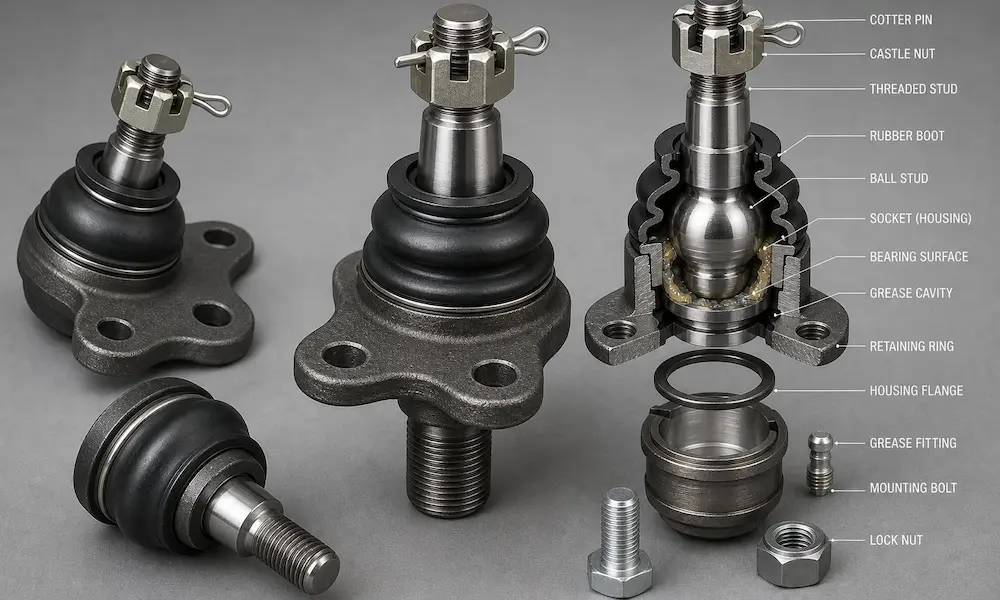
The biggest problems? Engine oil sludge buildup in the 4.7-liter V8 and suspension failures that were downright dangerous. The 1999 and 2000 models received over 2,000 NHTSA complaints, with broken ball joints creating situations where wheels nearly fell off.
Engine stalling was another nightmare. Imagine losing brake and steering power simultaneously on a busy highway—that’s what some owners faced.
The silver lining: 2001-2003 models showed marked improvement after Dodge addressed early issues. If you’re considering a first-gen Durango, stick with these later years.
Second Generation (2004-2009): Better, But Watch Out
These models improved to 200,000 to 250,000 miles expected lifespan. The introduction of the legendary 5.7-liter HEMI V8 engine brought more reliability than earlier powertrains.
However, early models (2004-2006) had a terrifying problem: catastrophic electrical system failures that could cause spontaneous cabin fires. Dodge issued a recall in 2007, but the damage to the model’s reputation was done.
The 2004 model year specifically suffered from widespread engine failures. Engines blew without warning, leaving owners stranded in dangerous situations.
By 2008, Dodge finally got it right. The 2008-2009 model years are the most reliable of this generation, with only two minor recalls. Owners who maintained these models properly report cruising past 200,000 miles.
Third Generation (2011-2020): The Sweet Spot
This is where Dodge nailed it. Expect 200,000 to 300,000 miles from these models with proper care.
Switching from body-on-frame construction to the Jeep Grand Cherokee platform paid off big time. RepairPal rates these Durangos at 3.5 out of 5.0, ranking third out of 14 full-size SUVs.
The 3.6-liter Pentastar V6, introduced in 2011, became the reliability workhorse. It’s one of the most dependable engines Dodge ever produced.
But don’t grab any third-gen model just yet. The 2011-2013 models suffered from Totally Integrated Power Module (TIPM) failures that caused random warning lights, starting issues, and electrical gremlins. Dodge issued recall #P54 for 2011 models, but it was a widespread headache.
The 2014 refresh changed everything. New eight-speed automatic transmission, improved styling, and better reliability made this the turning point.
The 2017 model year stands out as exceptional. J.D. Power gave it an 83 out of 100 rating, with only two recalls and minimal complaints. The most common issue? Faulty door locks—annoying but not catastrophic.
Owner testimonials consistently report third-gen Durangos hitting 200,000 miles without major mechanical failures. One 2013 Durango Citadel AWD HEMI owner with 125,000 miles reported zero significant issues and expected to surpass 200,000 miles easily.
Fourth Generation (2021-Present): The Modern Durango
Current models are projected to reach 250,000 miles or more. J.D. Power gave the 2024 model a 7.6 out of 10 expert rating, showing Dodge continued improving.
Early models (2021-2023) experienced some transmission hiccups—hard shifting, slipping, and overheating. Engine-related complaints included surging during acceleration and unexpected shut-offs related to the eTorque hybrid system.
The good news? These issues appear less widespread than problems from earlier generations. The 2025 Durango, the final year of production for this generation, includes updated powertrain software and improved HVAC and electrical systems.
What You’ll Actually Spend on Maintenance
The average annual repair cost for a Durango is $675, which beats the full-size SUV average of $784. Sounds good, right?
Here’s reality: over the first 10 years, you’ll spend approximately $11,769 on maintenance and repairs—about $3,561 more than the industry average for popular SUV models.
The probability of needing a major repair climbs from 3.17% in year one to 32.01% by year ten. After five years, expect annual costs exceeding $1,000, hitting $1,729 by year ten.
| Service Interval | Typical Costs | What’s Included |
|---|---|---|
| First 5 years | $540-$800/year | Oil changes, tire rotations, filters, brakes |
| 6-10 years | $1,000-$1,729/year | Above plus transmission service, coolant flush |
| 100,000 miles | $300-$500 | Spark plug replacement |
| 120,000 miles | $400-$800 | Transmission fluid, transfer case fluid, coolant |
RepairPal notes that while repair severity is average, frequency is relatively low. Major repairs aren’t common compared to competitors—when they happen, they just cost a bit more.
Common big-ticket repairs include:
- ABS control module replacement: $749-$824
- Heater core replacement: $1,292-$1,764
- Powertrain control module replacement: $843-$879
Given the 32% chance of major repairs within the first decade, an extended warranty isn’t a bad idea.
Which Engine Lasts Longest?
Your engine choice dramatically impacts how long your Durango survives.
3.6-Liter Pentastar V6: The Reliability King
This is the engine to buy if longevity matters most. Available from 2011 to present, the Pentastar V6 produces 290-295 horsepower and 260 lb-ft of torque—adequate power for daily driving without the headaches.
Owners consistently praise this engine’s dependability. Many report crossing 200,000 miles without major issues when following maintenance schedules. One 2019 GT owner reported zero problems through 78,000 miles aside from routine maintenance and tires.
Because Chrysler uses this engine across multiple brands, parts are cheap and readily available. Fuel economy is decent too—18-21 mpg combined.
If you want your Durango to last as long as possible, buy the V6.
5.7-Liter HEMI V8: Power with Responsibility
The HEMI produces 360 horsepower and 390 lb-ft of torque, delivering serious towing capacity up to 7,400 pounds. Expected lifespan hits 200,000-250,000 miles with proper maintenance.
The signature HEMI “lifter tick” or tapping noise develops as mileage climbs. It’s often cosmetic, but ignoring it can lead to valve problems. Fuel economy suffers significantly—only 14-17 mpg combined.
Despite these drawbacks, HEMI owners report excellent longevity. Forum discussions reference multiple Durangos exceeding 200,000 miles with minimal issues beyond routine maintenance.
6.4-Liter HEMI V8 (SRT): Fast But Thirsty
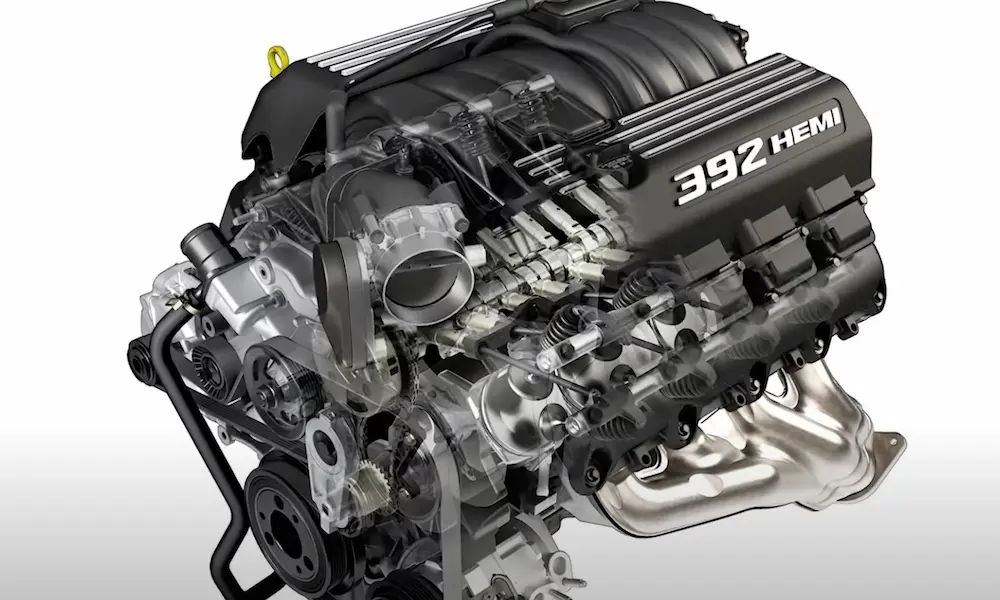
The high-performance SRT 392 cranks out 475 horsepower, but expected lifespan drops to 150,000-200,000 miles due to increased stress from performance driving. Maintenance costs skyrocket with premium fuel requirements and more frequent service intervals.
Older Engines from Early Generations
The 4.7-liter V8 (2000-2009) can hit 200,000-300,000 miles with dedication. Watch for timing chain tensioner failure, oil leaks, and carbon buildup.
The earlier 5.2-liter and 5.9-liter Magnum V8 engines (1998-2003) suffered from severe oil sludge problems, dramatically reducing lifespan to 150,000-200,000 miles.
Common Problems That’ll Shorten Your Durango’s Life
Understanding recurring issues helps you prevent major failures before they happen.
Transmission Troubles
Transmission problems rank among the most serious concerns, particularly in 2021-2023 models and early third-generation vehicles. Owners report hard shifting, slipping, overheating, and in severe cases, the vehicle unexpectedly moving into neutral.
Regular transmission fluid changes every 60,000 miles prevent many issues. The eight-speed automatic introduced in 2014 generally performs well but showed some jerkiness in early versions.
Electrical Gremlins
Electrical problems plagued multiple generations. The most dangerous occurred in 2004-2006 models, where faulty components could overheat and cause cabin fires.
The 2011 TIPM failure caused widespread problems including gauge failures, door lock malfunctions, and starting issues.
Recent models experience less severe electrical issues—infotainment glitches, dashboard warning lights, sensor malfunctions. Keeping Uconnect software updated minimizes these problems.
HVAC Headaches
Air conditioning failures span all generations. Owners report refrigerant leaks from the AC condenser in 1998-2003, 2005-2006, 2012, 2014, and 2018 models. Symptoms include hissing sounds, warm air, and complete system failure. Replacement condensers cost $40-$150 plus labor.
Many owners also report musty odors from bacterial growth on the evaporator. Dodge offers disinfectant treatments and evaporator coatings to fix this.
Suspension and Steering Issues
First-generation Durangos suffered catastrophic suspension failures with broken ball joints, worn bushings, and malfunctioning tie rods. These caused premature tire wear, steering difficulties, and genuinely dangerous driving conditions.
Later generations improved significantly, though shocks and struts still need replacement after several years, especially with heavy loads or rough roads.
That Annoying Exhaust Tick
Ticking or tapping noises from the exhaust manifold represent the most commonly reported Durango problem across all generations. Particularly prevalent in 2005 models, this issue stems from worn exhaust manifold bolts or failed gaskets.
While it doesn’t affect drivability, the noise drives owners crazy. Repair costs include replacement bolts or gaskets costing $10-$35 plus labor.
Fuel System Defects
The 2022 Durango experienced fuel pump failures leading to stalling while driving and refueling difficulties. Some owners found metal debris in the fuel system requiring repeated dealership visits.
Earlier first-generation models (1999-2002, 2004-2009) suffered from clogged EGR tubes causing engine stalling, rough idling, and starting difficulty. Cleaning or replacing the EGR tube typically resolved this at $30-$120 plus labor.
Body and Exterior Problems
Third-generation Durangos (2011-2023) experience spoiler failures where the rear spoiler detaches while driving, sometimes swinging down and striking the vehicle. Dodge issued a recall for this safety hazard.
Tail lights in multiple model years develop leaks due to faulty factory seals, allowing water accumulation inside the housing.
Dodge Durango Years to Avoid Like the Plague
Based on complaint data, recall history, and reliability ratings, steer clear of these model years:
Critical Years to Avoid:
- 1999-2000: Severe suspension failures, engine stalling, oil sludge buildup
- 2004-2005: Engine failure, electrical fires, transmission problems
- 2011-2013: TIPM electrical failures, transmission issues, early third-generation growing pains
The 1999 Durango alone racked up over 2,043 NHTSA complaints—more than half related to suspension problems. The 2000 model received 1,116 complaints and required two suspension-related recalls affecting over 592,000 vehicles.
The 2004 Durango’s engine failure problem was so severe that many owners experienced blown engines with zero warning signs.
The 2011 model’s TIPM issues were widespread enough to warrant a manufacturer recall affecting all vehicles with 3.6L or 5.7L engines.
While 2014 showed improvement, many buyers skip 2011-2014 entirely and start their search with 2015 or newer.
Best Dodge Durango Years to Buy
Certain model years stand out for exceptional reliability and value.
Top Recommendations:
- 2001-2003: Best of first generation after early issues resolved
- 2008-2009: Most reliable second-generation models
- 2014-2020: Solid third-generation choices, especially post-2014 refresh
- 2017-2019: Peak reliability with 2017 earning 83/100 J.D. Power rating
- 2023-2025: Latest generation with refined systems and improved quality
The 2017 model year represents exceptional value, combining mature third-generation engineering with minimal issues. The 2019 Durango received particularly high J.D. Power scores with the reliable Uconnect 4 system and minimal recalls.
For maximum reliability in a used Durango, the 2017-2020 model years offer the best combination of proven dependability, modern features, and reasonable pricing.
How Does the Durango Compare to Rivals?
Understanding how long do Dodge Durangos last compared to competitors helps you make the right choice.
Durango vs. Toyota Highlander
The Toyota Highlander typically lasts 250,000-300,000 miles with proper maintenance. Toyota’s legendary reliability gives the Highlander an edge, with a RepairPal rating of 4.5 out of 5 versus the Durango’s 3.5 out of 5.
Annual repair costs for the Highlander average $540 versus the Durango’s $675. However, the Durango offers substantially more power and towing—up to 8,700 pounds versus the Highlander’s 5,000 pounds. The Highlander achieves better fuel economy at 22 city/29 highway mpg versus the Durango V6’s 18 city/25 highway mpg.
For reliability and fuel economy, choose the Highlander. For power, towing, and interior space at modestly higher maintenance costs, the Durango wins.
Durango vs. Honda Pilot
The Honda Pilot typically lasts 200,000-250,000 miles with some reaching 300,000 miles through meticulous maintenance. This places the Pilot roughly equivalent to the Durango for longevity, though reliability ratings favor Honda.
The Pilot offers superior safety features and better interior legroom, though the Durango provides greater cargo capacity—84.5 cubic feet versus 80.7 cubic feet.
The Durango maintains advantages in power and towing, with V8 engines producing up to 360 horsepower versus the Pilot’s V6 maximum of 280 horsepower. Towing capacity reaches 7,400 pounds for the Durango V8 versus approximately 5,000 pounds for the Pilot.
Durango vs. Ford Explorer
The Ford Explorer achieves 200,000-250,000 miles under proper maintenance, comparable to the Durango. RepairPal gives both similar reliability ratings, with the Durango ranking slightly higher.
The Explorer costs approximately $732 annually for repairs versus the Durango’s $675. The Explorer offers more interior space, particularly front legroom (42.0 inches versus 40.3 inches). The Explorer’s available 3.0-liter twin-turbo V6 produces 400 horsepower but requires premium fuel.
Towing capacity favors the Durango significantly—V8 models reach 7,400-8,700 pounds versus the Explorer’s maximum 5,600 pounds. The Durango’s HEMI V8 provides superior acceleration and a more satisfying exhaust note, though fuel economy suffers.
What Real Owners Say About Durango Longevity
Owner testimonials provide valuable insights beyond statistical predictions.
Multiple owners report reaching 200,000 miles with minimal issues across different generations. One owner of a 2000 Durango reported achieving 200,000 miles and 27 years of ownership without a single problem, attributing success to diligent maintenance.
Forum discussions reveal owners of 2004 and 2008 second-generation Durangos exceeding 200,000 miles while still running well. Multiple family Durangos reached and surpassed this threshold with proper care.
Third-generation owners report similar success. A 2018 GT RWD V6 owner with 67,000 miles experienced only three replaced infotainment units under warranty—no other significant issues. A 2021 owner called their Durango “the best new vehicle I have ever had in 57 years of driving” with zero defects.
Several owners specifically praise the 5.7 HEMI engine for longevity, noting these engines “run forever” with proper maintenance. One owner stated Dodge made “excellent vehicles, especially with the 5.2 and 5.9 motors” and would “get 200,000 miles with no trouble.”
These real-world experiences confirm that well-maintained Durangos from reliable model years routinely achieve or exceed their expected 200,000-250,000 mile lifespan, with some pushing toward 300,000 miles through exceptional care.
The Bottom Line on Durango Longevity
So how long do Dodge Durangos last? With proper maintenance, most examples hit 200,000 to 250,000 miles, while well-cared-for third-generation models reach 300,000 miles. This lifespan compares favorably to competitors, though it falls slightly short of Toyota and Honda’s legendary reliability.
Success depends heavily on selecting the right model year and following rigorous maintenance schedules. Avoid problematic years (1999-2000, 2004-2005, 2011-2013) while targeting proven reliable models (2017-2020) to dramatically improve your ownership experience.
The 3.6-liter Pentastar V6 offers the best reliability and longevity combination, while the 5.7-liter HEMI V8 provides impressive power with only moderately higher maintenance needs.
For buyers seeking a three-row SUV with exceptional towing capacity, muscular performance, and reasonable longevity, the Dodge Durango represents an excellent choice—particularly 2017-2020 models. While not matching Toyota’s reliability reputation, the Durango offers significantly more capability and power at comparable pricing with only modestly higher maintenance costs. With proper care, regular maintenance, and responsible driving, your Durango will provide reliable service for well over a decade and hundreds of thousands of miles.