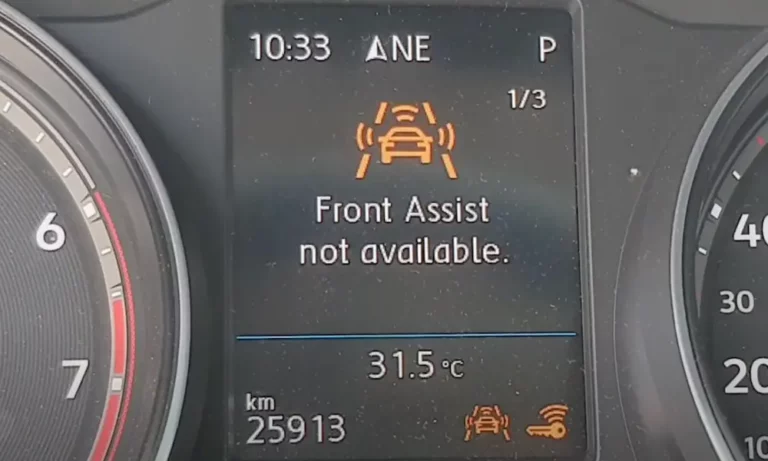
Ever glanced at your dashboard to see the dreaded “Front Assist Not Available” warning glaring back at you? This safety feature that’s supposed to protect you has suddenly gone AWOL—and it couldn’t have happened at a worse time. Whether you’re planning a road trip or just heading to work, a disabled Front Assist system can be both concerning and frustrating.
What Is VW Front Assist and Why Does It Matter?
VW Front Assist is essentially your car’s extra set of eyes on the road. Using a combination of radar sensors and cameras typically mounted behind your Volkswagen emblem and near your windshield, this system constantly monitors the distance between your car and objects ahead of you.
When it detects a potential collision, Front Assist springs into action with:
- Warning alerts through your dashboard
- Brake pre-charging to prepare for emergency braking
- Autonomous partial braking if you don’t respond
- Full emergency braking in critical situations
This technology isn’t just a fancy feature—it’s a proven safety system that can reduce rear-end collision risks by detecting obstacles before you might notice them.
Common Reasons Why Your VW Front Assist Isn’t Available
1. Sensor Obstruction
The most frequent culprit is actually the simplest—your sensors can’t see! Various obstacles prevent your Front Assist system from functioning properly:
- Dirt and debris: Road grime covering the radar sensor
- Snow and ice: Winter weather buildup on sensors
- Bugs and mud: Especially after highway driving
- Water droplets: After rain or car washing
According to Volkswagen, even a thin layer of dirt can interfere with the system’s ability to detect objects properly.
2. Extreme Weather Conditions
Your Front Assist system might temporarily shut down during:
- Heavy rain or snow
- Dense fog
- Extreme heat (sensor overheating)
- Blinding direct sunlight
These conditions can either physically impair the sensors or create too much interference for reliable readings.
3. System Calibration Issues
After certain repairs or modifications to your Volkswagen, the Front Assist may need recalibration:
- Windshield replacement
- Bumper repairs
- Suspension modifications
- After even minor fender benders
The system’s sensors must be precisely aligned to function correctly—even small deviations can cause the “not available” message to appear.
4. Electrical or Software Glitches
Like any computer-based system, Front Assist can experience technical hiccups:
- Low voltage issues
- Software bugs
- CAN bus communication errors
- Outdated firmware
Forum reports indicate that electrical problems often manifest as intermittent system availability.
5. Component Failure
Sometimes the problem goes deeper than surface issues:
- Failed radar sensor
- Camera malfunction
- Damaged wiring
- Control module issues
These hardware failures typically require professional diagnosis and replacement.
DIY Fixes for “Front Assist Not Available” Warnings
Clean Your Sensors and Camera
The first and easiest fix is giving your sensors a proper cleaning:
- Locate the radar sensor (typically behind the VW emblem on the grille)
- Use a pH-neutral cleaner—avoid isopropyl alcohol which can damage coatings
- Gently wipe with a microfiber cloth, moving from the center outward
- Clean the windshield thoroughly where the camera is mounted
According to user experiences, this simple maintenance step resolves a surprisingly high percentage of Front Assist issues.
Perform a System Reboot
Just like your computer, sometimes your car just needs a restart:
- Turn off the ignition completely
- Wait at least 2 minutes (crucial for full system reset)
- Restart the vehicle
- Reset the infotainment system by holding the power button for 10+ seconds
This procedure allows the system to fully power down and reinitialize, often clearing temporary glitches.
Check for Software Updates
Volkswagen occasionally releases updates that improve system stability:
- Contact your dealer about available software updates
- Ask specifically about Campaign 97K6 for improved snow rejection algorithms
- Consider scheduled updates every 24 months for optimal performance
These updates can significantly improve sensor reliability, especially in challenging weather conditions.
When to Visit a Volkswagen Service Center
While DIY fixes work for many Front Assist issues, certain problems require professional intervention:
Professional Calibration Requirements
After these events, proper calibration is essential:
| Scenario | Calibration Type | Professional Tools Required |
|---|---|---|
| Windshield replacement | Static | VAS 6430 calibration board |
| Bumper repair | Static + Dynamic | Specialized diagnostic equipment |
| Suspension modifications | Dynamic | VCDS or dealer-level scanner |
| Accident repairs | Complete recalibration | Factory alignment specifications |
Professional calibration isn’t just about making the warning disappear—improper calibration can increase false alerts by up to 40%, making the system more annoying than helpful.
Diagnostic Complexity
Modern service centers have specialized equipment to diagnose:
- Voltage integrity checks (proper range: 12.8V ±0.5V)
- CAN bus signal testing (2.5-3.5V differential)
- Comprehensive sensor functionality tests
According to specialized repair information, technicians can pinpoint issues that would be impossible to identify without proper equipment.
The Cost Factor: DIY vs. Professional Repair
DIY Cleaning and Resets
The good news: basic maintenance is virtually free:
- Microfiber cloths and pH-neutral cleaner: $10-15
- System resets: Free
- Basic inspections: Free
These measures solve approximately 60% of Front Assist availability issues.
Professional Repair Costs
For more complex problems, expect these approximate costs:
- Diagnostic fee: $100-150
- Calibration service: $385-620 (dealership average)
- Radar sensor replacement: $800-1,200 plus labor
- Camera module replacement: $650-950 plus labor
Third-party shops with suitable equipment may offer calibration services for around 40% less than dealership prices, but ensure they have the proper equipment for Volkswagen-specific calibrations.
Some owners have reported using OBDeleven tools for basic calibrations, but this approach carries risks without proper training.
Preventative Maintenance to Avoid Front Assist Issues
Regular Cleaning Schedule
Develop these habits to keep your system functioning:
- Clean the front emblem and radar area weekly
- Pay special attention after driving in snowy or muddy conditions
- Keep the windshield clean, especially in the camera viewing area
- Avoid high-pressure washes within 30cm of sensors
Many VW owners report in forum discussions that regular cleaning dramatically reduces system downtime.
Driving Conditions Awareness
Be mindful of conditions that may temporarily disable your Front Assist:
- Heavy precipitation
- Fog and low visibility
- Extremely bright sun at low angles (dawn/dusk)
- Construction zones with multiple metal objects
Knowing when the system is likely to disable itself helps set realistic expectations and prevents unnecessary service visits.
How Front Assist Interacts with Other VW Safety Systems
When Front Assist becomes unavailable, it doesn’t just affect collision warnings—it impacts several integrated systems:
Systems Directly Affected
When Front Assist goes offline, these features also become disabled:
- Autonomous Emergency Braking (complete disablement)
- Adaptive Cruise Control (speed control deactivation)
- Pedestrian Detection (reduced collision coverage)
- Traffic Sign Recognition (potential performance reduction)
This cascade effect means a “Front Assist Not Available” warning actually disables multiple safety layers in your Volkswagen.
Impact on Overall Safety
Research indicates a 23% increase in rear-end collision risk during Front Assist downtime, making prompt resolution important for maintaining your vehicle’s safety profile.
Technical Details for the Curious VW Owner
For those who like to understand the deeper workings of their vehicle, here’s what’s happening behind the scenes with Front Assist:
Sensor Specifications
The Front Assist system uses sophisticated hardware:
- 77GHz radar with 80-200m detection range
- Optical cameras with image recognition capabilities
- Multiple microprocessors for real-time decision making
Response Protocol
The system follows a specific sequence when detecting potential collisions:
- Initial Warning: Visual/acoustic alerts (dashboard symbols)
- Escalation: Brake pre-charging and haptic warnings
- Intervention: Autonomous partial braking (3.5-6m/s² deceleration)
- Emergency Action: Full emergency braking in critical situations
Understanding this progression helps you recognize when the system is actively working to protect you.
Real Owner Experiences with Front Assist Issues
VW owners across forums and social media report mixed experiences:
“After my windshield replacement, Front Assist stopped working. The dealer wanted $500 for recalibration! I found a reputable third-party shop that did it for $285 with the same equipment.” – VW Golf owner on Reddit
“My ‘Front Assist Not Available’ warning appeared during a snowstorm. I cleaned the emblem area thoroughly after reaching my destination, and the system came back online immediately.” – Jetta driver from T6 Forum
“Turned out my battery was beginning to fail, causing voltage drops that disabled Front Assist intermittently. New battery solved it completely.” – VW Atlas owner from VW Atlas Forum