Got a 996, 997, Boxster, or Cayman? Then the Porsche IMS bearing replacement conversation is one you can’t afford to skip. This bearing has a nasty habit of failing silently — then taking your entire engine with it. Read this before your next oil change, because what you find (or don’t find) in that filter matters more than you think.
What Is the IMS Bearing and Why Does It Matter?
The intermediate shaft (IMS) sits inside your flat-six engine and connects the crankshaft to the camshafts. It slows down the timing chain speed, which should extend chain life and keep the engine compact.
Simple idea. Problematic execution.
Porsche’s M96 and M97 engines — used in the 911 (996/997), Boxster (986/987), and Cayman — dropped a sealed ball bearing on the flywheel end of that shaft. This bearing relies on grease packed inside it at the factory. No oil feed. No backup.
Once that grease washes out, metal meets metal. Then your engine meets its end.
Which Years Actually Have the Problem?
Not every Porsche has the same level of risk. Here’s what the data shows:
| Model Years | Models Affected | Bearing Type | Risk Level |
|---|---|---|---|
| 1997–1999 | 986 Boxster / 996 911 | Dual-row ball bearing | Low (~1%) |
| 2000–2005 | 986/987 Boxster / 996/997 911 | Single-row ball bearing | Highest (~8–10%) |
| 2006–2008 | 987 Boxster / Cayman / 997 | Large single-row | Lowest (non-serviceable) |
The 2000–2005 single-row bearing is the real villain here. LN Engineering’s problem years breakdown puts failure rates under warranty as high as 10% — and that number likely climbs as the cars age.
One thing most owners miss: if your car received a factory replacement engine from a Porsche dealer, it may contain a different bearing than the original. A 1999 911 with a 2007 dealer-installed engine could have the larger non-serviceable bearing from the later generation.
Note: Turbo, GT2, and GT3 models use the Mezger engine with an oil-fed plain bearing. They don’t have this problem at all.
How the IMS Bearing Actually Fails
The failure process isn’t dramatic at first. It’s slow, quiet, and sneaky.
Grease Washout
The factory bearing sits in an area of the engine where hot oil splashes constantly. Over time, that heat degrades the rubber or plastic seals. Once the seals crack, engine oil sneaks in and washes out the grease. Now the bearing is running on old, contaminated oil — which it was never designed to do.
Spalling and Metal Debris
Without proper lubrication, the steel balls and races start to pit and crack. This is called spalling, and it feeds on itself. The jagged surfaces create friction, the friction creates heat, and the heat creates more damage. Metallic debris then circulates through your oiling system and attacks your crankshaft bearings and cylinder walls.
Why How You Drive Matters
This part surprises most people. At low RPMs, the inner race of the bearing carries most of the load. At higher RPMs, centrifugal force shifts that load outward to the larger, stronger outer race.
Drivers who cruise everywhere below 2,500 RPM actually stress the bearing more. Short city trips, cold starts, and long storage periods are genuinely bad for this bearing.
Warning Signs You Shouldn’t Ignore
Some bearings fail without a single warning. Others give you a window to act. Here’s what to watch for:
| Warning Sign | Where to Look | What It Means |
|---|---|---|
| Metallic glitter | Oil filter / drain plug | Bearing races wearing down |
| Black rubber fragments | Oil filter | Seal disintegration |
| Rattling at idle | Listen at the rear of engine | Excessive bearing play |
| Oil leak at rear of engine | Visual inspection | Flange or rear main seal issue |
| Misfires or rough idle | OBD-II scan | Camshaft timing slippage |
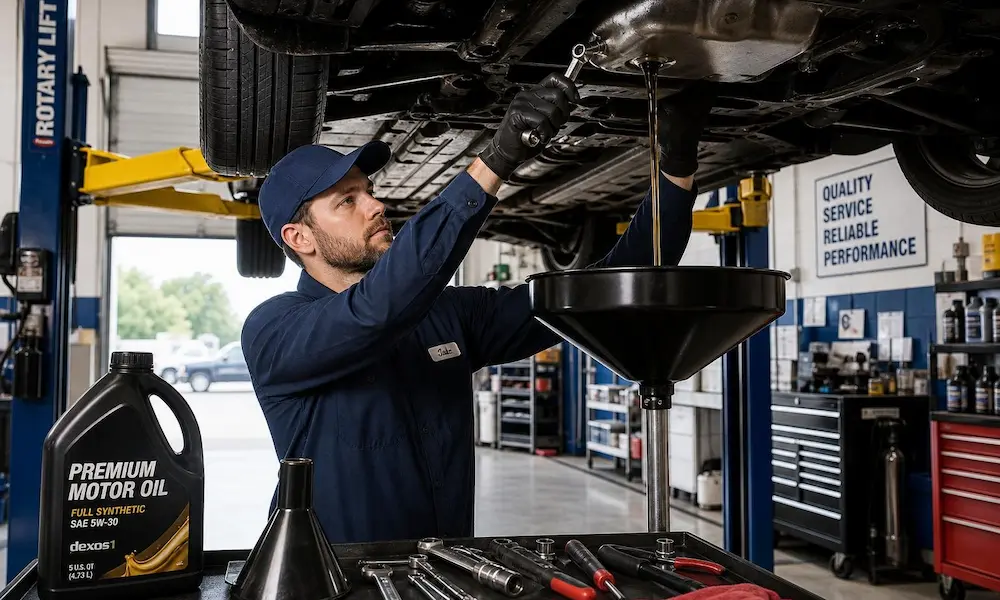
The most reliable check? Pull your oil filter at every oil change and look at the pleats under good light. Any metallic flakes — even tiny ones — demand immediate attention.
A magnetic drain plug is a cheap extra layer of protection. It catches ferrous particles before you’d ever see them in a filter check.
Your Porsche IMS Bearing Replacement Options
Three main solutions exist for Porsche IMS bearing replacement. Each has a different approach, cost, and lifespan.
Ceramic Hybrid Retrofit
This is the most popular fix. It swaps the original steel balls for silicon nitride ceramic balls — harder, lighter, and more heat-resistant than steel. Most aftermarket ceramic bearings are open (no seals), so engine oil lubricates them continuously. That’s the key improvement over the factory design.
Expected lifespan: ~75,000 miles before another service is recommended.
Cylindrical Roller Bearing
Rollers give you a much larger contact surface than balls, so they handle radial loads exceptionally well. These work great in high-revving applications. The downside? They don’t manage axial (thrust) loads naturally, so quality kits include thrust controls to keep the shaft stable.
Expected lifespan: ~75,000 miles.
The IMS Solution (Oil-Fed Plain Bearing)
This is the permanent fix. LN Engineering’s IMS Solution eliminates the ball bearing entirely and replaces it with a journal bushing fed by a pressurized oil line — the same design used in Porsche’s air-cooled engines and the Mezger-powered GT cars.
No rolling elements means nothing to fatigue. No grease means no washout. This solution doesn’t need to be revisited.
Expected lifespan: Indefinite.
What Porsche IMS Bearing Replacement Actually Costs
Labor runs 10–14 hours. That’s why smart owners replace other components at the same time — clutch, rear main seal, and air-oil separator (AOS) all share the same access window.
Here’s what you can expect to pay at independent Porsche specialists across the US:
| Region | Service Scope | Estimated Cost |
|---|---|---|
| Midwest (Chicago area) | IMS + clutch service | $3,000 – $5,000 |
| Texas | Standard retrofit + service | $3,500 – $5,000 |
| California (Bay Area) | IMS + clutch + AOS | $5,500 – $7,000 |
| Florida (Boca Raton) | Standard single-row retrofit | $8,000 – $12,000 |
| Florida (Boca Raton) | Full service with clutch | $12,000 – $18,000 |
That sounds like a lot — until you compare it to the cost of engine failure. A full M96/M97 rebuild starts at $15,000 and easily exceeds $30,000. A used replacement engine runs $15,000–$25,000 — and carries an unknown history with the same vulnerability unless you upgrade it immediately.
One more financial angle: buyers actively ask about IMS status when shopping used 996s and early 997s. A documented replacement from a reputable shop adds real market value and makes your car dramatically easier to sell.
What About 2006–2008 Models?
These cars use the largest, most robust factory bearing of the three generations. Failure rates are the lowest. But here’s the catch: that bearing is physically too large to remove through the engine case opening. Replacing it means a full engine teardown — which makes preventative replacement wildly impractical unless you’re already rebuilding the engine.
The smart move for these years? Remove the bearing’s outer grease seal during a clutch service. With the seal gone, engine oil reaches the bearing continuously. Given the large load capacity of this bearing, that lubrication is more than enough to prevent the fatigue failures that plagued earlier models.
This is the most cost-effective protection strategy for 2006–2008 owners — no teardown required.
Daily Habits That Protect Your IMS Bearing
Mechanical upgrades are the best defense, but your driving habits matter too.
Drive it regularly. Cars that sit for weeks develop moisture inside the bearing and degraded seals from inactivity. Short trips don’t allow the engine to reach proper operating temperature, which accelerates wear.
Keep your RPMs up (once warm). Aim to spend time above 2,500–3,000 RPM once your engine is at temperature. This shifts the load off the vulnerable inner race and maximizes oil splash lubrication.
Change your oil more often than Porsche suggests. Specialists recommend every 3,000–5,000 miles or annually, regardless of mileage. Fresh oil with strong anti-wear additives (look for zinc and phosphorus content) provides measurably better protection for the bearing races.
Keep your cooling system healthy. Every 18°F rise in oil temperature can significantly shorten bearing lubricant life. Regular coolant flushes and water pump inspections keep engine temps in range and protect everything downstream.
Before Any Replacement: Pre-Qualify Your Engine First
Reputable Porsche specialists drop the oil sump before any bearing replacement job to inspect for existing metallic debris. They’ll also run a borescope through the cylinders to check for bore scoring — a separate but related M96/M97 issue.
If your engine already has heavy metallic contamination in the sump, replacing the IMS bearing alone won’t save it. You’ll need a rebuild conversation, not a retrofit conversation.
This pre-qualification step protects you from spending $4,000 on a bearing replacement in an engine that’s already compromised beyond saving.
The Bottom Line on Porsche IMS Bearing Replacement
This isn’t a reason to avoid these cars. The 996, 997, Boxster, and Cayman are genuinely brilliant driving machines. The IMS bearing is simply a known maintenance item — like timing belts on other engines — that requires a proactive decision rather than a reactive one.
If you own a 2000–2005 model, schedule a Porsche IMS bearing replacement during your next transmission-out service. Don’t wait for the rattle.
If you own a 2006–2008 car, get that outer seal removed at your next clutch job and keep your oil fresh.
And whatever year you own, check your oil filter at every change. That little piece of paper might be the most important early warning system your engine has.