Picking the wrong oil for your Volkswagen diesel isn’t just a minor mistake — it can kill your diesel particulate filter and wreck your engine over time. This guide breaks down exactly which VW 507 00 oil equivalent you can grab in the US, what to avoid, and why the spec matters more than the brand name. Stick around, because the last section could save you from a very expensive mistake.
What Is VW 507 00 and Why Does It Matter?
VW 507 00 is Volkswagen’s mandatory oil specification for common rail TDI diesel engines. It became the required standard for North American diesel vehicles in 2009, and it’s not interchangeable with generic oils.
The spec was built around one core problem: modern diesel engines use diesel particulate filters (DPFs) and exhaust gas recirculation (EGR) systems. Traditional oils contain high levels of sulfated ash, phosphorus, and sulfur — elements that physically clog DPF pores and degrade catalytic converters over time. The shift to common rail diesel made a low-ash, low-sulfur formulation non-negotiable.
Using the wrong oil doesn’t just void your warranty. It accelerates DPF clogging, reduces engine power, and can lead to a full DPF replacement — a repair that often runs $2,000–$4,000.
The Technical Requirements Behind the Spec
Before you grab any bottle labeled “European formula,” you need to understand what 507 00 actually demands. ADDINOL’s breakdown and Lubrizol’s approval guide both confirm these core requirements:
| Performance Metric | VW 507 00 Requirement | Why It Matters |
|---|---|---|
| Viscosity Grade | 5W-30 or 0W-30 | Cold-start flow + high-temp stability |
| HTHS Viscosity | Minimum 3.5 mPa·s | Protects camshafts and bearings under load |
| Sulfated Ash | Low | Prevents DPF clogging |
| Oxidation Stability | High thermal resistance | Survives long service intervals |
| Soot Handling | Advanced dispersants | Keeps combustion byproducts suspended |
The HTHS viscosity requirement is the one that trips people up most. Many standard 5W-30 oils sold at American retailers are formulated for domestic gasoline engines and run below the 3.5 mPa·s threshold. They look identical on the shelf but will accelerate wear on your camshaft and bearings.
The certification process itself is brutal. An oil must pass the baseline ACEA C3 category requirements — eight engine tests and multiple lab benchmarks — then survive sixteen additional Volkswagen-specific tests totaling 10,000 hours of engine operation. That’s what separates a genuinely approved oil from one that just “meets the requirements.”
VW 507 00 Oil Equivalent: What You Can Buy in the US
Here’s the practical part. These are the oils that carry official VW 507 00 approval and are actually available in the American market.
Mainstream Options (Easy to Find)
| Brand | Product | Viscosity | Where to Buy |
|---|---|---|---|
| Mobil 1 | ESP Full Synthetic | 5W-30 | Walmart, AutoZone, Advance Auto |
| Castrol | EDGE Euro Car 5W-30 K | 5W-30 | Walmart, O’Reilly Auto Parts |
| Valvoline | European Vehicle XL-III | 5W-30 | Advance Auto, Target, Walmart |
| Pennzoil | Platinum Euro LX | 0W-30 | Online, specialty retailers |
Mobil 1 ESP is the most accessible pick for most owners. It’s widely stocked, competitively priced in five-quart containers, and its active cleaning agents help reduce deposit buildup across a 10,000-mile interval.
Pennzoil’s Euro LX is worth noting because it uses gas-to-liquid (GTL) base oil technology — natural gas converted into a pure synthetic base, which means fewer impurities than crude-derived oils. Just don’t confuse it with the “Euro L” version (5W-30), which does not carry the 507 00 approval. Only the LX (0W-30) does.
Boutique and Enthusiast-Grade Options
If you’re running your TDI hard, towing regularly, or living in extreme climates, these German-engineered options are worth the extra cost:
| Brand | Product | Notes |
|---|---|---|
| Liqui Moly | Top Tec 4200 | Highly stable, excellent deposit control |
| Ravenol | VMP 5W-30 / VSW 0W-30 | PAO base oils, superior shear stability |
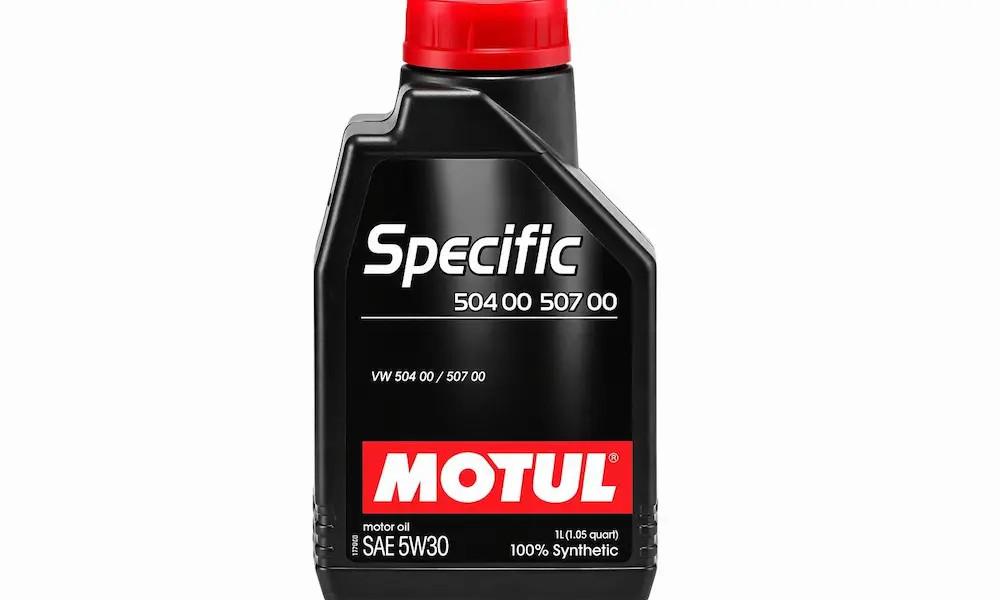
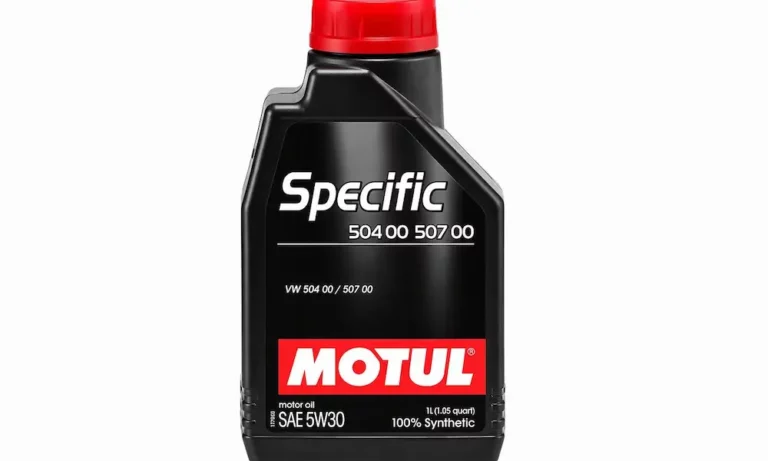
| Motul | Specific 504 00 507 00 5W-30 | Euro 4/5/6 compliant, 100% synthetic |
| Addinol | Giga Light MV 0530 LL | Long-life formulation |
Ravenol’s VMP and VSW lines are particularly popular in the VW/Audi enthusiast community. Their CleanSynto technology often exceeds OEM standards, and the low evaporation loss makes them a smart choice for high-stress driving.
How to Identify the Right Oil at the Store
Marketing language on oil bottles is designed to sell, not inform. Here’s a quick system to cut through it:
- Check the viscosity first. VW 507 00 is only available in 5W-30 or 0W-30. If you’re looking at 5W-40, that’s likely a 502 00 gasoline spec. If it’s 0W-20, that’s the newer 508 00/509 00 spec — not backward compatible.
- Find the approvals list on the back label. The text “VW 507 00” must appear explicitly. Phrases like “meets the requirements of” or “recommended for” mean the oil hasn’t gone through official Volkswagen certification testing.
- Ignore front-label buzzwords. “European Formula,” “Euro Blend,” and “Full Synthetic” are marketing terms. They don’t confirm 507 00 approval.
If you’re buying from a dealership or specialist supplier, you can also cross-reference OEM part numbers:
| OEM Part Number | Spec | Size |
|---|---|---|
| G V52 195 A1 | VW 507 00 | 1 Liter |
| G 052 195 M2 | VW 507 00 | 1 Liter |
| G 052 195 M4 | VW 507 00 | 5 Liters |
Backward Compatibility: What 507 00 Replaces
One of the practical benefits of 507 00 is that it consolidates several older diesel specs. If your owner’s manual calls for an older standard, 507 00 is a valid upgrade.
| Former Spec | Original Application | Status |
|---|---|---|
| VW 505 00 | Early naturally aspirated and turbo diesels | Fully replaced by 507 00 |
| VW 505 01 | Unit injector (Pumpe-Düse) engines | Replaced for most engines |
| VW 506 00 | Early long-life diesel service | Fully replaced by 507 00 |
| VW 506 01 | Long-life unit injector engines | Replaced for most engines |
There are two critical exceptions. The five-cylinder (R5) and ten-cylinder (V10) TDI engines from the mid-2000s — including the 2004 BKW V10 TDI — require the specific additive package found in 505 01 or 506 01. Using 507 00 in these engines is listed as “not admissible” and can cause premature engine failure. If you own one of these, you’ll need to source a specialty 506 01 oil from Motul or a similar manufacturer.
Why American Diesel Oils Don’t Work Here
This is a common mistake, especially for owners who’ve always bought oil at a truck stop or farm supply store.
API CK-4 and similar heavy-duty diesel ratings are designed for large, slow-turning commercial truck engines. They carry a higher sulfated ash content to handle extreme-pressure conditions in those applications. In a high-speed Volkswagen TDI, that excess ash accumulates in the DPF rapidly, causing power loss and eventual system failure. The API’s own motor oil guide makes clear that these ratings serve fundamentally different engine architectures.
Heavy-duty diesel oils also commonly come in 15W-40 viscosity — far too thick for the tight clearances and high-speed oiling systems in a modern European engine.
ACEA C3 is the closest international standard to 507 00, but it’s not a substitute. An oil can pass C3 and still fail Volkswagen’s proprietary 10,000-hour engine tests. Use a C3-only oil as a temporary top-off if you’re stuck, not as a regular fill.
Service Intervals in the US
In North America, the standard interval for a vehicle running 507 00 oil is 10,000 miles or 12 months — whichever comes first. This is shorter than European intervals, which can stretch to 30,000 km under the Longlife III program.
Consider dropping to a 5,000–7,500 mile interval if your driving includes:
- Frequent short trips where the engine doesn’t fully warm up
- Heavy stop-and-go city traffic
- Extreme temperatures (desert heat or northern winters)
- Regular towing or full cargo loads
Short trips are particularly hard on oil. When the engine doesn’t reach full operating temperature, moisture and unburned fuel accumulate in the crankcase and degrade the oil faster than the chemistry is designed to handle.
Don’t Confuse 507 00 With the Newer 509 00 Spec
Volkswagen’s newest diesel standard, 509 00, uses a strictly 0W-20 viscosity and is identifiable by a green chemical dye added to the fluid. It’s designed for engines with different oil pump pressures and bearing clearances than your TDI.
Using 0W-20 in an engine built for 507 00 will likely cause a loss of oil pressure and immediate engine damage. Going the other direction — using 507 00 in a 509 00 engine — increases internal friction and can interfere with variable-flow oil pumps. The Blauparts spec guide is clear: these specs are not interchangeable in either direction.
Your owner’s manual and the VW oil spec lookup tool are the definitive sources for which spec your specific engine requires. When in doubt, the back label of the bottle is your final check.